Alas Purwo remains a potential site
Speaking in Serang on Nov. 17, 2026, Andra joined politicians, environmental advocates and academics objecting to the proposal. Hashim Djojohadikusumo, President Prabowo Subianto's younger brother and special envoy for climate and energy, first publicly raised it on Nov. 12 during the UN Climate Change Conference (COP31) in Turkey.
Hashim proposed moving some rhinos to Alas Purwo National Park in East Java. But Muhamad Hidayat, a senior expert at the Indonesian Government Communication Agency (Bakom RI), said on Nov. 17 that Alas Purwo was only a potential location and still needed an in-depth assessment.
Hidayat said the government would not move the animals until a scientific study confirmed sufficient food, water, wallows and roaming space, along with habitat security.
The Forestry Ministry said it would consider Hashim's suggestion as part of its work on a second habitat, without reducing protection for Ujung Kulon. Ministry spokesman Ristianto Pribadi described safeguarding the existing habitat and exploring another location as complementary efforts, with any additional population to be established carefully and responsibly.
An earlier transfer shapes the objections
Andra cited Musofa, a Javan rhino that died shortly after being moved within Ujung Kulon last year. "We remember what happened to Musofa when it was moved from its original habitat, even though the relocation was still within Ujung Kulon. It died not long afterward. We don't want that tragedy to happen again," he said.
Mongabay reported that Musofa was a male transferred to the park's Javan Rhino Study and Conservation Area in November 2025. He died days later, and a necropsy identified a severe parasitic infection and chronic health problems.
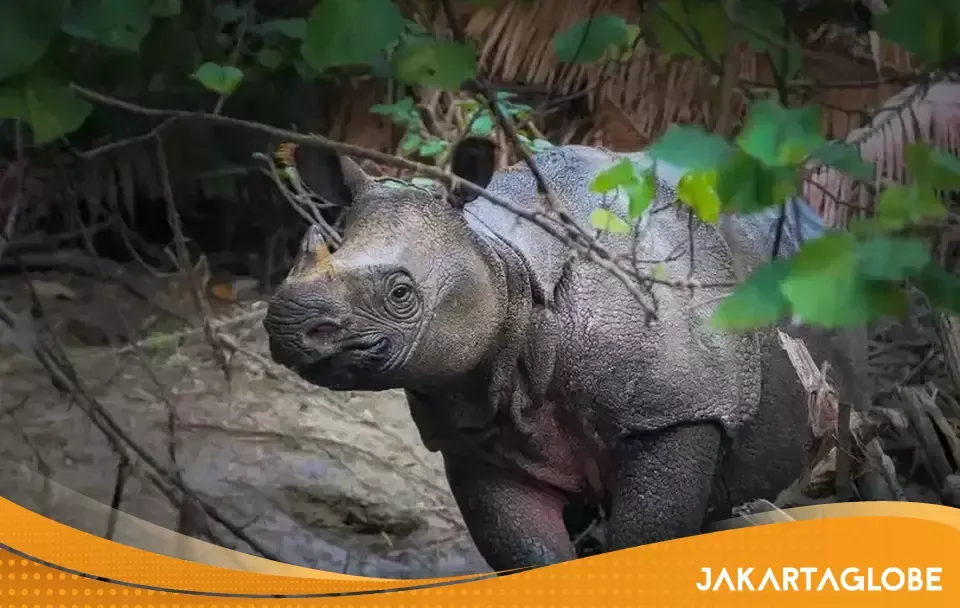
Ujung Kulon, at Java's western tip, is the last natural habitat of the Javan rhino (Rhinoceros sondaicus). Andra emphasized its global significance as a biodiversity sanctuary and its UNESCO World Heritage status, held since 1991. He said responsibility for protecting the animals extends from Indonesia's central and regional governments to local communities and the international community.
House of Representatives member Alex Indra Lukman called for the proposal to be put on hold until scientific findings, ecological risks and funding considerations were made public. "Simply floating a proposal to relocate an endangered species without conducting comprehensive studies could provoke international outrage," he said.
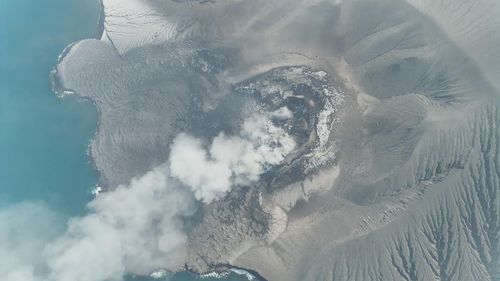
Alex nevertheless acknowledged the need for a viable second population because of Ujung Kulon's proximity to the active Anak Krakatau volcano. He also pointed to the International Union for Conservation of Nature's classification of the species as critically endangered, its highest threat category for species still living in the wild.
Disaster risk and uncertain population estimates
Hashim cited Anak Krakatau as one reason to consider another habitat. As reported by Kompas, he warned that an earthquake or volcanic eruption could generate a tsunami and wipe out the species, whose entire remaining wild population lives in Ujung Kulon.
A tsunami struck the park in December 2018. According to Mongabay, that disaster underscored the danger of keeping the population in a single location and renewed calls for another habitat outside tsunami-prone areas.
The size of that wild population remains disputed. Mongabay reported that, as of September 2026, the IUCN estimated a minimum of about 50 rhinos, a figure also used by Save the Rhino International. Indonesia's Forestry Ministry estimated 87 to 100.
Hidayat also raised concerns about low genetic diversity, saying on Nov. 17 that inbreeding among the rhinos had reportedly reached 58.5 percent.
A decades-long search
Efforts to find an alternative habitat date to the 1980s and have included assessments of Mount Honje and Cikepuh, according to Hidayat.
Cikepuh, a 5,000-hectare (12,400-acre) wildlife reserve on Java's southern coast, was once a leading candidate. Mongabay reported that it was deemed too risky in 2019 because the site was also used for military training. The government then shifted its attention to expanding suitable habitat inside Ujung Kulon.
Establishing another wild population would take far longer than a year or two, M. Ali Imron, director of forests and wildlife at WWF-Indonesia, said on Nov. 17. He estimated that the process could take about 15 years.