Research into collections at Naturalis
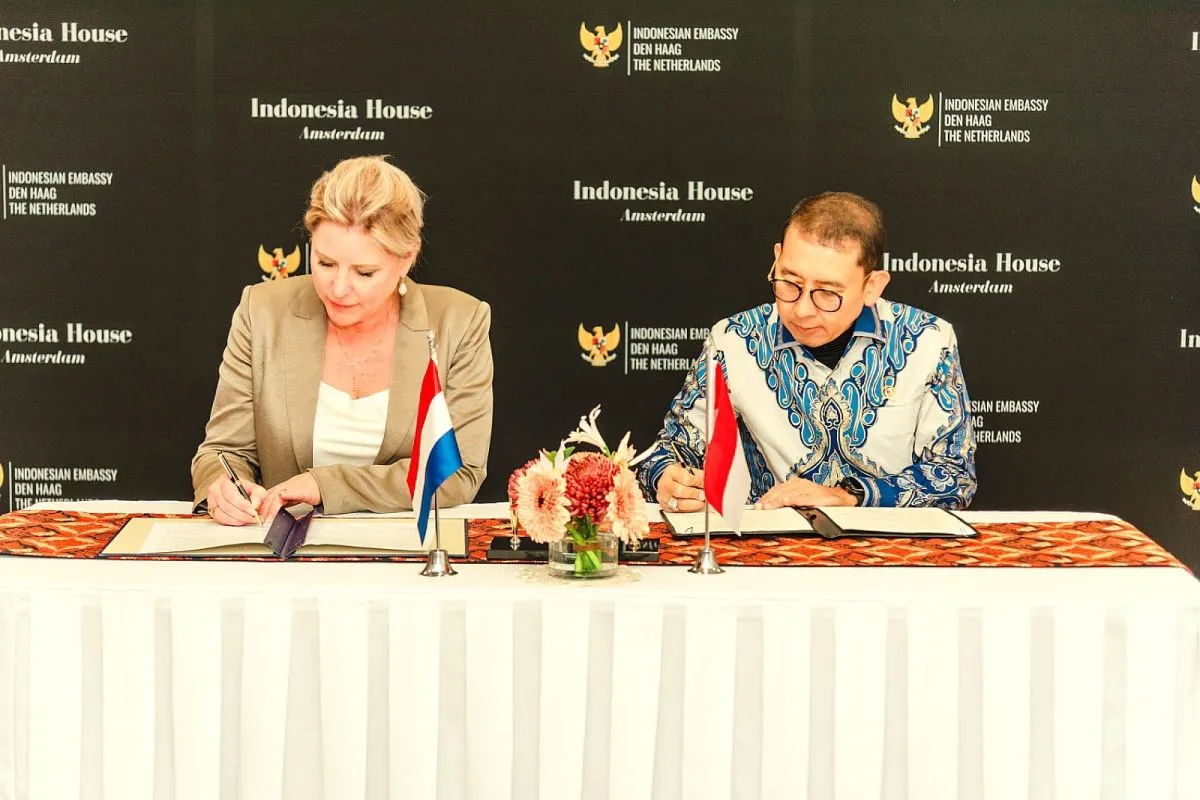
Fadli met with Dutch Minister of Education, Culture and Science Rianne Letschert at Indonesia House in Amsterdam. His request concerned continued joint provenance research on the Raden Saleh Collection and ancestral human remains in the Theodor Verhoeven Collection, both held at the Naturalis Biodiversity Center in the Netherlands, according to VOI.
"The Raden Saleh collection holds great significance for Indonesia. We intend to continue research collaboration and discussions on other collections held in the Netherlands, including ancestral remains, to ensure that repatriation proceeds on the basis of sound historical and scientific research," the minister said in a statement on Sunday.
Raden Saleh, also known as Raden Sarief Bastaman Saleh, came from a Javanese regent family. According to the Rijksmuseum, he traveled to the Netherlands to study painting in 1829, later specialized in oriental scenes and wore the dress of a Javanese prince. He returned to Java in 1851.
The Verhoeven Collection originated in archaeological exploration that Dutch missionary Theodorus Verhoeven undertook in Flores beginning in the 1950s, according to the Dutch Research Council (NWO). Material from those excavations is divided between Naturalis and the Bikon Blewut Museum in Sikka, East Nusa Tenggara, Indonesia.
NWO awarded funding on December 4, 2025, for a project titled "Orphaned Objects: Provenance Research for the Collection of Theodore Verhoeven in the Netherlands."
Dubois return follows an initial transfer in 2025
The transfer agreement signed in Amsterdam covers 30,190 units in the Dubois Collection: 29,763 objects and 427 ancestral skeletons associated with research on Homo erectus, also known as Java Man. Fadli said the collection's return would be Indonesia's largest repatriation by both item count and scientific value.
Four Dubois items had already been transferred on December 17, 2025: a Homo erectus skullcap, a molar, a femur and an engraved shell. Fadli said those items are now displayed at the National Museum of Indonesia in Jakarta.
The agreement also covers 20 historical cultural objects. These include the Banjarmasin Diamond; the Long Sikin Sword from Aceh; a Quran manuscript associated with Teuku Umar; four Aceh Sultanate manuscripts; six Wayang Beber scrolls; a tomb panel from Aceh; and six Batu Aceh tombstones.
Fadli identified the Rijksmuseum and the Wereldmuseum in Amsterdam as the institutions holding those cultural objects. He said the objects belong to seven collection groups taken during the colonial period.
Indonesia has recovered 2,338 historical artifacts from museums in Amsterdam and Rotterdam since 1975, Fadli said. Previous returns include the Pita Maha Collection and the Lombok Treasure.
Conservation, research and public access
Fadli linked the repatriation to Article 32 of Indonesia's 1945 Constitution, which mandates the advancement of national culture. Once returned, the objects will be managed by the Ministry of Culture, with care and conservation, collaborative scientific research, and broader public access through education guiding its work.
He said bringing the collections home would restore Indonesia's right to safeguard and study its history and cultural identity and pass them on to future generations. He also voiced confidence that the Netherlands would remain willing to discuss further returns and joint research to strengthen the historical basis for future repatriations.
Letschert described Dutch support for repatriation as part of addressing historical injustice, according to VOI. She emphasized that human remains should be returned to their country of origin so they can be treated with respect and, where necessary, properly reburied.
Cultural cooperation due for renewal
The ministers also discussed renewing the countries' cultural cooperation memorandum of understanding, VOI reported. Signed in February 2017 and due for renewal in February 2027, it covers museums, cultural heritage preservation, archives, the arts, cultural education and film.