Indonesian performances in a Southeast Asian program
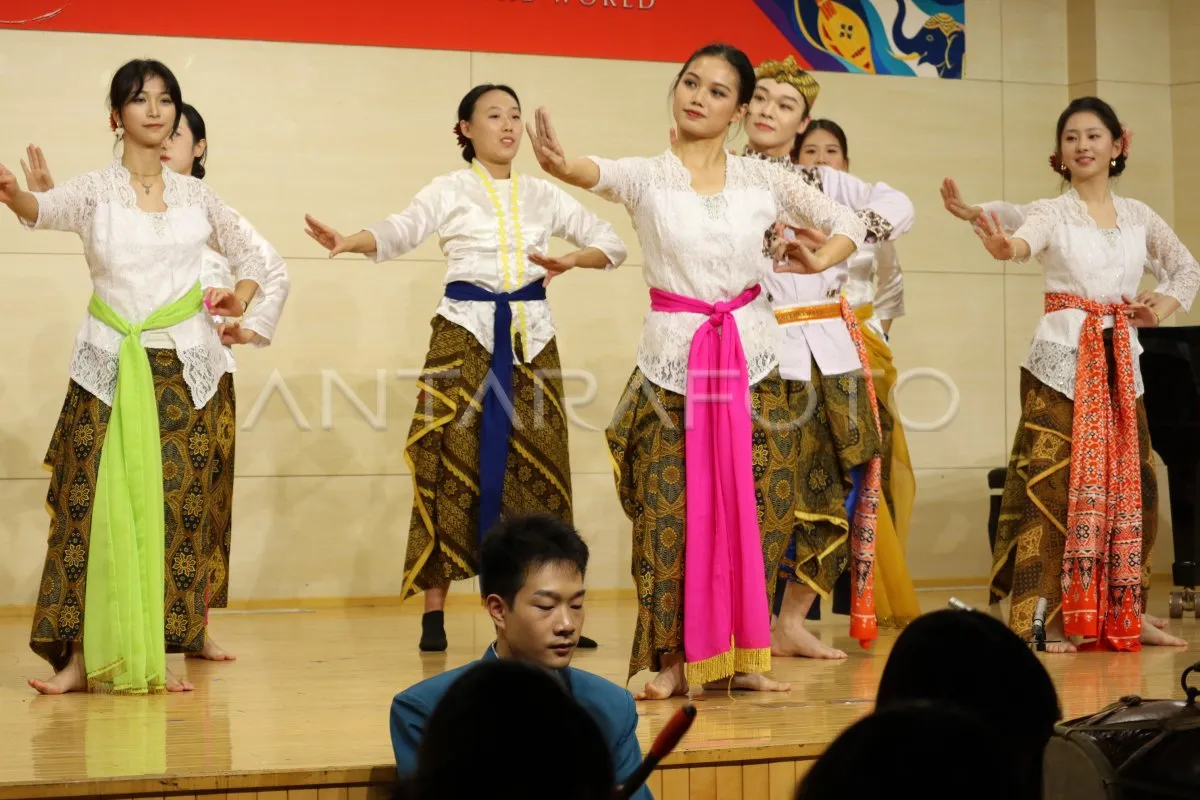
ANTARA FOTO listed Tari Syukur Asih, Tari Ratoe Jaroe, Tari Saman, and Tari Kecak among the traditional Indonesian music and dances presented at the event. Its account accompanied a photograph and was labeled as an automatically translated caption.
The performances took place during the conservatory's 12th World Music Days, titled "Thailand and the World" and held November 1-4, 2026, in Beijing. In an October 27 preview, the Chinese music-news digest Guoyue Toutiao said the edition focused on Thai and Southeast Asian music culture.
The program combined keynote lectures and workshops with student academic reports and concerts. Scholars and musicians were invited from Thailand, the Netherlands, Turkey, Indonesia, India, and South Korea, according to the digest. The event was also part of the eighth "10·15" Art Festival and a series celebrating the 70th anniversary of the conservatory's Musicology Department.
A recurring forum for music research
Music Finland's China music-market roadmap describes World Music Days as a high-level academic gathering that CCOM organizes for world-music research and cultural exchange, with editions held every one or two years.
The roadmap says the event became more closely integrated with China's Belt and Road Initiative beginning in 2015. At the time the roadmap was written, World Music Days had completed nine thematic editions, with participation spanning more than 20 countries in Asia, Africa, Latin America, Europe, and Oceania.
Saman's heritage and safeguarding status
Saman, one of the dances featured in Beijing, belongs to the cultural heritage of the Gayo people in Aceh province, Sumatra. In 2011, UNESCO added the dance to its List of Intangible Cultural Heritage in Need of Urgent Safeguarding.
UNESCO's description of the traditional dance identifies its performers as boys and young men, arranged in close rows while kneeling or sitting on their heels. The organization also reports that Saman is being performed less frequently and that its transmission is declining.