US prepares unprecedented sanctions against Iran as Tehran threatens Gulf oil shutdown
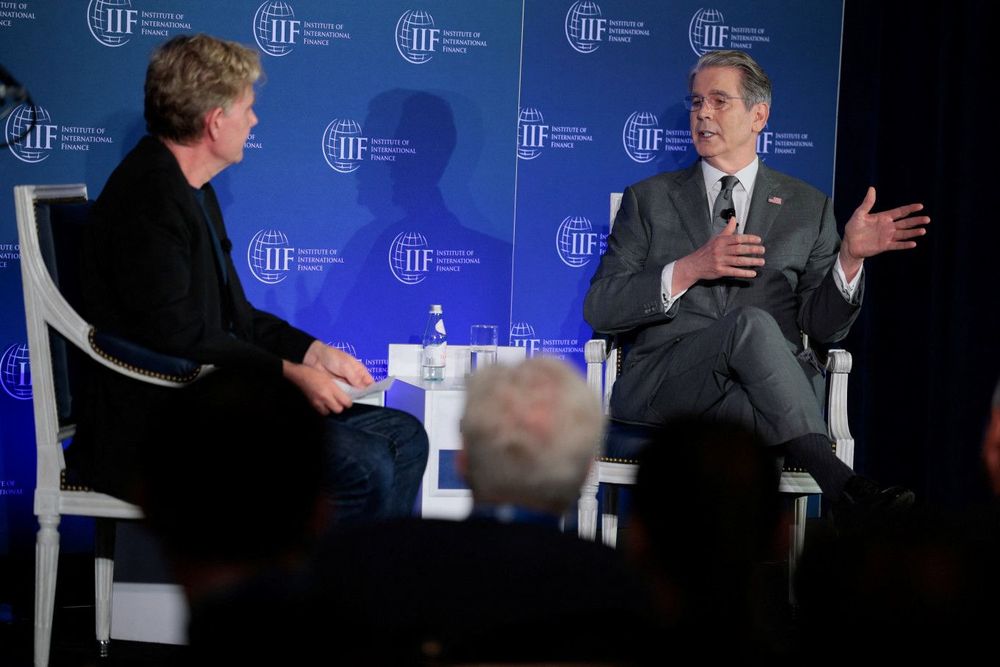
The United States has threatened Iran with what Treasury Secretary Scott Bessent described as an unprecedented economic assault, preparing to unveil comprehensive sanctions on Monday targeting not only Tehran but also nations conducting business with the Islamic Republic. Iran responded by threatening to shut down all oil shipments from the Persian Gulf.
Bessent is scheduled to hold a press conference at 2 p.m. EDT (1800 GMT) on Monday to announce measures he characterized as exceeding any previous financial pressure campaign. The sanctions will be implemented through the US Office of Foreign Assets Control (OFAC), which has authority to freeze assets under US jurisdiction and prohibit American entities from transactions with designated parties.
"At dawn begins an economic D-Day, the single greatest financial offensive ever marshalled against an adversary," Bessent wrote in an opinion piece published in the Financial Times on Sunday.
The former hedge fund manager, who was confirmed as Treasury Secretary in January 2025, bringing Wall Street expertise to the role, indicated Washington would employ secondary sanctions to penalize foreign entities doing business with Iran, potentially cutting them off from the US financial system and dollar transactions.
Iran vows retaliation through oil disruption
The escalating tensions come as both nations have refrained from direct military strikes for several weeks, though meaningful peace negotiations remain elusive. The six-month conflict has claimed thousands of lives, predominantly in Iran and Lebanon, with US and Israeli strikes degrading Iran's conventional military capabilities while killing Supreme Leader Ayatollah Ali Khamenei.
Mohsen Rezaei, secretary of Iran's Supreme National Security Council, issued a stark warning on Sunday regarding potential economic retaliation.
"If the economic war continues, not a single drop of oil will be exported, neither through the Strait of Hormuz nor from anywhere in the Persian Gulf. Iran will regard any country's participation in or support for America's economic war against the Iranian people as an act of war."
The threat carries significant global implications, as the Strait of Hormuz serves as a critical chokepoint through which approximately 21 million barrels per day of crude oil and petroleum products flowed in 2023, representing roughly one-fifth of global petroleum consumption. Iran, OPEC's third-largest oil producer with approximately 209 billion barrels of proven reserves as of 2021, holds substantial leverage over global energy markets.
Iran has maintained enough missile and drone capabilities to threaten Gulf neighbors and oil tankers despite military degradation, bringing shipping in the strategic waterway nearly to a standstill and pressuring global fuel prices. The status of Iran's nuclear program, a primary target of American and Israeli military operations, remains unclear.
Targeting Iran's economic partners
Without providing specific details, Bessent signaled the US would focus on what he termed "fearful nations" that practice "appeasement" through economic engagement with Iran. "They would do well to consider the consequences of sustaining it," he wrote.
The Treasury Secretary specifically urged Chinese cooperation, noting China's dependence on Gulf oil supplies. China imported approximately 11 million barrels per day of crude oil in 2023, with roughly half originating from Middle Eastern countries including Saudi Arabia, Iraq, the UAE, Oman, and Kuwait. A Chinese embassy spokesperson in Washington responded that "sanctions and pressure do not help resolve the problem," calling instead for diplomatic solutions.
Economic pressures mount
Iran's economy was already strained by international sanctions before US and Israeli attacks damaged infrastructure. The country has endured near-continuous economic sanctions since the Islamic Revolution of 1979, when the overthrow of Shah Mohammad Reza Pahlavi transformed US-Iran relations from alliance to adversary. More recently, the US withdrawal from the Joint Comprehensive Plan of Action (JCPOA) in 2018 and reimposition of sanctions have intensified economic pressure.
Tehran entered the conflict facing high inflation, currency depreciation, energy shortages, and deep structural weaknesses. Iranian officials have privately warned that additional economic punishment could increase hardships, potentially reigniting domestic unrest and further eroding the Islamic Republic's legitimacy. The country must now contend with damaged infrastructure, disrupted trade, lost production capacity, and reconstruction costs.
Regional mediation efforts
In the absence of direct talks between Washington and Tehran, last conducted in Switzerland in June, several nations including Qatar, Turkey, and Pakistan have attempted diplomatic mediation. Pakistan Army Chief Asim Munir is scheduled to visit Tehran on Monday as part of regional peace efforts. Pakistan, which shares a 909-kilometer border with Iran while maintaining defense cooperation with the United States, has positioned itself as a potential mediator in the conflict.
The conflict has resulted in thousands of deaths and displaced millions across Iran and Lebanon. The US has reported 18 military personnel killed and more than 750 wounded during operations.