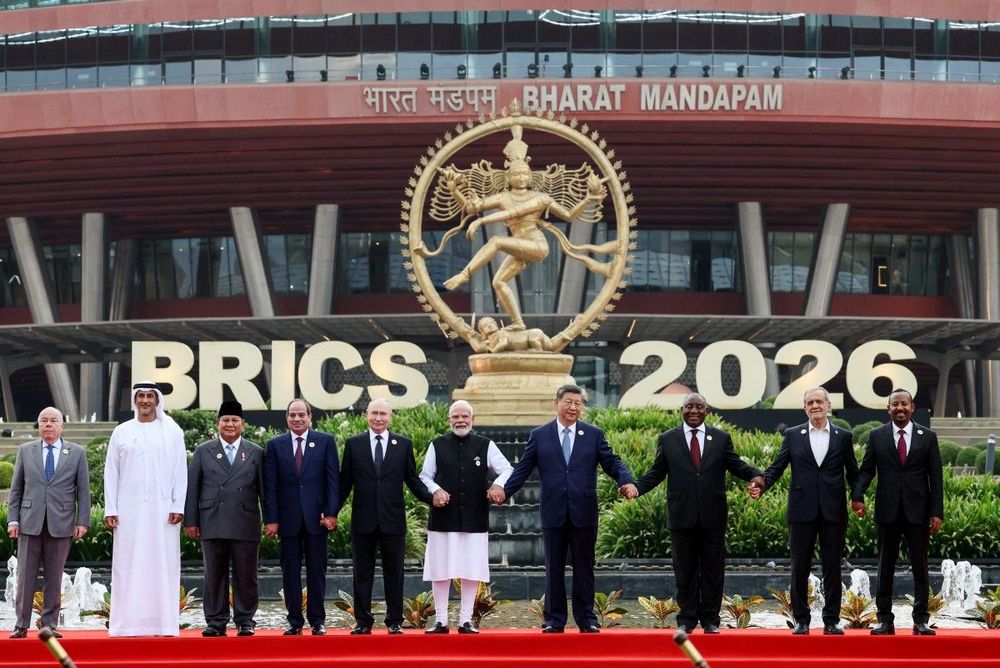
BRICS leaders issue joint call for restraint in Middle East conflict
Leaders of the BRICS nations issued a joint declaration calling for de-escalation in the Middle East at their summit in New Delhi on Saturday, marking a diplomatic breakthrough after member states failed to reach consensus on the conflict earlier this year.
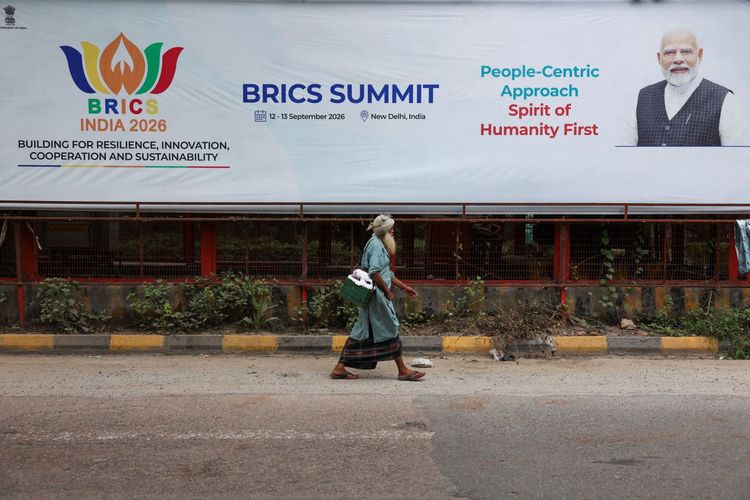
The 18th BRICS Summit, held at Bharat Mandapam on September 12-13 under the theme "Building for Resilience, Innovation, Cooperation and Sustainability," brought together heads of state from all 11 member countries. The group now includes the original five founding nations—Brazil, Russia, India, China and South Africa—plus Egypt, Ethiopia, Iran, the United Arab Emirates, and Indonesia, which joined in two expansion waves in January 2024 and January 2025 respectively.
"We express deep concern over the continued escalation of tensions in Middle East/West Asia. We call for exercising maximum restraint, as well as avoiding actions that could further aggravate the situation."
Diplomatic breakthrough for India
The declaration represents a significant diplomatic achievement for host India, which assumed the BRICS chairship in January 2026. Foreign ministers of the bloc had been unable to agree on a joint statement when they met in New Delhi in May, with Iran, Saudi Arabia and the UAE holding divergent positions on the war that began with US-Israeli strikes on Iran on February 28, 2026.
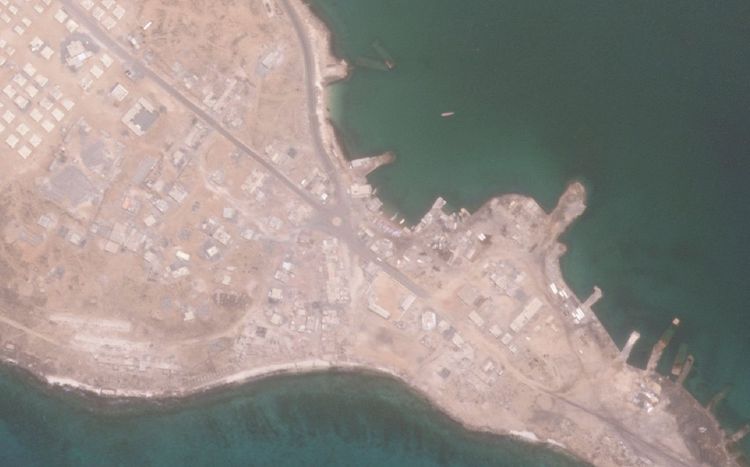
Those strikes killed Iran's Supreme Leader Ayatollah Ali Khamenei and several senior Iranian officials, triggering retaliatory missile and drone attacks across the region. The conflict has severely disrupted global energy markets, with Iran blocking or heavily restricting shipping through the Strait of Hormuz, a waterway that normally handles approximately 20-25 percent of global seaborne oil trade and 20 percent of liquefied natural gas.
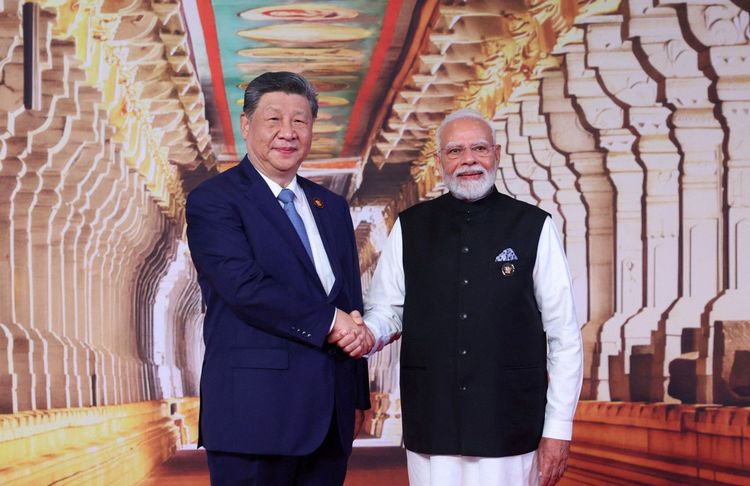
Chinese President Xi Jinping told the summit that the Middle East conflict "does not serve the common interests of the international community." His attendance at the two-day gathering marked his first visit to India since 2019, reciprocating Prime Minister Narendra Modi's trip to China in 2025—the first such visit by an Indian leader in seven years.
Growing global influence
Modi opened the summit by emphasizing the bloc's growing global influence. "We have to transform this pyramid of privilege into a platform of partnership," he said, noting that BRICS nations "represent 50 percent of the world's population, 40 percent of global GDP and more than 25 percent of global trade."
The carefully choreographed summit highlighted India's delicate balancing act as it maintains relationships with countries on opposing sides of major conflicts. New Delhi has cordial ties with both Iran and Israel, while also managing its strategic partnership with the United States and its complex relationship with Russia.
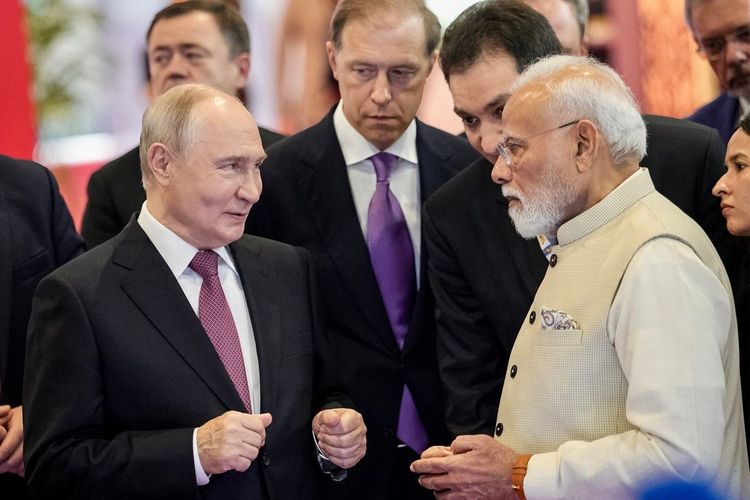
Russian President Vladimir Putin, making his first visit to India since December 2025, received a warm embrace from Modi before their bilateral talks on Friday. Russia remains one of India's most important strategic partners, particularly as New Delhi has turned to Moscow for energy supplies amid the global market disruptions caused by the US-Iran war.
China-India relations in focus
The Xi-Modi meeting drew particular attention given the historically tense relationship between the nuclear-armed neighbors. The two leaders expressed commitment to resolving their boundary dispute, which has remained contentious despite recent diplomatic progress.
"Although our two countries are different in many respects, they are fully capable of complementing each other's strengths, supporting one another, achieving mutual success and advancing together."
India's foreign ministry stated that Modi "underlined the need for both sides to observe existing agreements and understandings on border related issues." The approximately 3,500-kilometer Himalayan border has been a flashpoint since a deadly June 2020 clash in the Galwan Valley killed 20 Indian soldiers and at least four Chinese troops, triggering a four-year military standoff that only saw a disengagement agreement in October 2024.
Just weeks before the summit, on August 25, Chinese Foreign Minister Wang Yi and Indian National Security Advisor Ajit Doval held border talks in Beijing, agreeing to continue dialogue toward a "fair, reasonable and mutually acceptable settlement." The next round of discussions is scheduled to take place in India in 2027.
Regional diplomacy and protests
Iranian President Masoud Pezeshkian attended the summit shortly after warning that the Middle East does not need the United States to serve as a "regional policeman." He held talks with Abu Dhabi Crown Prince Khaled bin Mohamed bin Zayed Al Nahyan on the summit sidelines, demonstrating the diplomatic engagement between regional rivals.
Xi received a red-carpet welcome upon arrival, with an honor guard and traditional dancers in colorful attire. However, the visit was not without controversy—dozens of Tibetan exiles protested in New Delhi on Friday, waving placards against Xi's presence. The Dalai Lama and thousands of Tibetans have lived in India since fleeing a Chinese crackdown in 1959.
Expansion and future cooperation
The summit underscored the challenges facing BRICS as it seeks to expand its influence while managing internal differences. Beyond the 11 full members, the bloc admitted nine partner countries in January 2025—Belarus, Bolivia, Kazakhstan, Cuba, Malaysia, Nigeria, Thailand, Uganda, Uzbekistan and Vietnam—all on a potential path to full membership.
Despite the tensions, leaders managed to find common ground on the Middle East statement, with Xi calling for countries to "work hand-in-hand to promote high-quality major financial cooperation, advocate an equal and sustainable global order, and foster an economic globalization that is open and inclusive."
The successful issuance of the joint declaration suggests that India's intensive diplomatic efforts paid off, allowing the diverse group to speak with one voice on a conflict that continues to threaten regional stability and global economic security.