Russia's return to G20 table and media restrictions overshadow US economic agenda
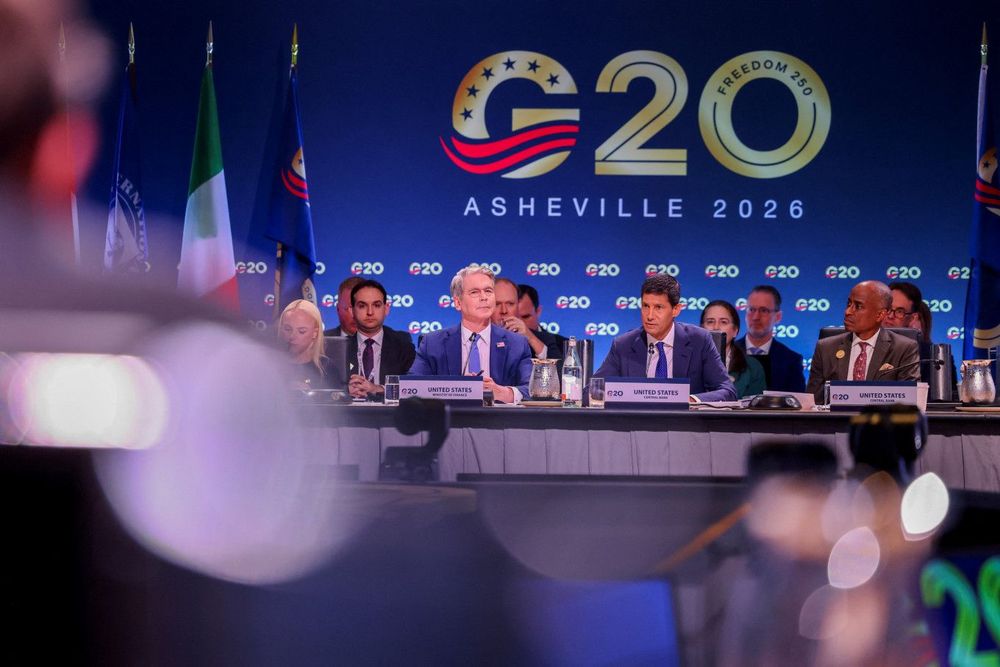
The United States drew sharp criticism from European allies at a Group of 20 finance ministers meeting in Asheville, North Carolina, after inviting Russian Finance Minister Anton Siluanov to attend in person for the first time since 2022, while simultaneously restricting access for certain international journalists.
The two-day gathering, which began Monday, was intended to address pressing economic challenges including an energy crisis triggered by conflict in Iran, China's massive trade surplus, and the global implications of surging artificial intelligence investment. Instead, diplomatic tensions over Russia's presence and press freedom concerns dominated early proceedings.
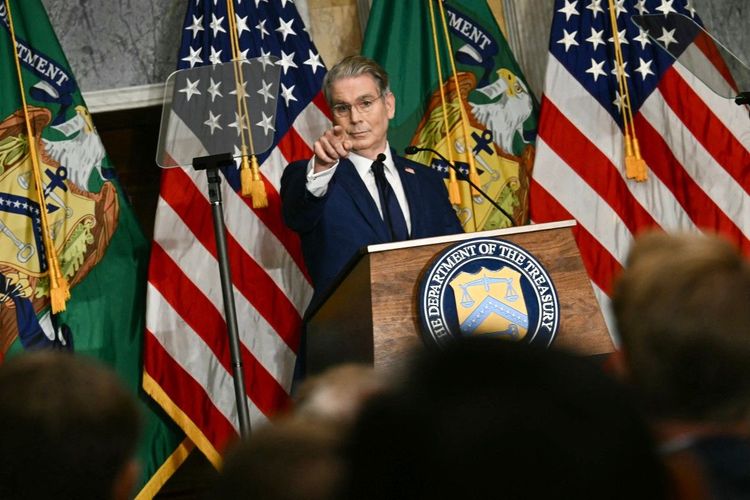
As US Treasury Secretary Scott Bessent opened the session, several finance ministers expressed surprise and dismay at seeing Siluanov seated at the table. This marked a dramatic reversal from April 2022, when then-Treasury Secretary Janet Yellen and officials from Britain, Canada, and the European Central Bank walked out of a G20 meeting in Washington during Russia's virtual presentation, declaring there would be "no business-as-usual for Russia in the global economy" following its invasion of Ukraine.
Polish Finance Minister Andrzej Domanski voiced strong reservations about engaging with Russian representatives.
"We do not trust Russia. They lie constantly and you need to be really, really cautious while discussing with them. For me it would be very difficult to have any kind of conversation with Russia."
The United States, holding the rotating G20 presidency in 2026, exercised its authority as host to invite Russia back to the forum. Bessent and Siluanov held a bilateral meeting focused on President Donald Trump's peace plan for Ukraine, according to Russia's finance ministry. A US official indicated that Bessent made clear no economic relief or agreements would be possible until the conflict ends.
German Finance Minister Lars Klingbeil described Siluanov's presence as sending a "quite troubling" signal for transatlantic cooperation on sanctions policy.
"I would have wanted greater clarity from the American side that he should not be received here as a normal guest,"
European officials also objected to appearing in the traditional group photograph of finance ministers and central bank governors, and the photo was ultimately taken without Siluanov present.
Press access controversy
The gathering faced additional controversy over the US Treasury's decision to deny media credentials to Bloomberg News teams and specific reporters from the New York Times and Wall Street Journal. The restrictions affected approximately 200 journalists expected to cover the event, which drew more than 500 attendees including finance ministers, central bank governors, and Fortune 500 executives.
"I believe the press has a completely legitimate interest in reporting openly and freely on this G20 summit. I consider it unacceptable for journalists or entire editorial teams to be excluded,"
A US Treasury spokesperson defended the decision, stating that over 300 media representatives were covering the event and that access comes with "a responsibility to report factual information consistent with established journalistic standards."
Economic growth agenda
Despite the diplomatic tensions, Bessent emphasized that the meeting's primary focus remained on strengthening global economic growth to address mounting debt burdens. According to the Institute of International Finance, global debt reached approximately $353 trillion at the end of March 2026, rising $4.4 trillion in the first quarter alone, driven largely by government borrowing in the United States and China.
"The world is awash in debt post-GFC, post-COVID, and the only way for us to get out of this is to grow our way out of this,"
The Treasury invited private sector leaders to participate in sessions on promoting growth, reflecting the Trump administration's emphasis on deregulation, energy production, and innovation. Bessent identified several impediments to growth requiring G20 attention, including "excessive regulatory and administrative burdens, poorly designed financial incentives and tax systems, insufficient public and private investment, internal market fragmentation, and gaps in workforce skills and mobility."
Federal Reserve Chairman Kevin Warsh, attending his first international economic policy meeting since taking office in May 2026, characterized the current moment as marking the end of an era of "secular stagnation." He described a "global investment surge" driven by AI infrastructure development that has reversed the previous "global savings glut."
Warsh succeeded Jerome Powell after a contentious 54-45 Senate confirmation in May, the most divisive Federal Reserve chair confirmation in history. He previously served as a Fed governor from 2006 to 2011.
Trade imbalances and China
Tuesday's agenda will focus on reducing global trade imbalances, with Bessent planning to press G20 members to reconsider their trade relationships with China. China's global trade surplus reached a record $1.189 trillion in 2025, with exports surging 23.9 percent year-on-year in July 2026 alone.
"The world cannot have a China with a $1.2 trillion trade surplus. In China, the economy is quite weak, and they are trying to export their way out of it, and they need to rebalance their economy,"
French Finance Minister Roland Lescure acknowledged the need for coordinated action.
"We need a more balanced world. We know that every big zone, whether China, the US and Europe, has got their own homework to do."
However, economists note that reducing global imbalances will require the United States to address its own growing fiscal deficits alongside pressuring China to shift toward domestic consumption.
Asheville was selected to host the finance meetings specifically to highlight western North Carolina's recovery and resilience following the devastating impact of Hurricane Helene in 2024. The US will culminate its G20 host year with a Leaders' Summit on December 14-15 at Trump National Doral in Miami, Florida.
When asked about market concerns over US debt levels, Bessent downplayed worries about bond market instability.
"First of all, I'm not sure where the bond market turmoil is. What's important, too, is that we are growing."