US launches expanded sanctions targeting Iran's economic networks globally
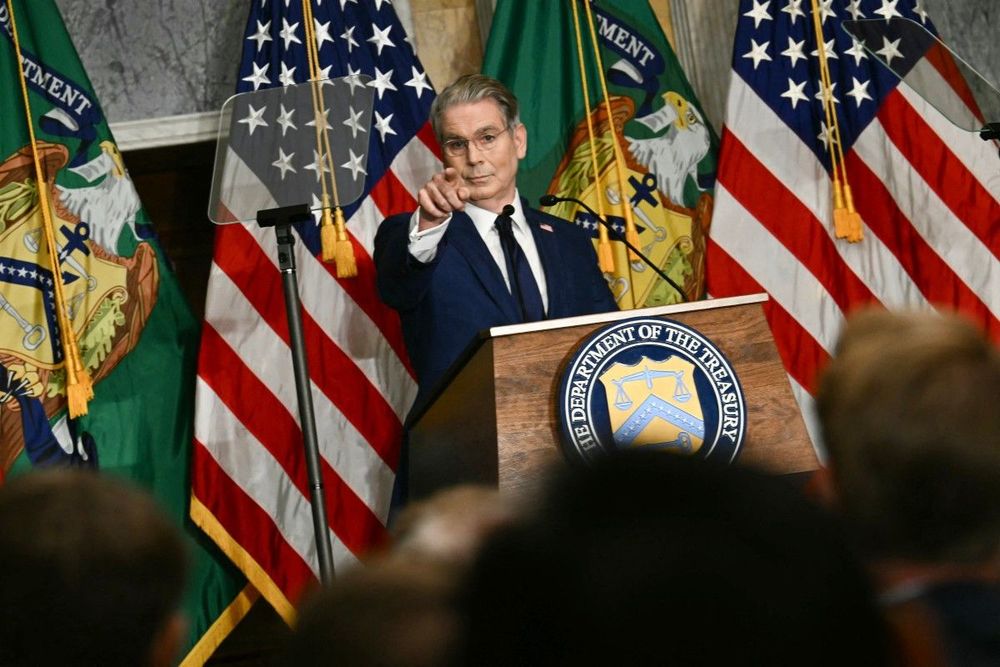
US Treasury Secretary Scott Bessent unveiled plans Monday for what he termed the "economic asphyxiation" of Iran, expanding Washington's sanctions regime to target third-party entities globally and warning of severe consequences for nations refusing to participate in the pressure campaign.
The announcement arrives nearly six months into an ongoing conflict with Iran that has reached a stalemate, with peace negotiations frozen and Tehran maintaining its blockade of the Strait of Hormuz, a critical maritime passage through which approximately 20 to 30 percent of the world's seaborne-traded oil flows.
"Around the globe, our objective is to sever every economic lifeline that sustains this tyrannical regime until Tehran stands alone. We are going to hold everyone accountable, and this is economic asphyxiation of this regime."
The Treasury chief indicated that countries declining to join US sanctions efforts would "share" in Iran's isolation. President Donald Trump has been personally contacting world leaders to request cessation of interactions with Tehran, Bessent disclosed.
Targeting global networks
The expanded measures employ secondary sanctions—penalties imposed on third-party entities that conduct business with a sanctioned nation, effectively forcing them to choose between commerce with the sanctioned country or the United States. The new restrictions will encompass Iran's digital assets, technology, gold, aviation and shipping sectors.
The Treasury Department simultaneously sanctioned 60 individuals, companies and vessels allegedly assisting Iran in generating oil revenue, procuring weapons and conducting cyber operations. The designations affect entities across multiple continents, including the United Arab Emirates, Hong Kong, China, Singapore and Europe.
The UAE has historically functioned as one of Iran's largest non-oil trade partners and a crucial re-export hub, with bilateral commerce estimated at $15 billion to $20 billion annually before previous intensified sanctions rounds.
Bessent pledged that any entity "that facilitates money laundering on behalf of Iran will be removed from the US dollar system." This threat carries particular weight given historical precedent: in 2018, SWIFT disconnected Iranian banks from its messaging system during previous sanctions, severing Iranian financial institutions from much of the global banking network.
When questioned whether Chinese banks would face targeting under the new sanctions framework, Bessent stated "no one is above the reach of US sanctions." China has served as Iran's primary oil customer, importing an estimated 600,000 to 1 million barrels daily of Iranian crude even during previous sanctions periods, frequently through indirect channels and independent refiners.
Iranian response and resilience
Iran dismissed the threat and predicted "another defeat" for Washington. "We've been waiting for these plans for a long time, and the government is and was ready and has a two-year plan to manage these events," said Economy Minister Ali Madanizadeh.
Tehran has endured sanctions for decades, deploying sophisticated international financial networks to circumvent restrictions. Iran has employed complex systems of front companies, ship-to-ship transfers, flag changes and transponder manipulation to evade previous oil sanctions. Before the current conflict, Iran continued exporting millions of barrels of oil, predominantly to China.
During the previous "maximum pressure" sanctions campaign under Trump's first administration in 2019-2020, Iran's economy contracted approximately 6 to 7 percent, with inflation exceeding 40 percent and the rial experiencing substantial devaluation.
Ali Vaez of the International Crisis Group noted that Washington seeks to impose maximum economic pressure through various mechanisms, but that Iran "has faced all of these before."
"While there is little doubt in Washington's ability to impose substantial pain, Tehran believes that it has a high threshold for absorbing it, as well as the potential to respond to financial pressure with military counterpressure."
Military and diplomatic dimensions
The US naval blockade of Iran has reduced its oil exports via the Strait of Hormuz from two million barrels daily pre-war to just 0.4 million by mid-August, according to maritime tracker Kpler. The strait's narrowest point spans approximately 21 miles, with shipping lanes in each direction measuring only about two miles wide, rendering the passage vulnerable to disruption.
Highlighting transit risks, an oil tanker was struck by an "unknown projectile" off Oman's coast late Monday, causing damage but no casualties, United Kingdom Maritime Trade Operations reported.
US Defense Secretary Pete Hegseth clarified Monday that the shift toward economic pressure does not eliminate military options. "By no means are we foreclosing using kinetic strikes anywhere in the Strait of Hormuz or around Iran," he stated.
For ordinary Iranians, the confrontation threatens intensified economic hardship following years of severe inflation, which in December and January sparked massive anti-government protests. "I don't think people can really take this much longer," said Sarah Hassanbeigi, a 32-year-old pharmacist in Tehran.
Mediation efforts continue
Pakistan's army chief Asim Munir visited Iran Monday, meeting separately with the country's president, chief negotiator and head of its highest national security body. The meetings followed Trump's conversation last week with Munir, according to a US source familiar with the matter.
Pakistan shares a 909-kilometer border with Iran, and the two nations established a free trade agreement in sectors including energy, with bilateral trade reaching approximately $1.3 billion to $2 billion annually in recent years. Islamabad served as a leading mediator in talks that produced an April ceasefire that subsequently collapsed. Pakistan's significant commercial ties with Iran potentially expose it to the new sanctions regime.
Oman's foreign minister is scheduled to visit Iran Tuesday, as Muscat and Tehran pursue an agreement on regulating passage through Hormuz. Oman has maintained neutrality in regional conflicts and historically served as a diplomatic backchannel between Iran and Western powers, including facilitating the 2015 nuclear deal negotiations.