More countries abstain or vote no
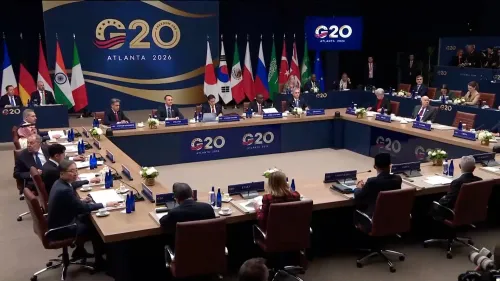
The annual measure drew its lowest support since 1995, according to France 24 (AFP) and the Associated Press. More than 160 countries supported it in 2025, when 12 abstained. The resolution is not legally binding; it expresses world opinion rather than changing US policy.
Germany, Italy and Latvia were among Western countries abstaining for the first time in the resolution's 34-year history, the AP reported. Countries voting against it included Bosnia, Colombia, Costa Rica, Ecuador, Lithuania, Morocco, North Macedonia, Paraguay and Slovenia. Most of those states had not previously voted no.
This was the assembly's 34th vote on the issue, according to UN News. The embargo dates to 1960. In the first vote, in 1992, 59 countries supported the resolution, three opposed it, 71 abstained and 46 did not vote. Support reached a high of 191 in 2015, 2016 and 2017, during the thaw in US-Cuba relations.
Competing accounts of Cuba's fuel crisis
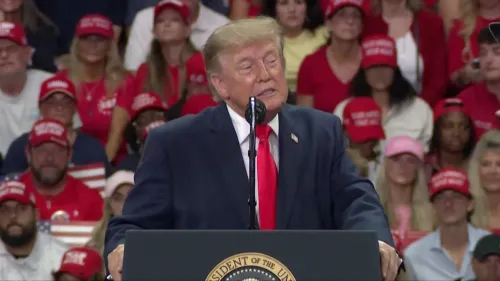
This year's Cuban-drafted text addressed the effects of US fuel restrictions imposed since January 2026, according to France 24 (AFP). The AP reported that President Trump announced in late January that countries selling or providing oil to Cuba would face US tariffs.
According to the AP, that warning effectively cut off fuel supplies to the island, contributing to widespread blackouts that disrupted water supplies, internet access and telephone service. UN Resident Coordinator in Cuba Francisco Pichon attributed an energy crisis and the risk of humanitarian collapse to the tightened embargo, UN News reported. The World Health Organization also warned of health consequences from energy shortages. In May 2026, senior UN officials said more than 100,000 surgical procedures had been postponed.
Waltz, in his remarks before the vote, rejected Cuba's description of a blockade. He said its ports remained open and no US Navy warships encircled the island. He cited recent shipments from Belize, Canada, Chile, China, Colombia, Mexico, Russia, Spain and Uruguay, along with the European Union, CARICOM, UN agencies and the United States.
American companies exported $876 million in goods to Cuba during the first eight months of 2026, including a quarter-billion dollars in fuel, Waltz said. He described the United States as the largest fuel supplier to Cuba's private sector.
Waltz also said Trump had committed another $100 million in food aid, including some medicines, and that distribution was proceeding through the Catholic Church. Thanking the Vatican, he said those trusted partners would get aid to people in need. He accused Havana of objecting because it wanted shipments to pass through military monopolies instead.
Scrutiny of GAESA's finances
Waltz argued that Cuba's government would use another favorable UN vote as propaganda. He said the foreign minister had spent 30 to 40 minutes speaking without answering questions he had raised the previous day about officials' luxury lifestyles, the military conglomerate GAESA's wealth and the treatment of Cuban doctors and nurses working abroad.
Citing a Miami Herald investigation, Waltz put GAESA's military-controlled assets at $18 billion and its cash holdings at $14 billion. He said Havana disputed the figures and challenged it to allow an independent audit. According to Waltz, Cuba's comptroller general acknowledged that she could not audit GAESA and disappeared from public view two months later.
Waltz said the cash he cited could cover every Cuban's salary for two years, supply the country's pharmacies for more than 40 years or purchase 2 billion gallons of gasoline.
The Miami Herald's 2025 investigation, drawing on leaked financial statements, also examined GAESA's profits and tax treatment. Economist Pavel Vidal conservatively estimated its 2023 gross profits at the equivalent of roughly 40% of Cuba's official GDP, which was 869 billion pesos that year. The records indicated that GAESA companies paid no taxes on dollar-denominated sales or on profits earned in either foreign currencies or pesos.
The investigation also documented a decline in funds. By August 2024, GAESA companies other than Cimex reported $14 billion in current assets, including $9.3 billion in bank deposits. The paper said the conglomerate had used about $5 billion over five months, likely because tourism revenue had fallen steeply.
A confrontation before the vote
The debate followed a shouting match on October 27. France 24 (AFP) reported that Cuban Foreign Minister Bruno Rodríguez approached Waltz at the podium and shouted, "You are a liar!" Waltz shouted for him to back away, and the General Assembly president briefly suspended the session.
In his October 28 remarks, Waltz accused Cuban representatives of pounding desks, shouting across the chamber, rushing the podium and assaulting an American diplomat. He said the conduct violated the Host Country Agreement and that the Cuban official involved would be sent back to Havana that day. "If you lay a hand on an American diplomat in this body, there will be consequences," he said.
Waltz said Cuba was holding 800 political prisoners and directed delegates' attention to former prisoners attending the meeting. He singled out José Daniel Ferrer, describing his repeated imprisonment for demanding freedoms for Cubans. Waltz also noted the presence of Orlando Gutiérrez-Boronat, whom he described as a longtime advocate for Cuban freedoms facing intimidation and persecution by the government.
Urging a no vote, Waltz said Havana broadcasts the annual result on state television to portray the world as supporting the government and to blame Cubans' suffering on a blockade. He asked delegates to hear the testimony of Cubans attending the session.