From connected vehicles to disease surveillance
China Changan Automobile Group Chairman Zhu Huarong described a shift beyond transportation, with cars becoming "self-evolving intelligent car robots." He said automakers are bringing together AI, chips, communications and big data, while automotive technologies are finding uses in energy systems and urban governance.
Chongqing already uses integrated vehicle, road and cloud data to support traffic management. Zhu also outlined a potential energy role for vehicles: through vehicle-to-grid interaction and integrated energy systems, they could serve as mobile nodes in green energy networks.
David Lopez Perez, a professor at Spain's Universitat Politècnica de Valencia, discussed robots for city drone operations, industrial inspections and assistance for older adults. Such machines need the ability to reason, plan and coordinate, he said. Digital twins, intelligent systems and future 6G networks would support those capabilities, but interoperability and standardization remain necessary.
Digital twins also featured in a presentation on epidemic prevention. Nils Stenseth, a University of Oslo professor and member of Academia Europaea, described building a model with air travel data to explore how local epidemics might be kept from developing into global pandemics. He emphasized combining data from multiple sources with digital technologies and a strong worldwide surveillance network to address emerging pathogens.
Cooperation and technology governance
The discussions linked practical uses of advanced technology with cooperation across disciplines, industries and national borders. CAST President Wang Guangqian urged participants to pursue technological breakthroughs and bring research and industrial innovation closer together. His priorities also included greener development and stronger technology governance, reflecting what he described as future industries' role in connecting science and technology to the economy.
Li Junhua, UN under-secretary-general for economic and social affairs, focused on engineering's role in turning scientific discoveries into industrial practice. Reaching the UN's 2030 Sustainable Development Goals, he said, requires deeper international scientific cooperation and involvement from every country and community.
At the opening ceremony, the China Association for Science and Technology signed a memorandum of understanding with the World Federation of Engineering Organizations, according to China Daily.
Technology outlooks and specialist sessions
Organizers unveiled the Top 10 Science and Technology Foresights of 2026 at the opening, together with an intelligent sensing industry map and other outcomes. The foresights addressed AI, brain-computer interfaces and space resource development, among other areas.
China Daily reported that the outlooks included autonomous research agents, verifiable AI safety and two-way brain-computer interfaces. The list covered digital intelligence, life and health, materials manufacturing, energy, and exploration of deep space and the deep sea.
The program also included 12 parallel forums. Topics ranged from intelligent sensing, AI-powered simulation and embodied intelligence to smart manufacturing, green energy and new-energy vehicles.
The forum's first Chongqing edition
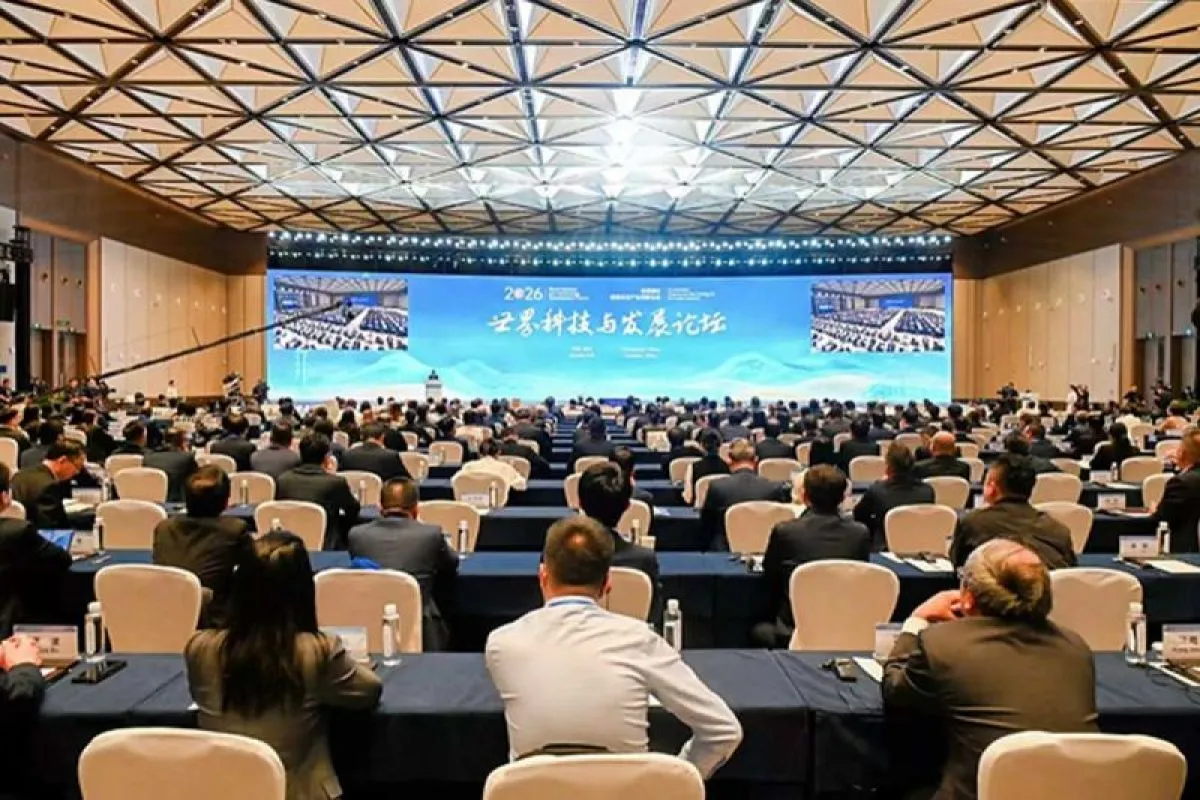
This was the eighth edition of the forum and its first in Chongqing. CAST launched the event in 2019 and jointly hosted the 2026 gathering with the Chongqing Municipal People's Government, according to China Daily and CAST.
CAST gave the forum's theme as "Co-evolution: Shaping the New Ecology of the Future Industry." It was also a flagship event within CAST's International Month 2026, whose theme was "Originating Innovation, Nurturing Excellence."
Participants came from nearly 40 countries and regions, iChongqing reported. The approximately 800 guests included leading experts, heads of international science and technology organizations, and executives from high-tech companies.
Chongqing's research and innovation context
Before the forum, 12 academicians and more than 100 experts organized into seven research groups to examine issues related to Chongqing's high-quality development and present recommendations at a symposium, according to iChongqing.
The outlet also reported that Chongqing placed 52nd in the World Intellectual Property Organization's 2026 Global Innovation Index ranking of the world's top 100 innovation clusters. That was five places higher than in 2025.
During China's 14th Five-Year Plan period, iChongqing reported, the number of Chongqing's high-tech enterprises increased 2.5-fold, while science and technology enterprises increased 2.9-fold. High-level science and innovation platforms increased twofold, and R&D personnel doubled. Over the same period, technology contract transaction value rose 6.4-fold, and invention patents per 10,000 people increased 1.4-fold.