Human judgment and public protection
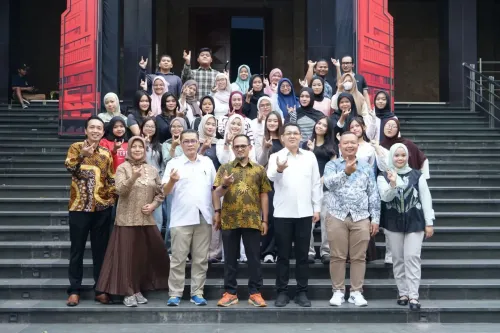
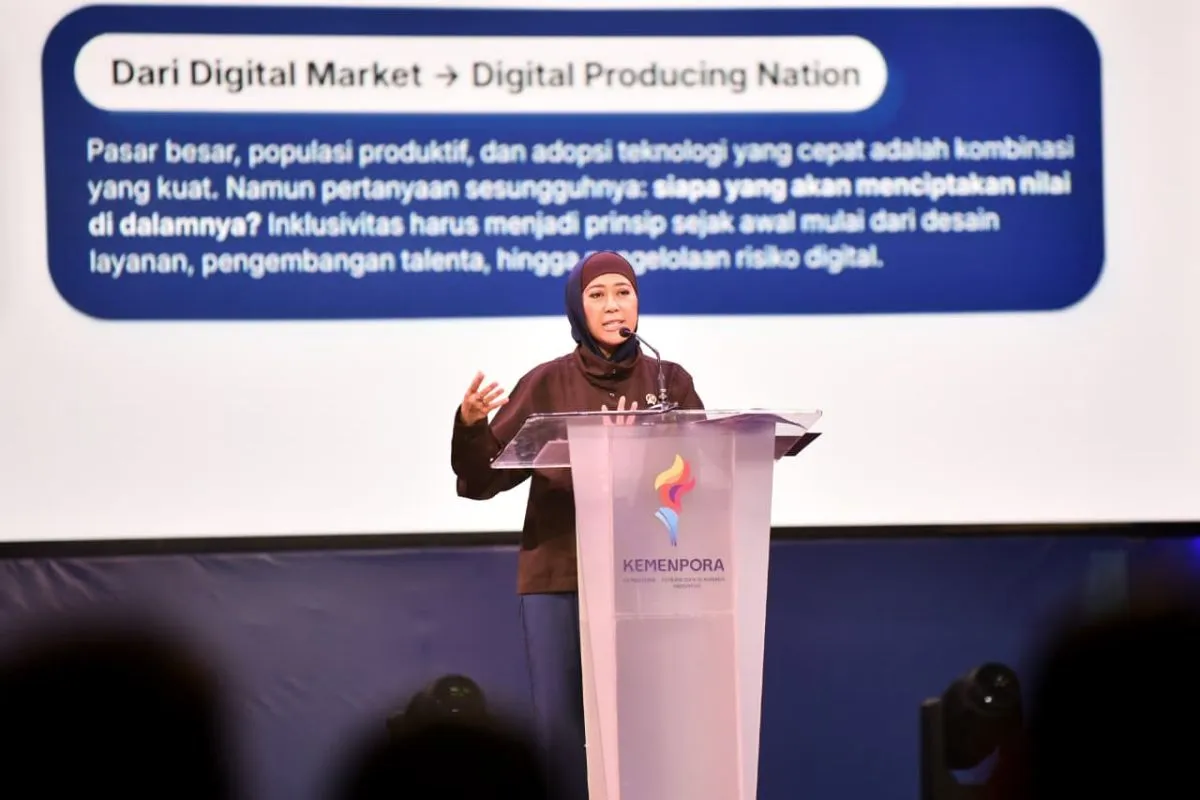
Addressing the Indonesia Youth Summit on October 30, 2026, Hafid said AI should not displace human judgment or values. "The final decision must remain in human hands. We must be the ones leading AI. There are things that cannot be replaced, including empathy and, most importantly, love for our country, because AI has no homeland," she said.
Hafid pointed to Indonesia's roughly 260 million internet users and its 30 percent share of ASEAN's digital economy. But she said broader use of technology must come with gains in productivity and innovation, as well as stronger protection for the public.
She warned against pursuing growth at the expense of children's safety or national unity, citing exposure to pornography and online gambling. "No matter how high economic growth may be, it is not worth pursuing if our humanitarian values are lost or overridden by these machines," she said.
AI rules nearing enactment
The government's proposed AI rules address both ethics and national development priorities. In an October 27, 2026, opinion article in Kompas, Hafid said inter-ministerial discussions had concluded on two draft presidential regulations: the Presidential Regulation on Artificial Intelligence Ethics and the Presidential Regulation on the National Artificial Intelligence Roadmap 2026–2029. Both were in the final stages before enactment, she wrote.
The ethics draft identifies nine ethical values and classifies AI risks, including a category of "unacceptable risks." Hafid cited mass facial-recognition tracking without a legal basis, discriminatory social scoring, manipulation of democratic processes, and practices that undermine child protection as examples.
The proposed roadmap contains about 43 programs in 10 strategic areas, supporting the government's priorities toward "Indonesia Gold 2045." Those areas cover economy and finance; energy, natural resources and the environment; health; food security; education; defense; housing; politics, law and security; bureaucratic reform; and arts, culture and the creative economy.
Hafid also described a sandboxing approach under development that would let AI applications be developed and tested against practical needs in priority sectors, including education, health, agriculture and public services. The approach would take data security and technological risks into account.
Preparing workers for AI
At the summit, Hafid presented projections showing that AI could displace 92 million jobs by 2030, while 170 million new jobs are expected to emerge. She urged young people to build relevant skills, particularly technical knowledge and the ability to work with AI.
About 62 percent of companies are looking for employees who can work with AI, she said, and 77 percent are investing in training workers to improve existing skills or acquire new ones.
Her Kompas article also described widespread AI use among younger Indonesians. A 2026 Deloitte survey found that 87 percent of Gen Z workers and 88 percent of millennials in Indonesia used AI at work, compared with a global average of 74 percent. The AI Ready ASEAN report, released in February 2026, found that 95.25 percent of the Indonesian students surveyed had used generative AI.
On training, Hafid wrote that more than 654,000 participants had received instruction through the Digital Talent Scholarship since 2020. The ElevAIte program and initiatives to develop women's talent each have a target of one million participants.
The government also launched the AI Talent Factory in 2025 to train specialists. Its 2026 cohort included 142 students from Brawijaya University, Gadjah Mada University and the Sepuluh Nopember Institute of Technology. Hafid said expansion to universities in other regions was planned, and graduates had been connected to a state-owned-enterprise AI Talent Pool since July 2026.
Research, startups and financing
Alongside workforce training, the government is encouraging stronger science and technology education, research, and cooperation among universities, startups and investors. Hafid said at the summit that progress also requires digital and computing infrastructure, sound governance, quality data, and access to financing and markets.
She reported that the Garuda Spark Innovation Hub program had established 10 hubs, reached 15,700 people, supported 80 startups and recorded Rp429.5 billion in direct investment.
Earlier, on October 13, Director General of Digital Ecosystem Edwin Hidayat Abdullah said the program aimed to raise Rp1 trillion in startup funding during 2026. At that point, about Rp400 billion had been secured.