A growing market for power and storage
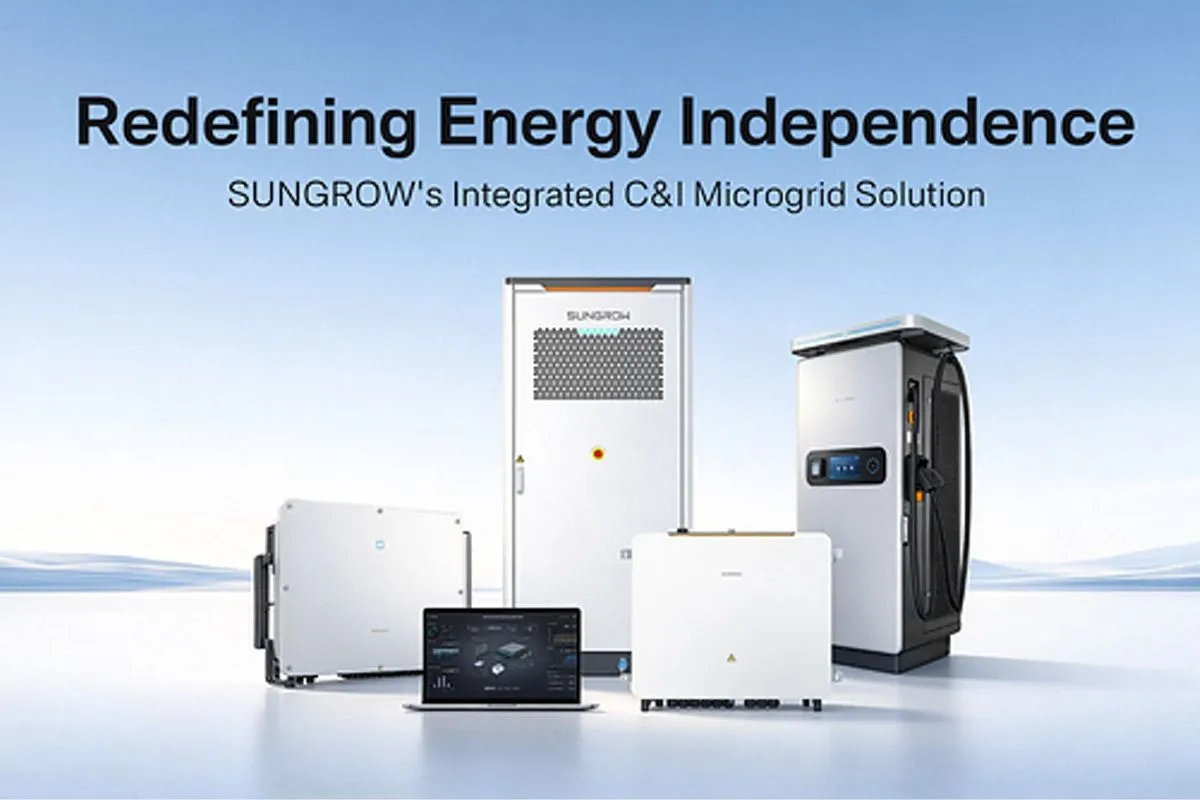
The November 2, 2026, announcement from Kuala Lumpur comes as manufacturers in Southeast Asia contend with higher electricity costs, supply interruptions and more complex energy needs. Sungrow, a supplier of PV inverters and energy storage systems, is offering the package as a way for businesses to obtain cheaper, more reliable and cleaner power.
The IEA's ASEAN Energy Security Review projects average annual electricity demand growth of about 5.4% across ASEAN member states from 2026 through 2030. Industry, cooling, data centers and broader electrification are expected to drive that increase, with Indonesia accounting for about 40% of additional demand and Viet Nam for 26%.
Coal still supplies nearly half of ASEAN's electricity, according to the IEA, although solar capacity reached nearly 38 GW in 2025, more than 15 times the level a decade earlier. The agency projects annual generation growth of around 26% for wind and 23% for solar through 2030, bringing their combined share of electricity generation from about 5% to 11%. It estimates that annual regional investment in grids and storage must increase from around $13 billion today to $30 billion by 2035 to keep up with demand and renewable deployment.
Sizing, dispatch and backup power
Sungrow's cost-saving approach starts with choosing the capacity of solar, storage and diesel generation. The company says its design process tests tens of thousands of configurations using 8,760-hour simulations and intelligent algorithms, aiming to avoid both excessive investment and systems too small for the job.
Once a system is operating, solar output and load forecasts refresh every five minutes. Sungrow says AI uses those forecasts alongside real-time electricity prices to adjust how solar, storage and diesel generation meet demand. It attributes a 12% improvement in overall economic benefits and a one- to two-year reduction in project payback periods to this dispatch approach. Open interfaces and compatibility with major electricity market protocols also allow businesses to participate in different market mechanisms and earn additional revenue, the company says.
For outages and other grid disturbances, Sungrow describes a five-layer protection framework that it calls an industry first. Its control strategies vary with the severity of the disturbance. The company says the system can tolerate three times overload for 10 seconds as well as severe voltage disturbances, protecting critical loads.
Sungrow also says the system can move from grid-connected to off-grid operation without interrupting loads and perform a whole-site black start in three minutes.
Deployment and operating support
Sungrow says its in-house technologies support projects from design through long-term operation. It offers a single system-design service, plug-and-play installation and one-click cloud connection. Coordinating solar, storage, EV charging and microgrid controls allows flexible dispatch, while cloud management provides unified oversight and automatic fault alerts.
The company's support network includes more than 520 service locations, round-the-clock technical assistance and global spare parts centers.
Huang Wanfeng, director of Sungrow's Smart Energy Products Department, said the solution has already been deployed at multiple locations in Southeast Asia. In Indonesia, the company says its microgrids help industrial parks address power supply problems while reducing their dependence on diesel generation.
Separately, Sungrow cites the Solomon Resort Hotel Microgrid in the Solomon Islands. It says the project supports reliable off-grid hotel operations, helps cut annual CO₂ emissions by around 1,000 metric tons and reduces fuel costs by an estimated $600,000 to $700,000.
Other microgrid launches and projects
Days before the Southeast Asia announcement, Sungrow unveiled its iNexGrid all-scenario microgrid solution at All Energy Australia 2026 in Melbourne on October 29. That offering uses a Five-Layer System Protection architecture and targets demanding applications in mining, AI data centers, commercial and industrial facilities, and island power supply.
Sungrow also points to a project in Western Australia's Northern Goldfields that it describes as one of Australia's largest microgrids. The installation combines 14.7 MW of solar PV with a 20.64 MWh PowerTitan storage system, using grid-forming technology and megawatt-level black-start capability. The company reports operating costs 70% below those of traditional diesel generation.
Its other cited microgrid projects include installations for Naipu Mining Machinery in Zambia and the HyIron Oshivela project in Namibia.
Storage accounts for half of sales
The launches follow a first half in which storage became Sungrow's largest sales contributor despite declining revenue. According to pv magazine, energy storage system revenue fell 13.2% to CNY 15.46 billion but reached 50% of total sales for the first time, overtaking PV inverters.
Sungrow's total first-half 2026 revenue declined 29.0% from a year earlier to CNY 30.91 billion, or about $4.34 billion. Net profit attributable to shareholders dropped 32.0% to CNY 5.26 billion. Overseas markets generated 73.4% of total revenue.