Oil price shock pushes global bond yields higher as currency traders stay cautious
Global currency trading remained subdued Thursday as investors assessed the implications of surging oil prices and rising bond yields across major economies, with the Japanese yen pausing its recent rally before anticipated central bank moves next week.
Brent crude futures stayed firmly above $100 per barrel after breaching that threshold Wednesday, driven by escalating attacks on shipping in the Middle East. The benchmark oil price has surged approximately 49 percent over the past year, rising from around $67 per barrel in September 2025. On September 8, US forces struck five Iranian oil tankers near Kharg Island and in the Gulf of Oman, marking the largest single-day tanker destruction since the conflict began. The attacks followed Iranian ballistic missile launches targeting American warships.
Energy supply concerns mount
The disruption has raised concerns about energy supplies from a region that accounts for roughly 20 percent of global oil flows. The Strait of Hormuz, through which approximately 20 million barrels flowed daily before hostilities intensified, has faced effective disruption since late February when the conflict escalated. Adding to supply worries, Iran-backed Houthi militants targeted Saudi Arabia's Jazan refinery, which processes 400,000 barrels per day.
Bond yields climb on inflation pressure
The renewed energy-driven inflation pressure sent benchmark 10-year Treasury yields to 4.818 percent on September 2, the highest level since November 2023. Yields have hovered near 4.8 percent throughout early September, with disappointment over a government buyback program for longer-dated bonds adding to upward pressure. HSBC recently raised its end-2026 forecast for the 10-year Treasury yield to 4.65 percent from 4.30 percent, citing structural factors including fiscal deficits and heavy Treasury issuance.
Currency markets hold steady
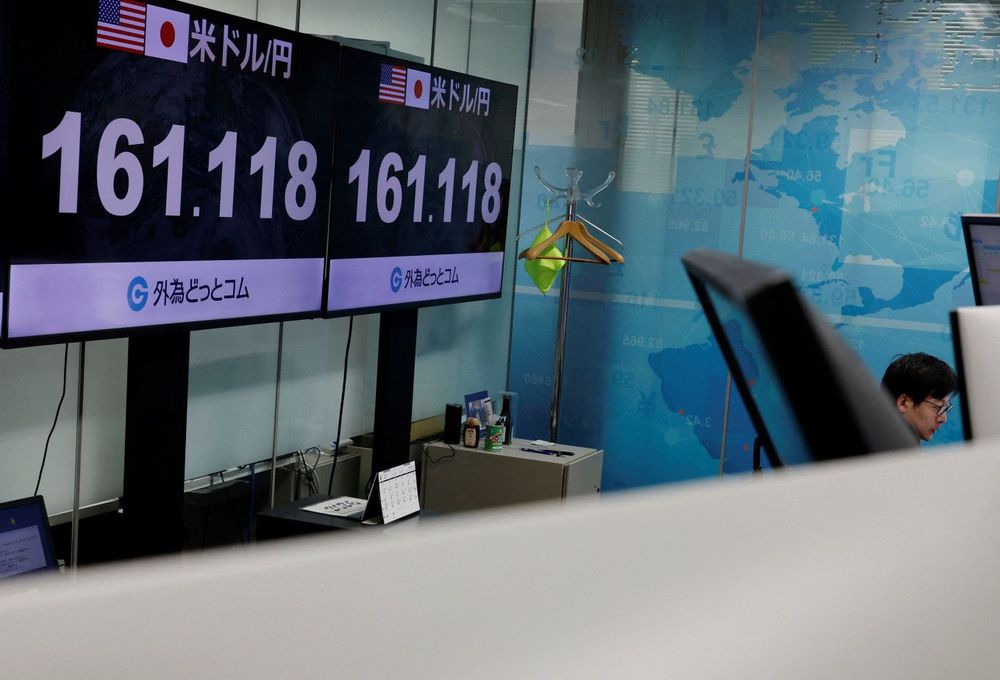
The dollar found marginal relief from rising yields, leaving the euro slightly weaker at $1.1633 and sterling at $1.3547. The Japanese yen, which had climbed to seven-month highs, paused its advance and traded at 153.70 per dollar. The dollar index, measuring the greenback against a basket of currencies, edged to 98.81, moving away from a three-week low.
Key US data awaited
Market attention now turns to upcoming US economic data releases. Producer price figures are due Thursday, followed by consumer price inflation data Friday—the final major indicators before the Federal Reserve's policy meeting scheduled for September 15-16. Markets are currently pricing approximately a 58 to 60 percent probability of a 25-basis-point rate hike at that meeting, following August employment data that showed 162,000 jobs added versus expectations of 56,000.
"I think the market feels like it's been put on notice around these numbers. We all feel like that's going to be reasonably consequential as to how quickly or not we might see an interest rate increase from the Federal Reserve."
Sally Auld, chief economist at National Australia Bank, noted the significance of the upcoming data releases.
The inflation readings will be closely scrutinized for clues on the Fed's next move amid persistent price pressures, according to Lloyd Chan, senior currency analyst at MUFG.
"While higher inflation may warrant tighter policy, additional rate hikes would also increase government borrowing costs at a time when fiscal deficits and debt servicing burdens are already under scrutiny."
Central bank decisions on the horizon
Central bank decisions loom across multiple regions. The European Central Bank is expected to raise interest rates Thursday for the second time this year and signal readiness for further tightening if inflation does not moderate. The Bank of Japan, which raised its policy rate to 1 percent in June—the highest level since 1995—is anticipated to increase rates to 1.25 percent on September 18, with another hike to 1.75 percent expected in the second quarter of 2027.
Beyond geopolitical tensions, fundamental supply factors are supporting elevated oil prices. Global oil inventories have decreased by an estimated 400 million barrels so far in 2026, according to the US Energy Information Administration, with further declines expected through year-end.
In Asia-Pacific trading, the New Zealand dollar strengthened 0.2 percent to $0.5848, while the Australian dollar held steady at $0.7215. China's offshore yuan remained flat at 6.705 per dollar, hovering near its strongest level in nearly four years, after data showed both producer and consumer price inflation rose amid higher energy costs.