Unusual market reactions follow rumored Bayan Resources acquisition by Haji Isam
A site visit to Kutai Kartanegara, East Kalimantan, on Aug. 15 by three prominent Indonesian businessmen set off a chain reaction in the stock market that revealed deeper structural patterns in Indonesia's capital markets. Tycoon Haji Isam, Bayan Resources owner Dato' Low Tuck Kwong, and defense entrepreneur Norman Joesoef toured the coal-rich region, sparking widespread speculation about a potential acquisition.
The market response was immediate and unusual. Bayan Resources shares surged 19.97 percent to Rp 17,125 per share by Aug. 18, while companies linked to Haji Isam moved in the same direction—a pattern that defies conventional acquisition dynamics. Both Bayan Resources and PT Jhonlin Agro Raya, Haji Isam's palm oil company, quickly denied knowledge of any deal, causing Bayan shares to plummet 14.9 percent to Rp 14,700 the following day.
Market movements defy acquisition norms
In typical mergers and acquisitions, the acquiring company's stock tends to decline as investors anticipate premium payments to target shareholders, while the target company's shares rise. This episode followed a different script. PT Dana Brata Luhur, Haji Isam's coal logistics firm, gained 21.09 percent to Rp 1,665 per share on Aug. 18. More remarkably, the rally extended beyond related industries: PT Fast Food Indonesia rose 6.69 percent, Jhonlin Agro Raya climbed 24.88 percent, and PT Abadi Nusantara Hijau Investama advanced 5.41 percent.
These companies share no operational synergies in fast food, palm oil, or nickel mining. Their common thread is association with Haji Isam, whose Jhonlin Group manages approximately 60 companies spanning coal mining, palm oil, biodiesel, logistics, aviation, and agribusiness. The businessman, who began his career as a truck driver before entering the coal business in 2003, has built a diversified empire that now produces approximately 400,000 tons of coal monthly through CV Johnlin Baratama.
Financial distress ruled out
The synchronized price movements cannot be attributed to expectations of financial rescue. Bayan Resources, founded in 1973 by Low Tuck Kwong as a construction company before pivoting to coal mining in 1988, maintains solid financial health. Moody's upgraded its corporate family rating from Ba2 to Ba1 on June 19, 2025, and the company reported stable performance through the first quarter of 2026. With 2024 production of 56.9 million tons—nearly 7 percent of Indonesia's total coal output of 832 million tons—Bayan Resources operates at significant scale.
Low Tuck Kwong, Indonesia's third-richest person with a net worth of $27 billion according to Forbes, recently restructured ownership. In August 2024, he transferred a stake worth $6.6 billion to his daughter Elaine as part of succession planning, reducing his ownership from 62.15 percent to 40.15 percent.
Concentrated ownership patterns emerge
The unusual market behavior points instead to Indonesia's highly concentrated ownership structures. Recent regulatory actions underscore this characteristic. In July 2026, the Indonesia Stock Exchange added 37 companies to its High Shareholding Concentration list, with Bayan Resources recording 98.5 percent ownership concentration as of June 30, 2026.
Academic research confirms that Indonesia's capital market features higher ownership concentration and family control compared to developed markets. Literature documents that firms with such structures often experience agency problems between controlling shareholders and minority shareholders.
These ownership patterns gained heightened scrutiny following an MSCI warning in January 2026 about a potential downgrade from emerging market to frontier market status. The warning triggered an $80 billion market selloff and intensified focus on concentrated ownership, low free float ratios, and questionable trading practices.
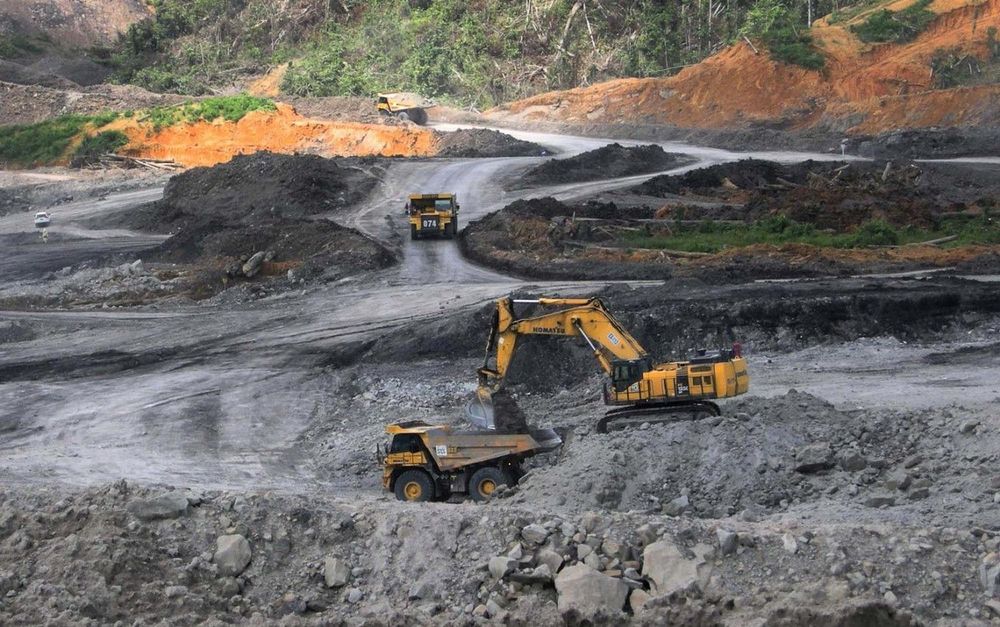
The site visit occurred in Kutai Kartanegara regency, part of East Kalimantan province, one of Indonesia's largest coal reserve sources. By 2011, the regency had issued 627 mining production operations licenses, representing 61 percent of the province's 1,304 mining licenses. The region's significance in Indonesia's coal industry explains why a potential transaction there would attract such intense market attention.
The episode illustrates how ownership concentration shapes market dynamics in Indonesia, where investor reactions reflect complex webs of corporate control rather than conventional acquisition economics. Whether or not the rumored deal materializes, the market's response has already exposed fundamental characteristics of Indonesia's evolving capital market structure.