Export gains announced at ADIPEC
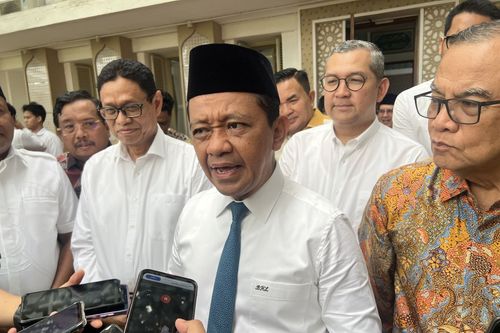
Speaking at the ADIPEC energy conference in Abu Dhabi, Energy Minister Suhail al-Mazrouei said UAE oil exports had surpassed levels seen before the Iran war on several occasions, Reuters reported. He gave no figures for those increases. He also pledged to protect energy infrastructure and invest in additional export routes.
The announcement comes as the war, which began in late February between the United States, Israel and Iran, continues to disrupt global energy supplies. Oil prices have reached multiyear highs, although they fell on Monday, November 2, after Iranian and Qatari officials held talks that raised hopes for possible peace negotiations. That decline also came a day after OPEC+ chose to keep its production targets unchanged.
Analysts say supplies remain tight, especially for some refined petroleum products. Governments will also need to replenish the strategic reserves they have drawn down.
ADIPEC's 42nd edition runs November 2-5. Organizers describe it as the largest yet, with a record 2,260 exhibiting companies across 16 halls and 30 country pavilions. More than 1,800 speakers are participating, and attendance is expected to exceed 239,000 people from more than 170 countries.
Higher estimates, disputed figures
Secondary-source data compiled by OPEC put UAE crude production at 3.917 million barrels per day in September, 15% above February's level. That was also 470,000 bpd more than the May OPEC+ quota the country would have faced had it remained in OPEC and the broader OPEC+ group. Among other regional OPEC+ members, all except Oman were producing below their quotas.
The IEA's report last month estimated September oil output at 4.4 million bpd. Its broader measure, which includes crude, condensates and other liquid products, reached a record 5.3 million bpd.
ADNOC rejected the data in Reuters' report. The news agency had asked the company about the OPEC and IEA estimates, export figures indicating that UAE shipments surpassed Saudi Arabia's in August, and suggestions that leaving OPEC had benefited the UAE.
"We have informed Reuters that the data in this story is wrong and the report is inaccurate," an ADNOC spokesperson said. The company neither identified the figures or passages it disputed nor supplied replacement numbers.
Reuters received no response to its requests for comment from OPEC or Saudi authorities. Saudi Arabia is the world's largest oil exporter and a leading OPEC member.
From wartime cuts to recovery
Before the conflict began in late February 2026, UAE crude production stood at about 3.4 million bpd, roughly 30% below its capacity of about 4.85 million bpd. The effective closure of the Strait of Hormuz was followed by a sharp drop: March output was approximately 1.9 million bpd, nearly 44% below the pre-war level.
By June, output had recovered to more than 3.8 million bpd, Reuters reported on July 6. That was the highest level since April 2020, exceeded pre-war production and put the UAE ahead of other Gulf producers in restoring supply.
Richard Bronze of Energy Aspects said production had stayed above pre-war levels since June. He attributed the increase more to the UAE's willingness and ability to take risks to restore exports faster than its regional peers than to the OPEC departure alone.
A separate assessment cited in July highlighted the conflict's constraints. Wood Mackenzie estimated that nearly 2 million bpd of offshore UAE production was shut in, limiting the scope to raise output in 2026 regardless of OPEC membership. Its assessment allowed for up to six months after the Strait fully reopened for production to return to pre-conflict levels.
The quota dispute behind the departure
The UAE announced on April 28, 2026, that it would leave OPEC, with the withdrawal taking effect on May 1 and also ending its participation in OPEC+. The decision ended 59 years of OPEC membership. According to law firm Foley & Lardner, the UAE did not consult Saudi Arabia or any other member before the announcement; the firm describes the exit as the most significant defection in the cartel's 66-year history.
Disagreements over production limits had surfaced years earlier. In 2021, the UAE held up an OPEC+ production agreement for weeks as it sought a higher baseline quota. The standoff brought the group close to a split before members reached a compromise.
The UAE's contribution was substantial. The U.S. Energy Information Administration estimates that OPEC, including the UAE, supplied 28.0 million bpd of crude in 2025, or 35% of global crude production. Excluding the UAE would have reduced that share to 31%. For OPEC+, the corresponding shares were about 46% with the UAE and 42% without it.
Two sources familiar with UAE oil policy told Reuters that freedom from OPEC's output restrictions had left the country well placed to meet demand. Western energy analysts also said it had more flexibility to pursue an aggressive export recovery. Rystad Energy analyst Rahul Choudhary, comparing the UAE's resilience during the war with that of other regional countries, said: "The UAE has come out ahead, and leaving OPEC has clearly helped,"
Export alternatives and capacity plans
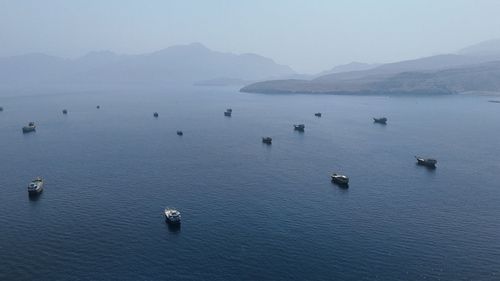
Since the Strait of Hormuz closure, the UAE has redirected crude through the Abu Dhabi Crude Oil Pipeline to Fujairah, a port on the Gulf of Oman outside the Strait. Abu Dhabi has also quickly increased ship-to-ship transfers, allowing it to move crude without depending entirely on the Hormuz route.
The pipeline can carry a maximum of 1.8 million bpd, according to the EIA. The UAE plans to double that capacity by 2027. Separately, following a $150 billion investment program, ADNOC is targeting oil production capacity of 5 million bpd by 2027.