Putting domestic policy behind climate promises
Indonesia's Environment Ministry wants the annual United Nations climate summit to emphasize fulfilling commitments already made. For Muhammad Zulfikar Rakhmat and Bhima Yudhistira Adhinegara, that position puts the country's own land, energy and forest-finance policies in focus.
Rakhmat, director of the China-Indonesia Desk at CELIOS, and Adhinegara, the organization's executive director, argue that those policies currently work at cross-purposes. President Prabowo Subianto is targeting 8% annual economic growth, while the forestry minister has identified the green economy, including forest carbon-credit sales, as a potential growth engine.
Carbon credits allow companies to compensate for emissions by financing reductions elsewhere. The analysts argue that buyers will pay higher prices for forest credits only when they believe the underlying forests are protected. Their proposed agenda connects that credibility to plantation sourcing, fire prevention, community land rights and access to revenue.
B50 raises demand for palm oil and land
Indonesia's B50 requirement, introduced in July, calls for diesel to contain 50% palm-oil biodiesel. The analysts acknowledge its benefit in reducing diesel imports but warn that supplying the palm oil creates additional demand for land.
The USDA Foreign Agricultural Service reports that the July 2026 move from B40 to B50 included a three-month transition. Indonesia also raised its biodiesel allocation for 2026 to 17.6 billion liters from 15.6 billion liters. The USDA's Jakarta post forecasts consumption of 17.5 billion liters this year, up 17% from 2025.
The scale of the land requirement remains central to the analysts' concerns. They cite a University of Maryland study putting the additional plantation area potentially needed for B50 at 4.85 million to 8.55 million hectares. Indonesia also plans to open 600,000 hectares for palm oil cultivation this year, they write.
Agriculture Ministry figures reported in July put B50's annual crude palm oil requirement at 23.3 million metric tons, an increase of 8.5 million tons over B40. The government's estimate calls for about 5 million additional hectares of oil palm plantations, with annual production capacity of roughly 20 million tons of crude palm oil.
The ministry is assessing confiscated land as one possible source of expanded production. State-owned Agrinas Palma Nusantara has assumed control of 4.11 million hectares seized by the Forest Area Enforcement Task Force from illegal plantation and mining operations on state-owned land. Of that area, about 730,000 hectares have been confirmed as oil palm plantations.
The analysts warn that converting forests or peatlands could turn a policy intended to reduce pollution into a source of additional emissions. Peat is waterlogged soil that, after drainage, can sustain fires for weeks. They propose barring biodiesel producers from sourcing palm oil from forests, peatlands or land claimed by communities, and requiring plantation-level traceability for every metric ton.
Biodiesel subsidies also face financial pressure. According to the USDA, the palm oil export levy fund, BPDP, roughly halved during 2025 as subsidy spending exceeded levy income. Its balance declined from IDR 36 trillion, about $2.3 billion, at the end of 2024 to IDR 18.5 trillion, about $1.1 billion, a year later. The government increased palm oil export levy tariffs in March 2026 to bolster the fund.
Fire prevention through village payments
The analysts' second proposal would reward villages that remain fire-free for the entire dry season. Satellite monitoring would verify their performance, and annual payments would go directly into village bank accounts.
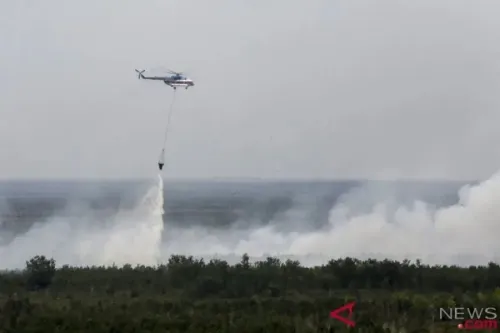
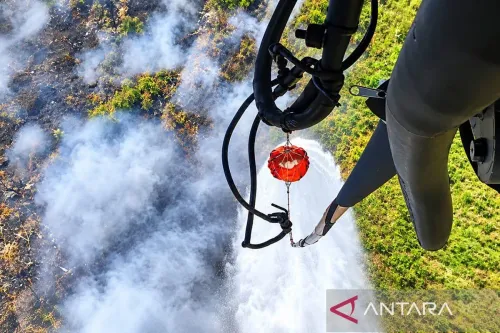
They frame fire prevention as a land-use and energy-policy responsibility, not solely an emergency-response task, because plantation development can involve clearing land or draining peat. On Oct. 3, government satellites detected more than 20,000 hotspots. These unusually warm areas can signal fires, though a hotspot is not itself confirmation of one.
Al Jazeera reported in October that Indonesia's 2026 fire season was its worst in more than a decade. At least 200,000 hectares had burned across six provinces, and the Health Ministry had recorded more than 170,000 respiratory infections.
The effects extended into Malaysia. The Jakarta Globe authors describe a two-day school closure in Johor because of the haze. Separately, Al Jazeera reported that closures ordered on Oct. 9 affected roughly two million students across Kuala Lumpur, the administrative capital Putrajaya, and the states of Johor, Malacca, Negeri Sembilan, Pahang and Selangor.
Pairing forest rights with a share of revenue
The third part of the proposed agenda would connect recognition of community forest rights to a fair share of carbon-credit proceeds and other forest-related payments. The analysts want at least 20% of all forest and carbon finance in Indonesia reserved for communities.
Their argument is that secure tenure gives people a reason to protect land that supports both their homes and livelihoods. They cite the forestry minister's statement last year that recognizing customary land rights could lower deforestation by 30% to 50%.
Customary forests are areas managed by Indigenous communities under traditions passed down through generations. Indonesia has formally recognized about 369,000 hectares belonging to 174 communities and aims to reach 1.4 million hectares by 2029. The analysts consider that target small relative to biodiesel's potential land needs and argue that tenure recognition must be accompanied by income for villages.
Access to funding remains limited. The International Institute for Environment and Development found that local initiatives received less than 10% of the money distributed by international climate funds. Such finance is intended to help developing countries reduce emissions and adapt to warming.
A forest fund with payments still years away
The Tropical Forest Forever Facility offers a model for the community revenue share the analysts advocate. Launched at COP30 in Belém in 2025, it would pay eligible tropical forest countries up to $4 annually for each hectare of standing forest, with at least 20% going to Indigenous peoples and local communities.
The facility seeks to mobilize $125 billion through $25 billion in public loans and $100 billion in private bonds. But commitments remain short of its nearer-term fundraising goal. Dialogue Earth reported that, by late October 2026, eight countries had pledged a combined $7.8 billion toward a $10 billion target for year-end. Norway's $3 billion commitment depends on that target being reached.
The facility is expected to begin operating in 2027, with initial payments not anticipated before 2028. Its community-allocation rule is therefore a model for future funding, not an indication that money is already reaching villages.
The CELIOS analysts argue that adopting their domestic proposals would strengthen Indonesia's case for asking wealthy countries to send forest finance directly to community funds, rather than routing it through multiple agencies and consultants.
Those issues feature in COP31's schedule. According to the official presidency program, the World Leaders Climate Action Summit will take place Nov. 11-12 within the Nov. 9-20 conference. A Finance and Trade thematic day follows on Nov. 13, while the Nov. 17 program, titled "Ocean, Seas, Nature and Land Use — Rio Synergy," includes forest and ecosystem restoration.