Signing and ratification timetable
The two sides are completing the English-language text of the Indonesia-European Union Comprehensive Economic Partnership Agreement (IEU-CEPA). Indonesia's proposed schedule calls for a signing by the end of this week, followed by submission to the European Parliament by early November. The government expects domestic ratification to proceed alongside that process and is targeting entry into force in early 2027.
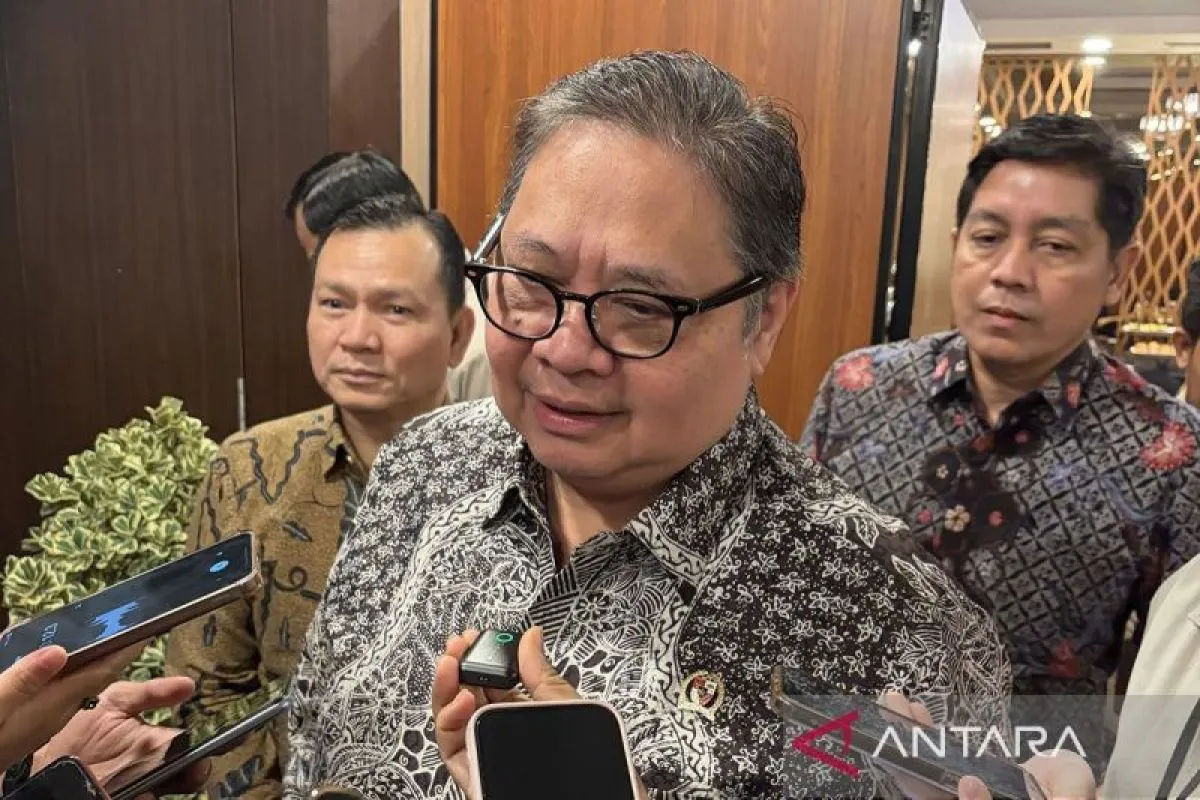
The deadline reflects Indonesia's scheduled departure from the EU's Generalised Scheme of Preferences (GSP). Speaking in Jakarta on Wednesday, October 28, Airlangga said Indonesia's move to upper-middle-income status meant it would no longer qualify for the benefits.
"Consequently, we are no longer entitled to receive GSP benefits. Therefore, the solution is to ensure the IEU-CEPA is signed as soon as possible," he said.
A report by SEO Amsterdam Economics for the Dutch Ministry of Foreign Affairs explains that Indonesia's World Bank classification as an upper-middle-income country for three consecutive years, from 2023 through 2025, triggered the scheduled loss of GSP status. Without the CEPA, exports would face the EU's standard most-favored-nation (MFN) tariffs rather than preferential rates starting January 1, potentially weakening their price competitiveness.
According to the European Commission, about 30 percent of EU imports from Indonesia currently receive lower duties through the GSP. The EU is Indonesia's fourth-largest trading partner and accounts for 6 percent of its total trade. Goods trade between the two reached €28.9 billion in 2025: the EU exported €10.2 billion to Indonesia and imported €18.7 billion.
Market access and product coverage
The IEU-CEPA is expected to liberalize about 98 percent of tariff lines, representing 99.5 percent of the value of bilateral imports. Tariff removal on eligible goods is expected to expand opportunities for Indonesian palm oil derivatives, textiles, footwear and rubber products.
The EU offers a market of roughly 450 million consumers and an economy worth about $22 trillion. Indonesia, in turn, is expected to lower or remove duties on major European exports such as wood pulp, aircraft components, railway equipment and fertilizers.
Not all products will become duty-free. FreshPlaza reports that rice, sugar and fresh bananas will remain subject to tariffs, while tariff-rate quotas will govern access to the EU market for other sensitive goods. The agreement also protects 221 EU geographical indications and 72 Indonesian ones.
Negotiations and accompanying commitments
The signing push follows a negotiating process that began on July 18, 2016. The European Parliament's Legislative Train Schedule records 19 rounds of talks, with the last held in July 2024. European Commission President Ursula von der Leyen and Indonesian President Prabowo Subianto reached a political agreement on July 13, 2025; negotiations on the CEPA and a separate Investment Protection Agreement concluded on September 23, 2025.
The trade pact includes climate, environmental and workers' rights commitments and makes the Paris Agreement an essential element. It also contains a dedicated palm oil protocol, addressing what the European Parliament's Legislative Train Schedule describes as one of the negotiations' most contentious subjects. For the first time, the Trade and Sustainable Growth and Development chapter is compulsory.
The accompanying Investment Protection Agreement does not include investor-state dispute settlement (ISDS) provisions. Instead, the parties agreed to voluntary mediation for disputes between investors and states, along with a state-to-state dispute settlement mechanism. They will continue negotiations with the aim of agreeing on ISDS within three years.
Projected economic effects
A June 2026 European Commission assessment projects gains for both economies by 2042, when all CEPA tariff cuts would be fully phased in. It estimates that Indonesia's GDP would be €26.8 billion higher than otherwise, equivalent to 0.13 percent of real GDP, while the EU's would be €16.1 billion higher, or about 0.01 percent.
That assessment projects a roughly 40 percent increase in EU exports to Indonesia, worth €6.4 billion, and an approximately 14 percent increase in Indonesian exports to the EU, worth €2.6 billion. The Commission separately estimates annual duty savings of about €600 million ($647 million) for EU exporters.
A separate study by SEO Amsterdam Economics, commissioned by the Dutch Ministry of Foreign Affairs and published September 30, 2026, estimates that the CEPA would increase Indonesia's real GDP by 0.33 percent under its central scenario. It projects increases of 12.6 percent in Indonesia's total exports and 15.7 percent in imports, with smaller real GDP gains of 0.006 percent for the Netherlands and 0.005 percent for the EU.