A call for investment and jobs
Prabowo met privately with Kadin on Oct. 31 at his Hambalang residence in Bogor, West Java. About 250 chamber members from across Indonesia attended, alongside roughly 400 participants in Batch 1 of the President's Program for Future Indonesian Leaders (P3MDI), according to the Presidential Secretariat's Instagram account cited by Indonesian media.
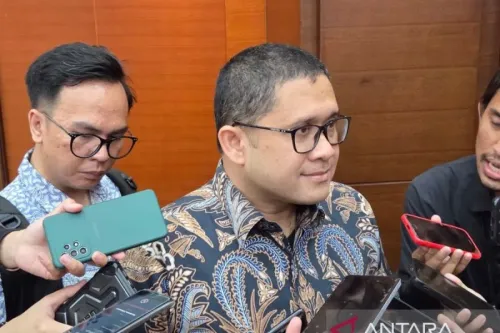
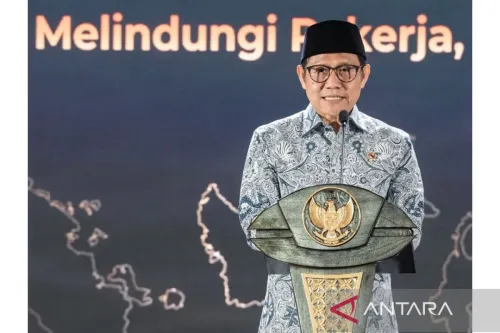
In a statement after the Saturday meeting, Bambang said: "The President wants Kadin to not only be an organization for businesspeople but also a strategic partner for the nation."
Bambang, a Kadin official and former speaker of the People's Consultative Assembly, urged businesses to act promptly on the request through productive investment, broader export markets and job creation that supports economic growth.
He also called on businesses to put competition and differing interests within the wider national interest, saying the government needed their support. "When the world faces wars, supply chain disruptions, climate change and financial uncertainty, Indonesia must not just be a market. We have to be a producer, innovator, raw material processor and a main actor in the global market," he said.
Kadin reports domestic investment
At Hambalang, Kadin chairman Anindya Bakrie told Prabowo that domestic direct investment, known as PMDN, had totaled nearly Rp 2,000 trillion in the administration's first two years. Anindya described the figure as a sign of growing business confidence in Indonesia's economy.
The chamber also conveyed businesses' commitment to developing electric vehicles, renewable energy and data centers, identifying those industries as having potential to use locally produced components.
Investment outside Java
Bambang pointed to the share of investment reaching regions outside Java as an opportunity for Kadin to attract more capital, build industries around local strengths and generate jobs, helping distribute economic growth more evenly.
His statement put realized investment in the first half of 2026 at Rp 1,010.6 trillion, employing 1,448,862 workers. Regions outside Java received Rp 507.8 trillion, or 50.2 percent, of that investment. He also cited economic growth of 5.45 percent for the first half and 5.29 percent year-over-year in the second quarter, with September inflation at 3.28 percent.
Figures presented at Kadin's 2026 National Leadership Meeting showed a sharp regional difference in investment growth. According to Kadin's data, investment in Java rose 14 percent year-over-year, from Rp 225.6 trillion in the third quarter of 2025 to Rp 265.8 trillion in the third quarter of 2026. Outside Java, the reported increase was 2.2 percent, from Rp 257.1 trillion to Rp 271.6 trillion over the same period.
Downstream processing, or hilirisasi, has a substantial presence outside Java. Ministry of Investment and Downstream Industry data put about 78 percent of downstream investment outside the island, concentrated in Central Sulawesi and North Maluku. The sector's share of total investment increased from about 25 percent in 2024 to roughly 31 percent across 2026, reaching 34 percent in the third quarter alone.
National totals and the five-year target
Two days before the Hambalang gathering, Minister of Investment and Downstreaming Rosan Roeslani, who is also Danantara's CEO, presented national investment figures at the opening of Kadin's National Leadership Meeting (Rapimnas). The event took place at Hotel Borobudur in Jakarta on Thursday, Oct. 29, 2026.
The ministry's data showed Rp 3,923.2 trillion in cumulative realized investment from the fourth quarter of 2024 through the third quarter of 2026, covering Prabowo's first two years in office. That investment created 5.48 million jobs.
For January through September 2026, realized investment totaled Rp 1,539.2 trillion. That represented 75.4 percent of the full-year target of Rp 2,041.3 trillion.
Rosan set out a five-year investment target of Rp 13,032.8 trillion, or about US$820 billion, for the current administration, compared with roughly Rp 9,100 trillion realized during the full 2014–2024 decade.