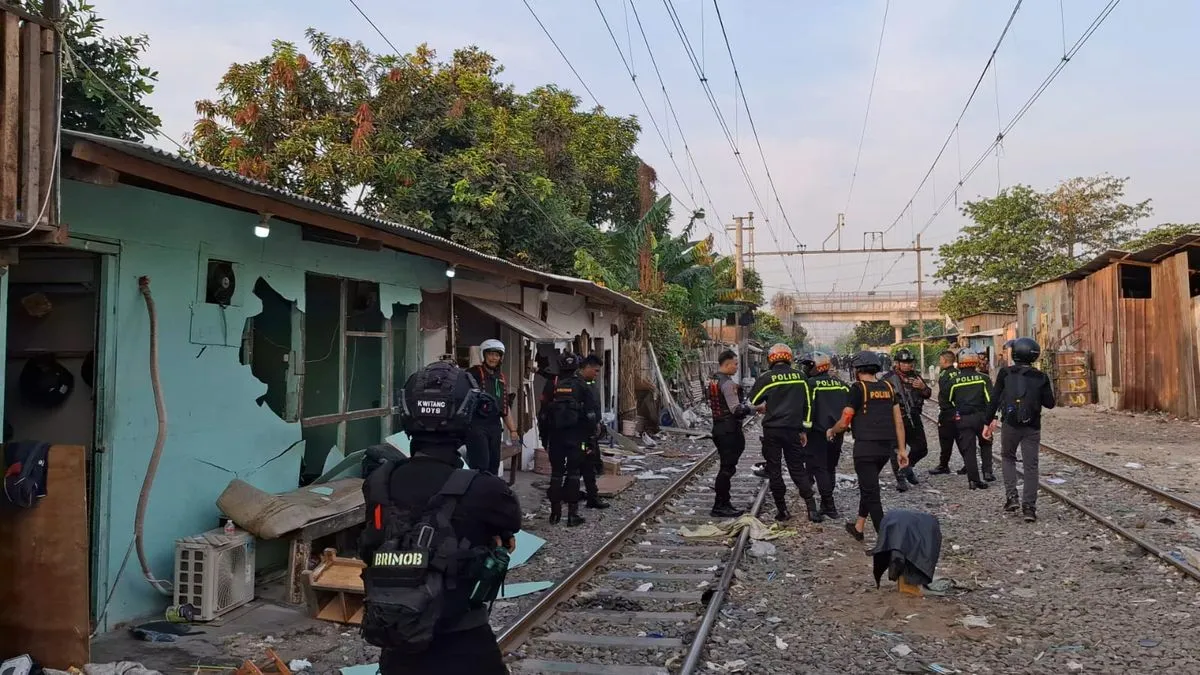
Raids in Jakarta and beyond
The November 1, 2026, operation targeted Kampung Bahari, where suspects sold drugs from illegal stalls beside a railway track. According to ANTARA News, Jakarta Metropolitan Police seized hundreds of grams of methamphetamine and marijuana, thousands of ecstasy pills, an ecstasy press machine, bongs, bladed weapons, firearms and cash suspected to be drug proceeds. Police said they would tear down the stalls and continue pursuing the dealers.
The campaign began in West Jakarta's Kampung Boncos and Kampung Ambon on October 9, with 24 arrests, Kompas.com reported. Operations in nine villages in North Sumatra resulted in 36 arrests and the seizure of 102 grams of methamphetamine.
At a nightlife venue in Riau, police apprehended 68 people, 63 of whom tested positive for drugs. In the Borta area of Tallo District, Makassar, police took 104 people into custody, including three suspected traffickers. Other raids took place in Palu, Palembang and Palangka Raya.
The operations followed Suyudi's appointment as national police chief. President Prabowo Subianto inaugurated him at the State Palace in Jakarta on October 1, 2026, succeeding General Listyo Sigit Prabowo, according to the Cabinet Secretariat of the Republic of Indonesia.
Suyudi had led the National Narcotics Agency (BNN) since August 25, 2025. During that tenure, he directed a December 2025 operation that intercepted an international trafficking ring and seized two metric tons of methamphetamine valued at Rp 5 trillion, according to the Indonesian National Police.
Rising prevalence despite enforcement
The Kompas.com commentary supports the raids but questions whether arrest totals reveal how much damage police have done to the organizations behind the trade. It describes a persistent gap between visible enforcement results and the continued availability of drugs in affected neighborhoods.
The commentary characterizes drug crime as having reached emergency-warning status in 2025, threatening younger generations, harming families and serving as a major source of street crime. It argues that the urgency of the problem makes it especially important to look beyond the number of suspects detained.
National survey findings provide context for that concern. BNN's 2023-2025 drug-prevalence survey, conducted with BRIN and BPS, covered people ages 15-64 in 34 provinces and 134 cities and regencies. It estimated drug-abuse prevalence at 2.11 percent, or about 4.15 million people, compared with 1.73 percent in 2023.
Lead BRIN researcher Mashuri Imron described the estimate as an "under value" and said actual use was believed to be far higher. The commentary interprets the increase, despite thousands of enforcement operations, as evidence that the approach has not yet addressed the problem's root causes.
Following the chain of control
For the commentary, the central question is why repeated arrests have not dismantled traffickers' power. An active drug market can keep recruiting replacements even as police detain its street-level participants. High arrest figures therefore do not necessarily establish that a syndicate is losing strength.
The commentary draws on Donald R. Cressey's 1969 organized-crime study, Theft of the Nation, to explain how relationships within a criminal organization can sustain it. It describes the drug trade as an industry supported by capital, assigned roles and arrangements for protection, rather than a collection of isolated offenders.
Those roles extend from investors supplying funds and controllers directing trafficking routes to distributors, couriers and money launderers concealing the proceeds. In that structure, the commentary argues, couriers are readily replaced; arresting them can leave the traffickers and financiers who sustain the operation untouched.
While recognizing the work of officers conducting raids, the commentary calls for investigators to use those operations to trace authority and financing through the syndicates. Its proposed priority is to reach the people controlling the business, rather than allow each raid to end with the detention of replaceable operatives.