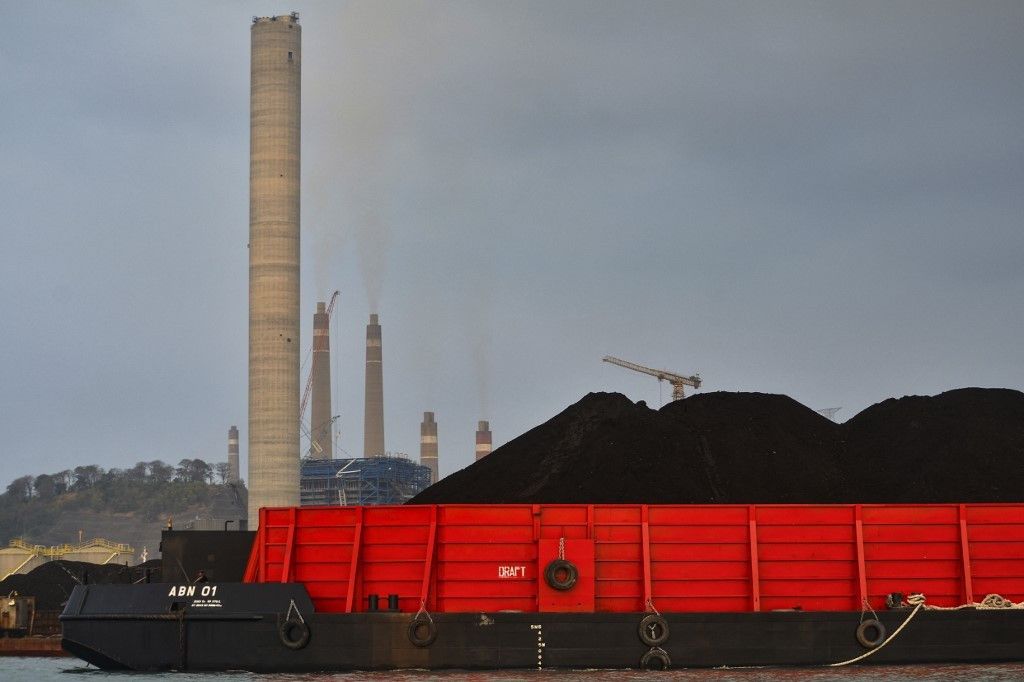
Shrinking river levels in Kalimantan are disrupting Indonesian coal shipments, as prolonged dry weather worsened by El Niño limits how much coal barges can carry. The Indonesian Coal Mining Association (APBI) says drought and falling water levels have affected barging in several parts of the island.
Commodity price intelligence provider Argus revealed in August that parts of the upper reaches of the Barito River had become completely unnavigable. Some mining companies in the area had already declared force majeure on shipments.
Barge capacity cut
APBI executive director Gita Maharyani said lower water was restricting how heavily barges could be loaded.
"In several river basins, falling water levels can limit barge draft, leaving barges unable to operate at maximum capacity," she said, as reported by CNBC Indonesia on Monday.
Argus reported on Aug. 26 that producers on the Barito had limited barge loading to 7,500 tonnes, and to as little as 3,000 to 4,000 tonnes in some places. Sxcoal, as relayed by Bloomberg Technoz, said the river's depth had fallen from the usual 8 to 18 meters to just 3 to 4 meters, forcing barges to cut their loads by roughly half.
A local reading points the same way. On Aug. 18, a North Barito transport official said the water level at Muara Teweh port was below 1 meter, against a normal range of 5 to 11.5 meters. That figure is a single-point reading at one port on one date.
Scale of the disruption
The Indonesian Employers Association (Apindo) has estimated that the shrinking water, specifically in the Barito River in Central Kalimantan, could disrupt around 3.9 million tonnes of coal barging operations in a month.
For context, Argus, citing market participants, put Central Kalimantan's 2025 coal output at about 46.78 million tonnes, of which 29.54 million tonnes were exported and the rest sold domestically. Argus noted that the volume affected by low water is hard to quantify.
The problem is not confined to the Barito. Platts reported that low water on parts of both the Barito and Mahakam river systems had forced suppliers to cut barge loads, change schedules and, in some places, halt movements. It noted that much of Indonesia's inland coal production depends on river transport before reaching coastal loading points.
Stockpiles, exports and prices
Gita said the situation could potentially increase stockpiles at mining sites and ports. The association nonetheless believed that coal price fluctuations would still be shaped by several factors, particularly supply and demand dynamics in the global market.
"Logistics conditions in Indonesia may be one of the factors influencing market sentiment, but they are not the sole factor driving price increases," Gita noted.
The effect is already visible in trade data. Indonesia's seaborne coal exports in August were 36.10 million tonnes, down 23.34 percent year on year. It was the third consecutive monthly decline and the lowest August level in five years. Sxcoal pointed to shallow Kalimantan rivers as a factor, but also cited uncertainty over this year's production quota, so the drop cannot be attributed to river conditions alone.
Regulatory approvals have also constrained supply. In September, three Bayan Resources subsidiaries notified customers of force majeure because amendments to their 2026 production plans, known as RKABs, had not been approved. Approval for an additional 15 to 20 million tonnes of production followed about a week later. That force majeure stems from permits rather than water levels.
Wider local impact
The low water has also affected communities along the river. In North Barito regency, residents said river transport had stopped, including the ferry service for vehicles. According to a resident quoted by Kompas.com, traders had to reroute along unpaved mining and logging roads, adding about three hours to journeys, and the price of subsidized LPG rose to nearly four times its normal level.
The Barito has run low before. Tempo has reported that hundreds of coal barges and ships were stranded on sandbars along the river, especially around Bukau in Central Kalimantan, for almost four months before rain restored depth in November.
Outlook
The weather agency BMKG has forecast that the strong El Niño will persist into early 2027. At a briefing on Sept. 22, it said the rainy season would begin gradually between November and December, with about 61 percent of Indonesia's land area entering it later than usual. These are forecasts rather than certainties, but they indicate how long river-level constraints on coal logistics could continue.