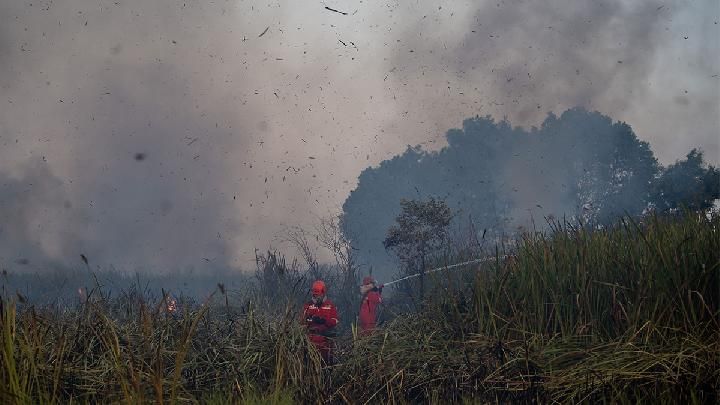
Indonesia's BNPB Spends 2.4 Tons of Dry Ice to Tackle Sumatra Haze
Indonesia's National Disaster Mitigation Agency deployed 2.4 tons of dry ice over South Sumatra on October 15-16 in an emergency atmospheric operation to combat severe wildfire haze that had disrupted aviation and created hazardous air quality conditions in the region.
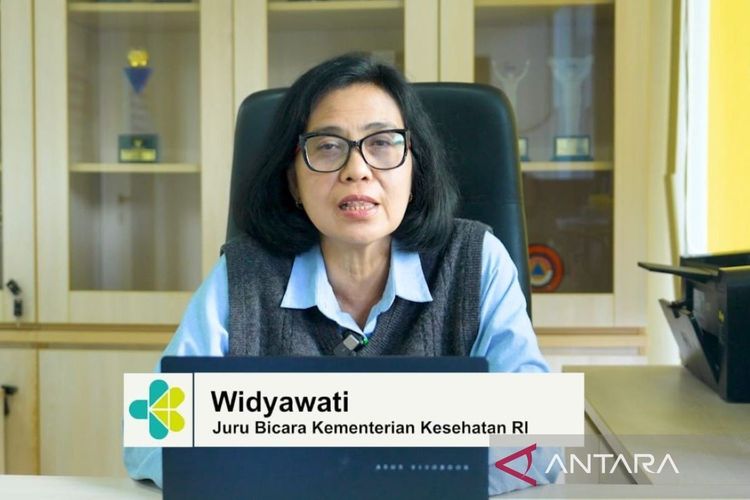
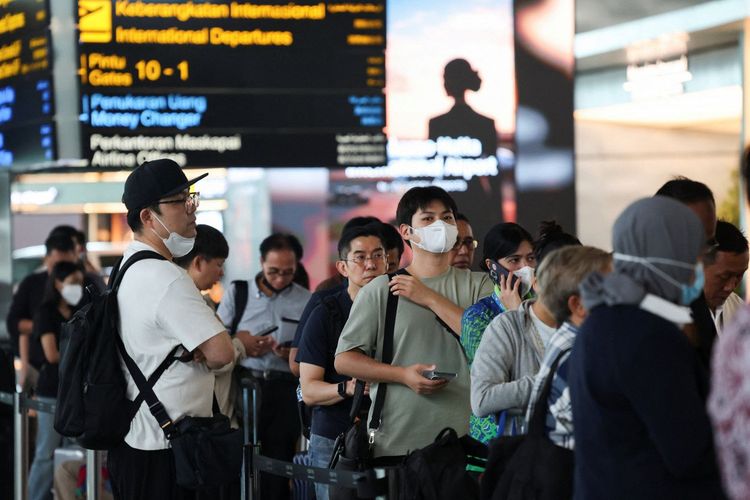
Berton Panjaitan, acting head of BNPB's Disaster Data, Information and Communication Center, confirmed Saturday that the operation responded to flight disruptions at Palembang's Sultan Mahmud Badaruddin II Airport and serious health impacts from dense smoke. The airport had experienced 30 flight disruptions on October 8 when visibility fell below 600 meters, while PM2.5 concentrations reached 903.6 micrograms per cubic meter on October 5—the highest level recorded at the airport in 2026 and classified as very hazardous.
BNPB aircraft flew three sorties totaling seven hours and three minutes, departing from Raden Inten II Airport in Bandar Lampung, Lampung Province. The morning sortie distributed 800 kilograms of dry ice around the Palembang airport area.
According to data from the Meteorology, Climatology and Geophysics Agency, visibility improved from 1,000 meters at 1 p.m. to between 1,500 and 2,000 meters several hours later. After the second and third sorties, visibility stabilized at 2,800 meters, then increased to 3,000 meters and held until 8:30 p.m.
How the Technology Works
The dry ice seeding technique represents a departure from conventional weather modification methods Indonesia has deployed extensively this year. Unlike traditional cloud seeding using salt or silver iodide to induce rainfall from existing cloud formations, the dry ice approach targets smoke layers directly and does not require the presence of rain clouds.
Panjaitan explained that dry ice seeding disrupts the atmospheric inversion layer, where warmer air sits above cooler air, weakening its stability. Breaking up that layer helps disperse smoke trapped near the surface and improves visibility. The technology dates to 1946, when American researcher Vincent Schaefer discovered that solid carbon dioxide could induce ice formation in clouds.
Authorities turned to the alternative approach after more than 70 conventional weather-modification operations in South Sumatra alone failed to adequately clear the persistent smoke. Indonesia has significantly intensified weather modification efforts overall, conducting 252 cloud-seeding operations between 2021 and August 2026, compared with only 85 in the preceding decade.
Wider Crisis Context
South Sumatra is one of six priority provinces for forest and land fire suppression operations in Indonesia, alongside Riau, Jambi, West Kalimantan, Central Kalimantan, and South Kalimantan. The 2026 wildfire season has been driven by a very strong El Niño phenomenon, which created extreme drought conditions on top of annual forest clearing activities that typically cause fires in the country.
Indonesia experienced 107,465 hectares of land affected by fires from January through June 2026, representing a 110% increase compared with the same period in 2023 when El Niño last affected the country. Out of Indonesia's approximately 24 million hectares of peatland, an estimated 16 million hectares have been made more fire-prone as a result of ecosystem damage, including extensive deforestation and the depletion of water tables.
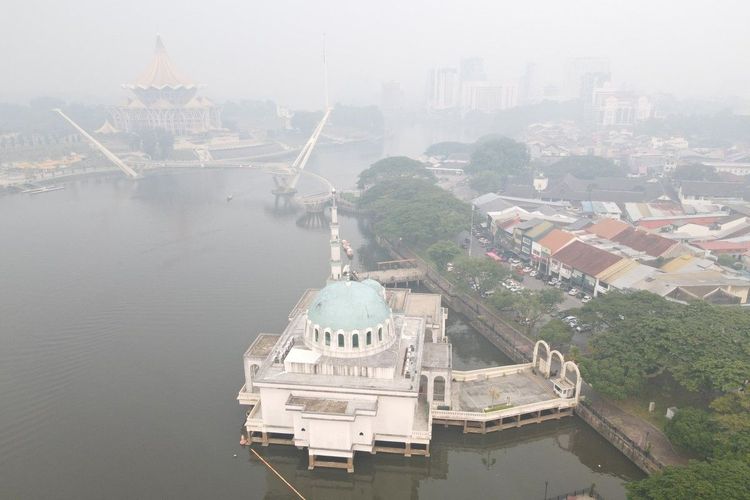
The haze crisis has extended beyond Indonesia's borders, with Singapore and Kuala Lumpur ranking among the world's 10 most polluted major cities in recent weeks. ASEAN activated a Level 3 transboundary haze alert—its highest level—for the southern part of the region.
Panjaitan noted that further evaluation and research are needed to assess the effectiveness of dry ice seeding and its contribution to improved visibility compared with other meteorological factors. The improved conditions following the operation are believed to support safer and smoother flight operations in the region.