Reporting on regional cooperation
"Journalists must build trust through fact-based reporting," said Hirano, senior director of Kyodo News' International Department. "Journalists can also encourage thoughtful discussion among citizens through their works."
Hirano urged journalists to explain the difficulties as well as the opportunities involved in regional cooperation so audiences can understand its significance.
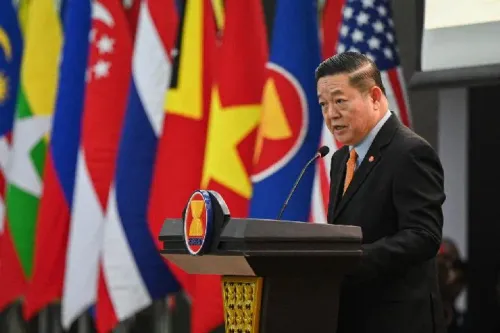
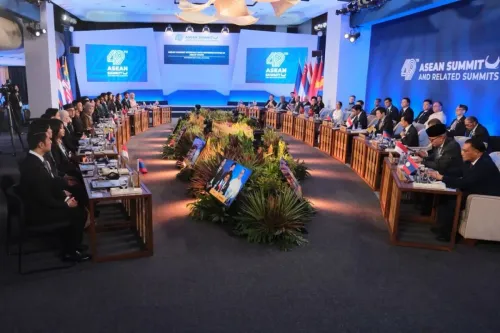
The Economic Research Institute for ASEAN and East Asia (ERIA) organized the caucus under the theme "Promoting ASEAN Energy Security and Advancing Green Growth." Researchers and journalists examined energy preparedness, industrial competitiveness and green growth.
ERIA senior communication advisor Kavi Chongkittavorn moderated the energy security discussion. Joining Hirano were Thailand's The Nation journalist Frank Han Shih; Evgeny Belenkiy, Rossiya Segodnya Media Group's chief correspondent in Southeast Asia; and Ismira Lutfia, the Indonesian correspondent for Singapore's Berita Harian.
Based in Jakarta, ERIA researches regional economic integration and sustainable growth in ASEAN and East Asia. According to Manila Standard, leaders of 16 countries established the international organization at the Third East Asia Summit in Singapore in November 2007.
Oil reserve proposal puts costs and access in focus
ERIA's modeling presented at the caucus put the annualized cost of additional emergency oil reserves across ASEAN at US$2.19 billion if countries cooperate, compared with US$2.80 billion under a nationally led approach. For an equal volume of additional reserves, the cooperative option would cost about 22% less, saving roughly US$610 million a year.
The proposed model would give participating countries negotiated access to stocks still owned by producers or partners. ERIA cautioned that the estimates do not include the extra expense of emergency delivery or replenishment. The arrangements remain research recommendations, not commitments agreed to by ASEAN.
Access rights alone would not make the system ready for an emergency, ERIA Senior Energy Economist Han Phoumin told participants. He said countries would also need procedures for releasing stocks, appropriate fuel and enough transport capacity to deliver it. Voluntary pilots could allow governments and operators to test those arrangements before supplies are disrupted.
A related proposal came from Philippine President Ferdinand Marcos Jr. at the Asia Zero Emission Community Plus online summit on April 15, 2026. Manila Standard reported that he sought a regional study of joint oil stockpiling and faster implementation of the ASEAN Petroleum Security Agreement. He also offered the Philippines as host or co-chair of an emergency simulation to test the regional fuel-sharing mechanism.
Import dependence and supply risks
Speaking at the caucus, Sri Konsep Harum Wicaksono said Southeast Asia's energy imports could reach US$245 billion by 2035, up from US$80 billion in 2024. Wicaksono, head of the ASEAN Council on Petroleum and Energy Secretary-In-Charge Office, warned that insufficient flexibility could allow a supply crisis to become an economic crisis, China Daily reported.
The report also cited International Energy Agency figures showing that, before the US-Iran war, the Middle East accounted for about 60% of ASEAN's crude oil imports and a third of its gas. More than 80% of the region's refining capacity is in Indonesia, Thailand, Singapore and Malaysia.
Businesses face financing, skills and technology barriers
The caucus also considered how green growth, digital transformation and regional integration could fit into one economic agenda. ERIA Senior Policy Fellow Intan Murnira Ramli argued that combining them would provide ASEAN's next competitive advantage. Participants discussed what a future ASEAN Green Economy Framework Agreement (GEFA) could contribute.
Survey findings cited by ERIA showed uneven progress on decarbonization. Among Japanese firms surveyed in ASEAN, 53.3% were taking measures to reduce emissions. Just 7.1% said they were changing to lower-emission suppliers or encouraging existing suppliers to cut emissions.
A separate survey of local ASEAN companies found that smaller businesses were less likely to take action. Financing and technical capacity were their main obstacles.
Digital transformation presented its own hurdles: 70.8% of surveyed Japanese firms in ASEAN reported a shortage of digital talent, while 64.7% identified high implementation costs as a barrier, according to survey data cited by ERIA.