Jakarta's economic and diplomatic goals
The signing of WAICO's founding declaration in Shanghai brought Indonesia together with 28 other countries. For Jakarta, membership offers a chance to influence AI governance as it takes shape, rather than limit its role to adopting technology developed abroad.
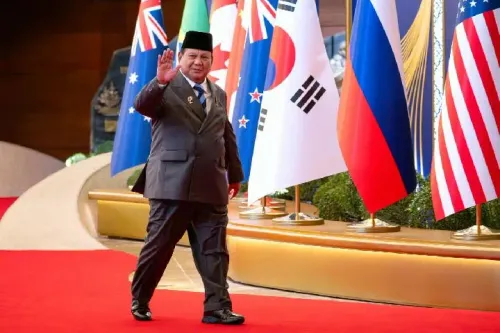
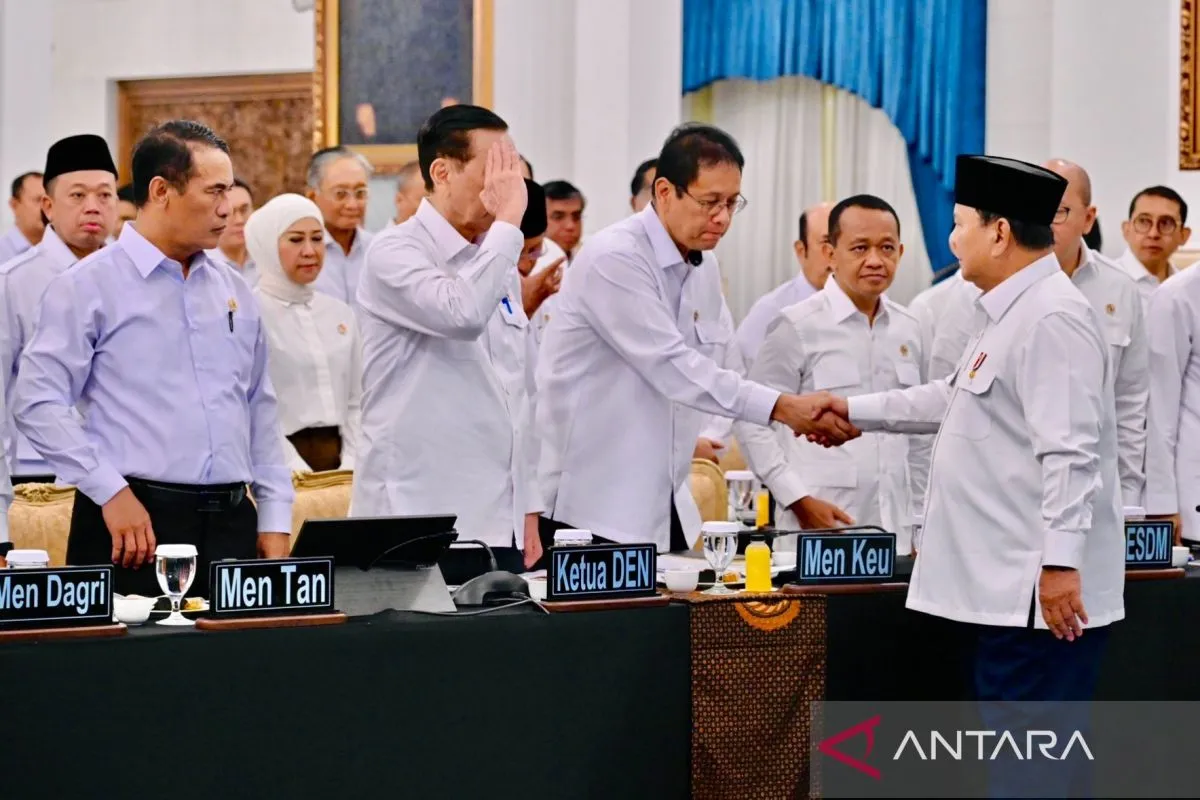
Coordinating Minister for Economic Affairs Airlangga Hartarto linked the decision to President Prabowo Subianto's directive to accelerate AI development and adoption as part of the country's economic transformation. Airlangga estimated Indonesia's digital economy at about $130 billion and said it could grow to $300 billion, with AI among its main drivers.
Potential applications span agriculture, renewable energy, healthcare, manufacturing and public services. Indonesia also has an opportunity to advocate for wider access to technology and help narrow the gap between developed and developing countries.
Teuku Rezasyah, an international relations lecturer at Padjadjaran University, said founding membership fits Indonesia's long-standing independent and active foreign policy. It allows Jakarta to work with multiple major powers while representing developing-country interests. Helping shape WAICO from the outset could also bolster Indonesia's diplomatic standing in ASEAN, the G20 and the Global South, he said.
How WAICO is organized
WAICO is an independent, nonprofit intergovernmental organization established under the United Nations framework. Its mandate combines international cooperation and national capacity-building with broader access to AI. It seeks development that is safe, inclusive, equitable and centered on people.
The initiative predates the Shanghai signing. According to Wikipedia's account of WAICO, Chinese Premier Li Qiang proposed it in July 2025, and CCP General Secretary Xi Jinping renewed the proposal at the 32nd APEC meeting in October that year.
The founding treaty assigns the highest decision-making authority to a Council of Member States, Wikipedia reports. The council admits members and observers and appoints the organization's leadership. A separate Secretariat has a secretary-general and two deputy secretaries-general, each serving a three-year term.
The 29 founders span Asia, Africa, Latin America and Europe: Indonesia, China, Brazil, Russia, Kazakhstan, Pakistan, South Africa, Malaysia, Laos, Cambodia, Myanmar, Venezuela, Algeria, Belarus, Cameroon, the Republic of the Congo, Cuba, Ethiopia, Kenya, Kyrgyzstan, Lesotho, Mozambique, Nicaragua, Oman, Senegal, Serbia, Tajikistan, Uzbekistan and Zambia.
Membership subsequently reached 37 when Iran, Vietnam, Brunei, Georgia, Sudan, Tanzania, Togo and Dominica acceded later in July 2026, according to Wikipedia. Bangladesh became an observer on August 1, while Singapore was reported to be considering an invitation.
Cooperation amid strategic competition
At the opening of the World Artificial Intelligence Conference in Shanghai on July 17, 2026, Xi said AI development should not be "a solo performance by a single country," but "a symphony of international cooperation." He urged broader access to AI and stronger international governance so its benefits would reach all countries.
The Diplomat reported that Xi also announced plans for 5,000 AI training spots for developing countries over the following five years, along with AI cooperation centers involving groups such as ASEAN, the African Union and BRICS.
UN Secretary-General Antonio Guterres expressed hope that WAICO would support inclusive, responsible AI and advance the Sustainable Development Goals.
Rezasyah placed the organization within China's effort to influence global AI governance amid competition with the United States. Separately, Wikipedia reports that analysts see WAICO as a rival to the US-led Pax Silica initiative and a counterweight to Western influence over rare-earth and semiconductor supply chains, as well as AI governance.
That competition extends beyond software. AI is moving from decision support toward autonomous agents that can carry out complex tasks, while embodied AI is becoming more common in manufacturing and logistics. The wider requirements include semiconductors, computing infrastructure, data centers, skilled workers and internationally trusted governance.
Domestic rules await approval
Indonesia's international ambitions are accompanied by work on a national regulatory framework. MLex reported that, as of late July 2026, draft presidential regulations on AI Ethics and the National AI Roadmap had completed inter-ministerial review and were awaiting presidential approval.
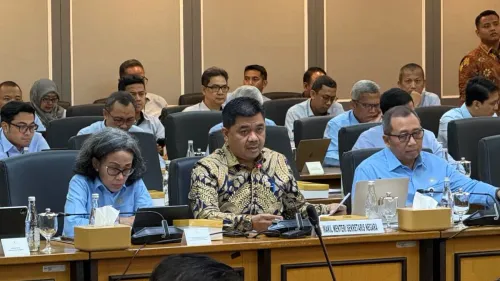
Deputy Communications and Digital Affairs Minister Nezar Patria said the regulations would provide an initial governance framework before the government drafts a comprehensive AI law. That law would be integrated with the Personal Data Protection Law, the Electronic Information and Transactions Law and planned cybersecurity legislation.
The roadmap covers 10 priority sectors: food security, healthcare, education, finance, bureaucratic reform, law enforcement, energy, housing, transportation and infrastructure, and the creative economy. In a Kompas.id opinion article, Communication and Digital Affairs Minister Meutya Hafid said the draft contains approximately 43 programs. She cited government projections that AI could contribute $366 billion to GDP by 2030 and help meet an 8 percent economic growth target.
Meutya has called for protections against misuse of data, deepfakes, algorithmic bias and cybersecurity threats. Indonesia's suspension of World Apps in 2025 over concerns about its collection of users' retinal data highlighted the challenge of keeping regulation abreast of new technology.
The country has around 230 million internet users. Meutya's opinion article also cited a 2026 Deloitte survey in which 87 percent of Indonesian Gen Z workers and 88 percent of millennials reported using AI at work, compared with a global average of 74 percent. A February 2026 AI Ready ASEAN report found that 95.25 percent of the Indonesian students surveyed had used generative AI.
Building capacity beyond technology adoption
Edwin Hidayat Abdullah, director general for the digital ecosystem at the Communication and Digital Affairs Ministry, said digital sovereignty requires control throughout the AI value chain. He included semiconductors, data centers, computing infrastructure, AI models and downstream applications.
Nezar has similarly called for investment in digital talent, a stronger semiconductor industry and more international collaboration so Indonesia can generate greater value from AI instead of remaining solely a technology user. Turning its diplomatic access into lasting influence will also require sustained support for research, infrastructure and regulation that can adapt to technological change.
At the regional level, Indonesia is promoting three principles for AI in ASEAN: sovereign, interoperable and trusted. Regulatory alignment is expected to support an ASEAN digital economy projected to reach $2 trillion by 2030, while extending AI's benefits to a broader range of businesses, including micro, small and medium-sized enterprises.