Poverty decline and faster growth
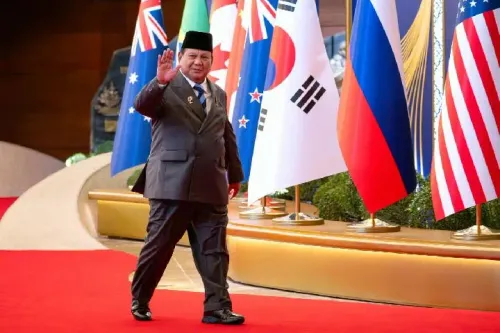
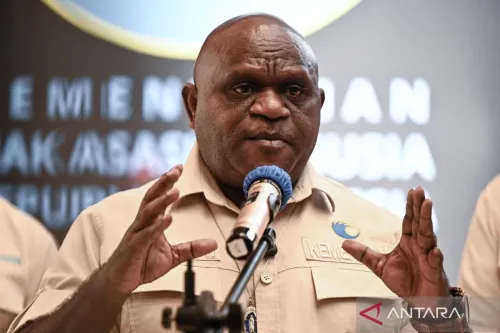
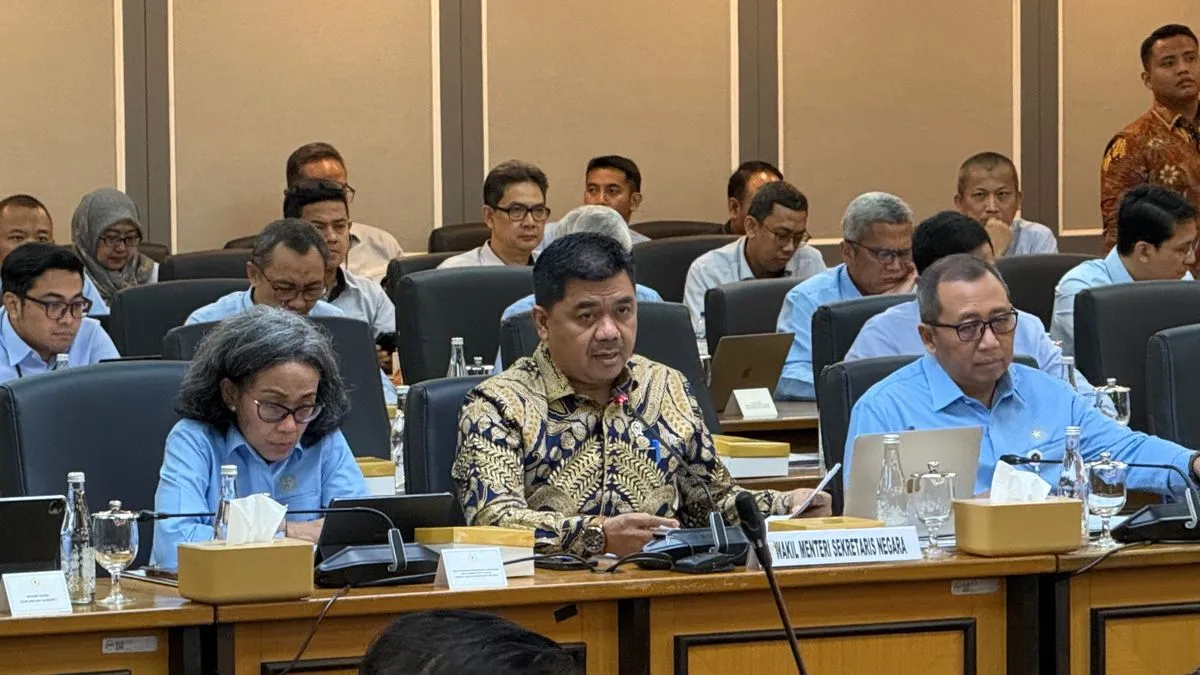
Speaking to the House of Representatives' Commission XIII in Senayan, Jakarta, Juri highlighted improvements during President Prabowo Subianto's first two years in office. He said further progress was needed to ensure that growth and development benefited the public.
Figures reported by Indonesia Business Post put the number of Indonesians living in poverty at 22.93 million in March 2026, compared with 23.85 million in March 2025. The count also fell by about 430,000 from 23.36 million in September 2025.
Juri cited BPS data showing that the economy expanded 5.47 percent year over year in the third quarter of 2026, compared with 5.04 percent in the corresponding quarter of 2025. He also pointed to an open unemployment rate of 4.75 percent in August 2026.
Poverty thresholds and inequality
A joint BPS-World Bank statement placed Indonesia's national poverty line at IDR 669,235 per person per month in March 2026, equivalent to about US$3.60 a day. Indonesia Business Post reported that the threshold had risen 4.33 percent from IDR 641,443 in September 2025. With poor households averaging 4.62 members, the household threshold was about IDR 3.09 million a month, or roughly US$189.
The longer-term decline preceded the latest figures. Indonesia's Government Communications Agency, Bakom, said, citing BPS, that the poverty rate dropped from 10.14 percent in 2021 to 8.47 percent in 2025. Extreme poverty fell from 2.14 percent to 0.85 percent over that period, while the Gini ratio decreased from 0.384 to 0.375.
The more recent inequality figures moved in the opposite direction. Indonesia Business Post reported a March 2026 Gini ratio of 0.368, an increase of 0.005 points from September 2025's 0.363. Expenditure inequality therefore rose even as poverty declined. The urban ratio was 0.387 and the rural ratio 0.296; both were higher than in September 2025.
The World Bank's 2025 estimates used separate international poverty thresholds. They placed 3.7 percent of Indonesians below the extreme-poverty line of US$3.00 a day, 15.5 percent below the lower-middle-income line of US$4.20, and 64.1 percent below the upper-middle-income line of US$8.30.
Lower unemployment alongside more underemployment
The lower open unemployment rate did not extend to underemployment. Jakarta Globe, citing BPS, reported that 12.84 million people were underemployed in August 2026, compared with 11.60 million a year earlier. The underemployment rate rose from 7.91 percent to 8.68 percent.
Informal employment also accounted for a larger share of workers: 57.93 percent in August 2026, against 57.80 percent a year earlier. The formal share declined from 42.20 percent to 42.07 percent, even though the number of formal workers grew by about 410,000.
Government poverty-reduction measures include Wage Subsidy Assistance, known as BSU. According to ANTARA News, the 2025 program targeted about 17 million eligible workers, with assistance of Rp300,000, or about US$16.64, a month for two months, delivered in one Rp600,000 payment. A national internship program included 100,000 places in 2025 and 150,000 in 2026. An evaluation found that host companies offered jobs to about 30 percent of the 2025 participants.
Budget spending judged by results
At the parliamentary meeting, Juri also outlined Prabowo's instructions for the state budget, or APBN. He said the president wanted every rupiah accounted for and spent on public welfare, with spending that was effective, efficient, targeted and focused on results, without waste, misuse or leaks.
Juri said each government expenditure should deliver value to society. The test of a program's success, he said, was its tangible benefit to the public rather than how much of its allocation had been spent or how many activities officials had conducted.
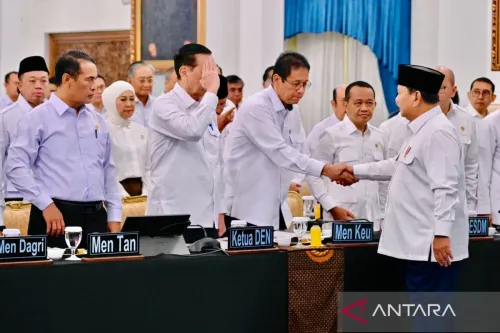
He said the Ministry of Finance and Bappenas were involved in implementing APBN management alongside the Ministry of State Secretary to keep spending targeted and accountable.