Farmers seek recovery before new charges
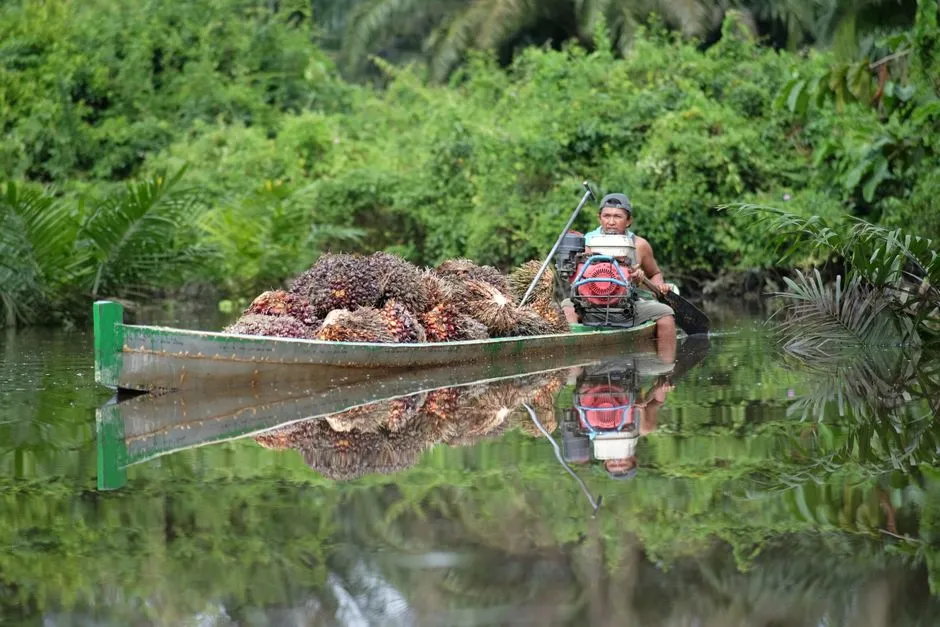
Mansuetus Darto, chairman of the Indonesian Palm Oil Farmers' Organizations Union (POPSI), wants DSI to postpone the fee until El Niño's effects ease, plantation productivity rebounds and smallholders' finances improve. He said the timing was inappropriate given the production pressure facing the industry, particularly small farmers.
POPSI estimates that El Niño has reduced plantation productivity by 10% to 15% in some affected regions. The group also cited fresh fruit bunch (FFB) prices: across 15 producing districts in North Sumatra, prices ranged from Rp2,650 to Rp3,400 per kilogram in mid-November 2026. North Labuhanbatu recorded the lowest price, at Rp2,650 per kilogram.
In West Kalimantan, the highest FFB price for plasma partners slipped from Rp3,484.85 to Rp3,440.93 per kilogram for November's second pricing period. In Riau, the price for self-reliant partners with nine-year-old plants fell to Rp3,719.99 per kilogram for Nov. 11–17, 2026.
Smallholders account for a substantial share of the industry. Speaking at the Indonesian Palm Oil Conference (IPOC) 2026, Deputy Foreign Minister Arif Havas Oegroseno said Indonesia's 2.5 million farmers manage 6.7 million hectares, or 40% of the country's oil palm plantation area. Worldwide, about 7 million small farmers contribute up to 40% of palm oil supply, he said.
CPO fee targeted below $10 per metric ton
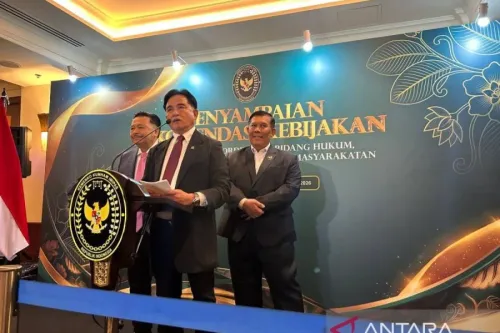
DSI president director Luke Thomas Mahony outlined the proposed charge at IPOC in Bali on Nov. 13. He said DSI was targeting a single-digit US-dollar fee per metric ton of commodity exports, putting it below $10. The final rate is expected in December, before the service formally begins in 2027.
Mahony did not identify which commodities the proposed rate would cover. A DSI spokesperson subsequently said it applied to CPO; charges for coal and ferroalloys had not yet been set.
"Export activities must continue and flow uninterrupted during this implementation period," Mahony said, as quoted by Bloomberg Technoz.
Kompas.id estimated that a fee of $1 to $9 per ton on palm oil derivative exports could generate $29.73 million to $267.57 million for DSI, equivalent to about Rp541.09 billion to Rp4.87 trillion. That calculation assumes exports of 29.73 million tons in 2027 and an exchange rate of Rp18,200 to the dollar; it is not an announced revenue target.
Earlier official comments left conflicting signals about fees, according to Jakarta Globe. Deputy Agriculture Minister Sudaryono said DSI would neither levy transaction fees nor seek export profits. Danantara chief investment officer Pandu Sjahrir later said the revenue model remained under discussion, adding that investment funds "typically pursue profit."
Export reviewer, not sole exporter
The government's Nov. 7 announcement assigned DSI a role as the sole intermediary for reviewing export transactions filed through its online portal. Under that arrangement, DSI will check contracts, draft Export Declarations and other documents before exporters submit them to the Directorate General of Customs and Excise. Exporters will pay for that review.
This remit is more limited than President Prabowo Subianto's original description. On May 20, shortly after DSI's establishment, he said the company would act as Indonesia's sole exporter and handle the process from negotiating contracts through shipping products.
Investor Trust reported that DSI was established under Government Regulation No. 24 of 2026 on the Export Governance of Strategic Natural Resource Commodities. Its scope includes CPO, coal and ferroalloys, which together represent nearly half of Indonesia's total exports.
For real-time oversight of those commodities, DSI plans to introduce National Advance Data Intelligence (NADI), a digital portal for auditing exporters' sales contracts and Goods Export Declarations (PEB).
Questions over costs and funding
Indonesia supplies roughly 60% of the world's palm oil, according to Jakarta Globe. University of Indonesia economist Rizki Nauli Siregar said export costs for Indonesian palm oil can amount to 36% of export value, versus about 6% in Malaysia.
Farmers and industry groups have also questioned a government proposal to release payments only once international transactions are complete while requiring exporters to retain foreign-exchange earnings in Indonesia for at least a year. Industry groups warned that the arrangement could constrain working capital and hold up payments to farmers.
POPSI has asked DSI to explain how it would calculate the per-ton charge, what services it would cover, how much revenue it expects and how the money would be used. The union also wants details of auditing and accountability arrangements.
Rather than impose another per-ton fee, POPSI proposed using existing palm oil export-duty revenue, known as Bea Keluar, through the state budget (APBN). It said that funding should cover the export system's development, data integration, verification and oversight.