Trade preferences end before ratification is assured
The potential tariff gap concerns Indonesia's departure from the EU's Generalised Scheme of Preferences (GSP), which grants developing countries reduced import duties. Without the Indonesia-European Union Comprehensive Economic Partnership Agreement (IEU-CEPA) in force, Indonesian exporters could face higher most-favored-nation (MFN) tariffs.
"If the agreement is not yet effective, Indonesian export products could potentially be subject to general tariffs or most favored nation (MFN) tariffs again," Johni Martha, director general of international trade negotiations at Indonesia's Trade Ministry, said at a November 16 briefing in Jakarta. He said talks with the European Commission were underway on a possible transition mechanism but did not disclose its details.
According to official EU sources, Indonesia will leave the GSP because the World Bank classified it as an upper-middle-income country in each of 2023, 2024 and 2025. The loss of preferences on January 1 will cover all Indonesian goods, rather than selected product categories.
The GSP itself will continue under a new framework that excludes Indonesia. Regulation (EU) 2026/1395, published on June 22, 2026, provides reduced or zero tariffs for imports from 65 developing countries from January 1, 2027, through December 31, 2036.
The European Commission identifies Indonesia as the scheme's second-largest beneficiary. In 2024, 44 percent of Indonesian exports to the EU qualified for reduced GSP tariffs.
Brussels signing and the approval process
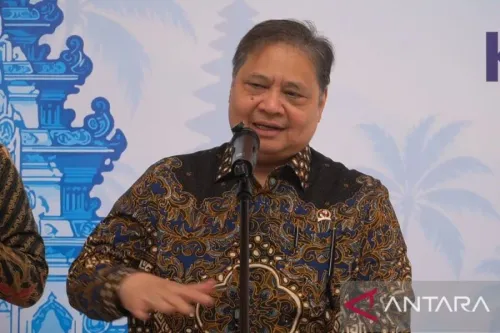
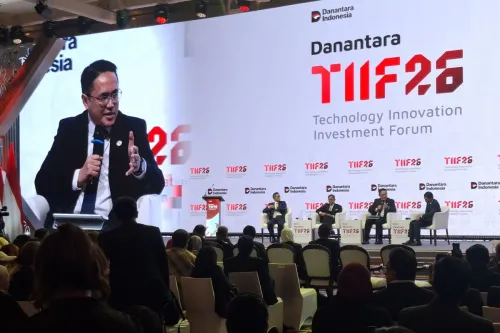
Coordinating Minister for Economic Affairs Airlangga Hartarto will lead Indonesia's delegation to Brussels for the scheduled November 21, 2026, signing. The visit will also include an Indonesia-EU Investment Protection Agreement. Rosan Roeslani, investment and downstreaming minister and CEO of Danantara Indonesia, will sign that agreement for Indonesia.
The European Commission says the trade negotiations concluded on September 23, 2025, after nine years and 19 rounds. According to Johni, the text prepared for signing went through almost a year of legal drafting beginning in 2025 and covers 25 chapters, along with protocols on palm oil and customs.
Signing will not make the trade agreement effective: both parties must first ratify it. Johni said a parliamentary session typically lasts six to seven months, but that is not a guaranteed ratification timetable. Approval involves several institutions and depends on political decisions on each side. Indonesia's government is nevertheless working toward implementation in early 2027.
Exporters urged to identify tariff exposure
Yose Rizal Damuri, executive director of the Center for Strategic and International Studies (CSIS), said replacing Indonesia's GSP market-access benefits is one purpose of the IEU-CEPA. He singled out footwear and clothing as manufacturing exports that have long relied on those preferences.
Yose urged businesses and the government to examine products by HS code, identifying those most exposed to tariff increases and measuring the differences between applicable rates. That work should also establish which products need priority preparation for the IEU-CEPA. Without a detailed assessment, he warned, exporters could be slow to adapt when tariff rules change.
The Indonesian Footwear Association (Aprisindo) sees substantial potential once the agreement takes effect. Its secretary general, Yoseph Billie Dosiwoda, said national footwear exports could rise by up to 60 percent within three years of implementation, with significant growth in employment.
Billie said realizing the export opportunity, particularly in the EU, also requires a better domestic business and investment climate. Footwear producers continue to contend with high labor costs, tax burdens, legal uncertainty and licensing problems. He called for government support through more efficient energy and logistics, better access to financing and simpler regulations.
Tariff cuts and other provisions
The IEU-CEPA provides for tariff reductions and broader market access for both parties. Airlangga says that once it is fully in force, 90.4 percent of Indonesian tariff lines entering the EU market will immediately receive zero import duties. Another 8.37 percent will receive reductions over three to 15 years or under a tariff-rate quota scheme. The remaining 1.2 percent will retain MFN rates because the products are considered sensitive.
The European Commission describes the agreement's overall coverage as eliminating tariffs on more than 98 percent of tariff lines, representing close to 100 percent of trade by value. It says 80 percent will be liberalized when the agreement enters into force, with liberalization reaching 96 percent of bilateral trade after a five-year phase-out.
The agreement also contains protections for domestic industries. According to the Commission, Chapter 5 allows either party to impose temporary safeguard measures when a significant increase in preferential imports causes, or threatens to cause, serious injury to its domestic industry.
Beyond tariffs, the agreement directly protects 221 EU and 72 Indonesian geographical indications, the Commission says. The covered agricultural and food products include European meats and cheeses, as well as Indonesian spices and coffees.
The trade relationship in figures
The donor report projects Indonesia-EU trade at 28.9 billion euros for 2025, equivalent to about Rp 581.51 trillion using an assumed exchange rate of Rp 20,121 per euro. It puts EU exports to Indonesia at 10.2 billion euros and EU imports from Indonesia at 18.7 billion euros.
For Indonesia's exports worldwide, the Central Statistics Agency (BPS) reported $221.23 billion from January through September 2026, an increase of 5.58 percent from the same period in 2025. That total was equivalent to Rp 4,040 trillion at Rp 18,256 per U.S. dollar.