Agriculture and market access
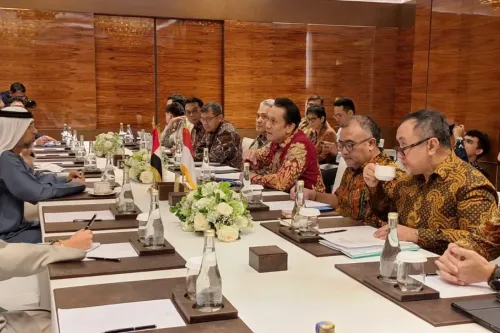
Indonesian Coordinating Minister for Food Zulkifli Hasan and Uzbekistan's Deputy Prime Minister for Investments, Industry and Trade Jamshid Khodjaev reached the agreement. The Indonesia–Uzbekistan Intergovernmental Joint Committee will oversee follow-up on bilateral agreements and help direct further economic cooperation.
Agricultural trade was among the subjects discussed, including possible Indonesian imports of dried fruit from Uzbekistan, subject to strict food safety requirements.
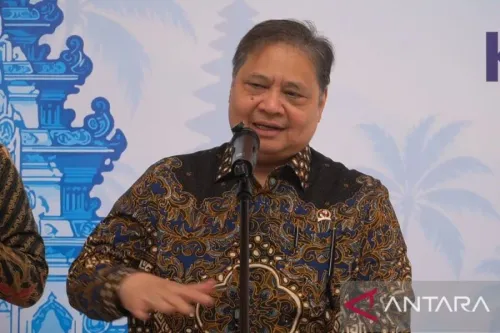
Hasan pointed to Indonesia's food production gains as a basis for expanding economic ties. He cited increases of 13.54 percent in rice production and 9.34 percent in corn output, with government rice reserves at about 4.58 million tons.
According to detikNews, Hasan also told the talks that Indonesia had become self-sufficient in eight food commodities and had imported no rice since 2025. He gave the precise reserve figure as 4,579,788 tons, describing it as a record high. The meetings were presented as a further step in a bilateral relationship spanning 34 years.
"The self-sufficiency we have achieved should serve as a foundation to strengthen cooperation, expand markets for Indonesian products and open investment opportunities that provide tangible benefits to both nations," Hasan said in a statement released on October 31.
Trade negotiations and travel links
Trade between the two countries reached $181.4 million in 2025, up 48.9 percent from 2021. Negotiations for an Indonesia–Uzbekistan Free Trade Agreement remain under way.
Kun.uz reported that the negotiations began on March 2, 2026, with the trade ministers signing a Joint Statement and a separate Agreement on Trade and Investment Cooperation. At those talks, they also agreed to increase agricultural exports, speed up phytosanitary and quarantine procedures, and mutually recognize halal product certification.
Direct Tashkent–Jakarta flights are planned. An August 2025 agreement between the countries' aviation authorities raised the agreed number of weekly flights from three to 28. It also gave Uzbek carriers operating rights to eight Indonesian destinations beyond Jakarta: Banda Aceh, Denpasar (Bali), Yogyakarta, Lombok, Majalengka, Medan, Surabaya, and Tanjung Pandan.
Tourism incentives were also under consideration. As of September 2026, Uzbekistan was weighing a $100 payment to local tour operators for each Indonesian tourist they attract, along with subsidies for new air routes, according to Uzbekistan's Tourism Committee. The proposals were intended to encourage both tourism and pilgrimage travel from Indonesia.
Uzbekistan cited annual Hajj and Umrah participation by more than 2 million Indonesians. It also highlighted the opening of the five-star Hadith Hotel at the Imam Bukhari Complex with Indonesian investors as a concrete result of tourism cooperation.
Environmental cooperation
Hasan's visit also included an October 30 meeting with Aziz Abdukhakimov, chairman of Uzbekistan's National Committee on Ecology and Environmental Protection. Ahead of the 31st UN Climate Change Conference, or COP31, in Antalya, Türkiye, they discussed sustainable development and the transition to a green economy.
The potential areas for joint work were waste-to-energy technology, sustainable agriculture, and conservation management. Indonesia described its restoration work from 2015 through 2025, when it rehabilitated roughly 2 million hectares of degraded land, including 90,000 hectares of mangroves. It also reported managing 27 million hectares of conservation areas.
"Economic growth must go hand in hand with environmental protection," Hasan said. He added that the partnership seeks to support sustainable development for future generations.
Waste-to-energy projects in both countries
Uzbekistan is advancing 11 waste-to-energy projects valued at about $1.56 billion. The Uzbek government published the figures on September 11, 2026, after they were presented to President Shavkat Mirziyoyev.
Six projects had entered implementation by late 2026. Worth $933 million, they are being implemented during 2026–2027 with Chinese companies in the Kashkadarya, Samarkand, Tashkent, Andijan, Fergana, and Namangan regions. At full operation, their combined annual capacity is expected to reach 3.6 million tons of municipal waste processed and 1.6 billion kWh of electricity generated.
The other five projects, worth $625 million, are planned for the Republic of Karakalpakstan and the Jizzakh, Surkhandarya, Bukhara, and Khorezm regions. Their annual targets are 1.9 million tons of waste processed and 635 million kWh of electricity generated.
Indonesia aims to have at least 18 waste-to-energy plants operating by the end of 2029. Presidential Regulation No. 109 of 2025, which replaced Presidential Regulation No. 35 of 2018, provides the framework for that effort. Sovereign wealth fund Danantara facilitates investor selection and project development, while state electricity company PT PLN buys the power produced.
Indonesian authorities have identified 24 waste-to-energy clusters, each potentially covering two or three districts or cities. According to ANTARA News, government figures cited by Hasan in July 2026 put national waste generation at approximately 141,926 metric tons a day.