Deep technology and the European comparison
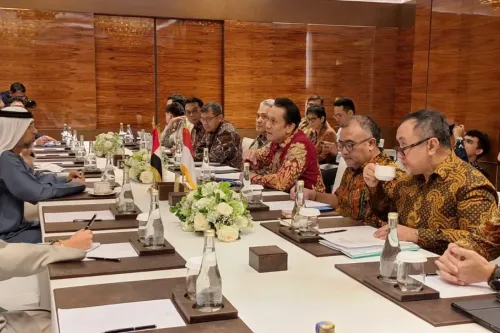
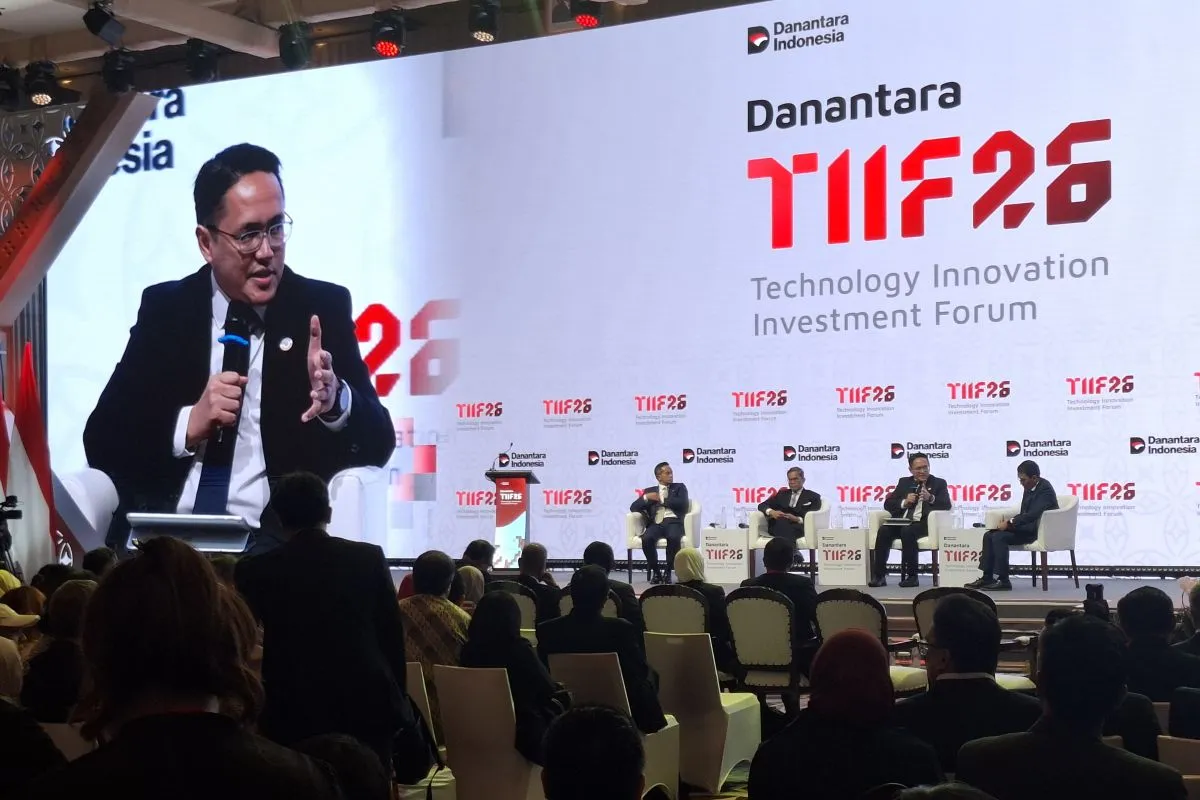
Speaking on a panel at the Danantara Technology Innovation Investment Forum (DTIIF), Adziman cited European data showing that deep technology startups reached valuations above $1 billion faster than conventional technology companies.
The PitchBook data, referenced by McKinsey and included in his presentation, put the average time to unicorn status at five years and seven months for European deep technology startups. Conventional technology startups averaged seven years and 11 months, a difference of two years and four months.
"Deep technology uses research, something that other industries cannot easily copy, and has the potential to be developed on a large scale," Adziman said.
He identified energy, food, and health as areas where research-based innovation could address problems and strengthen industry capabilities. He also called for genomic and biotechnology research to be turned into technology-based products or businesses serving health, food, and industry. Researchers, universities, companies, and investors need to work together, he said, so innovations respond to market needs and can be developed more widely.
A three-year gap in new unicorns
Indonesia's recent unicorn record provides context for those remarks. According to IDN Research Institute's account of Crunchbase data dated June 29, 2026, the country had gone three years without producing a new unicorn. The most recent addition was eFishery, which joined the list on May 25, 2023.
Crunchbase placed Indonesia 17th globally with 10 unicorns, level with Ireland, Switzerland, and Sweden. Tracxn also ranked Indonesia 17th but counted 13 unicorns under a different methodology that includes all unicorns ever created in the country.
Startup funding had also fallen. Citing the e-Conomy SEA 2025 report, IDN Research Institute said Indonesian domestic private startup investment dropped from a full-year peak of $9.1 billion in 2021 to $0.1 billion in the first half of 2025. The number of deals fell from 649 to 20, a decline of more than 95%. Those figures compare a full year with a six-month period.
The institute also reported on the governance scandal at eFishery. FTI Consulting's independent investigation found that the company had inflated revenue by roughly $600 million in the first nine months of 2024, reporting $752 million rather than the actual $157 million. On April 29, 2026, the Bandung District Court sentenced its founder and former CEO to nine years in prison.
Research funding and university-industry ties
Adziman's presentation also highlighted the business sector's share of research and development spending. In Indonesia, businesses accounted for 16.7% of national R&D expenditure in 2022. The corresponding shares were 85.5% in Taiwan, 79.4% in South Korea, 77.6% in China, and 73.1% in Japan.
The ministry has funded applied research involving universities and industry. In a July 8, 2026, report, it said it had disbursed about Rp454 billion for more than 1,070 such projects.
It also launched a Deeptech Hackathon scheme offering host universities up to Rp1.5 billion in funding to help generate technological solutions to practical problems, including those in semiconductors, food, and energy. Separately, the government has been developing Mandala, SKALA+, and Saintek Nusantara under the 2026 Berdikari Partnership Catalyst Program to expand the use of research results in response to public needs.
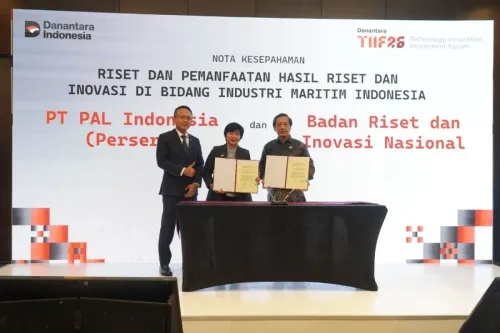
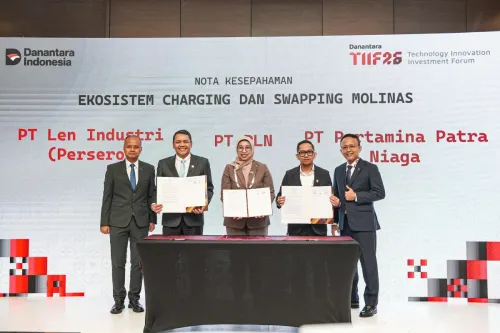
Research and industry coordination was also the subject of an agreement signed on the forum's opening day, October 26. According to Danantara Indonesia, it signed a memorandum of understanding with the Finance Ministry, the Higher Education, Science, and Technology Ministry, the Industry Ministry, and the National Research and Innovation Agency (BRIN). The agreement seeks closer coordination across research agendas, talent development, industrial needs, funding mechanisms, and strategic investment opportunities.
The forum's investment agenda
DTIIF ran from October 26 to 28, 2026, at Fairmont Jakarta. Danantara Indonesia said more than 1,500 participants attended, including global innovators, technology executives, research institutions, state-owned enterprises, investors, and scientists. Its theme was "Investing in Tomorrow: Advancing Technology, Innovation, and Sustainable Growth".
The forum covered six priority sectors: energy; agriculture, food, and health; advanced materials and semiconductors; transportation and infrastructure; AI, digital infrastructure, and telecommunications; and finance and banking.
At the October 26 C-Suite session, Danantara Chief Technology Officer Sigit Puji Santosa outlined a target of attracting $20 billion to $30 billion in strategic industrial investment over the next two to three years, ANTARA News reported. He said the agency had a pipeline exceeding 40 industrial projects, with several already in feasibility studies and front-end engineering design.
Danantara described DTIIF as a step toward the inaugural New Asia Forum, scheduled for December 3-4, 2026, in Bali. The agency says that gathering will bring together world leaders, sovereign wealth funds, and global business leaders to link long-term capital with strategic opportunities supporting Asia's economic transformation.