Human capital takes a larger role
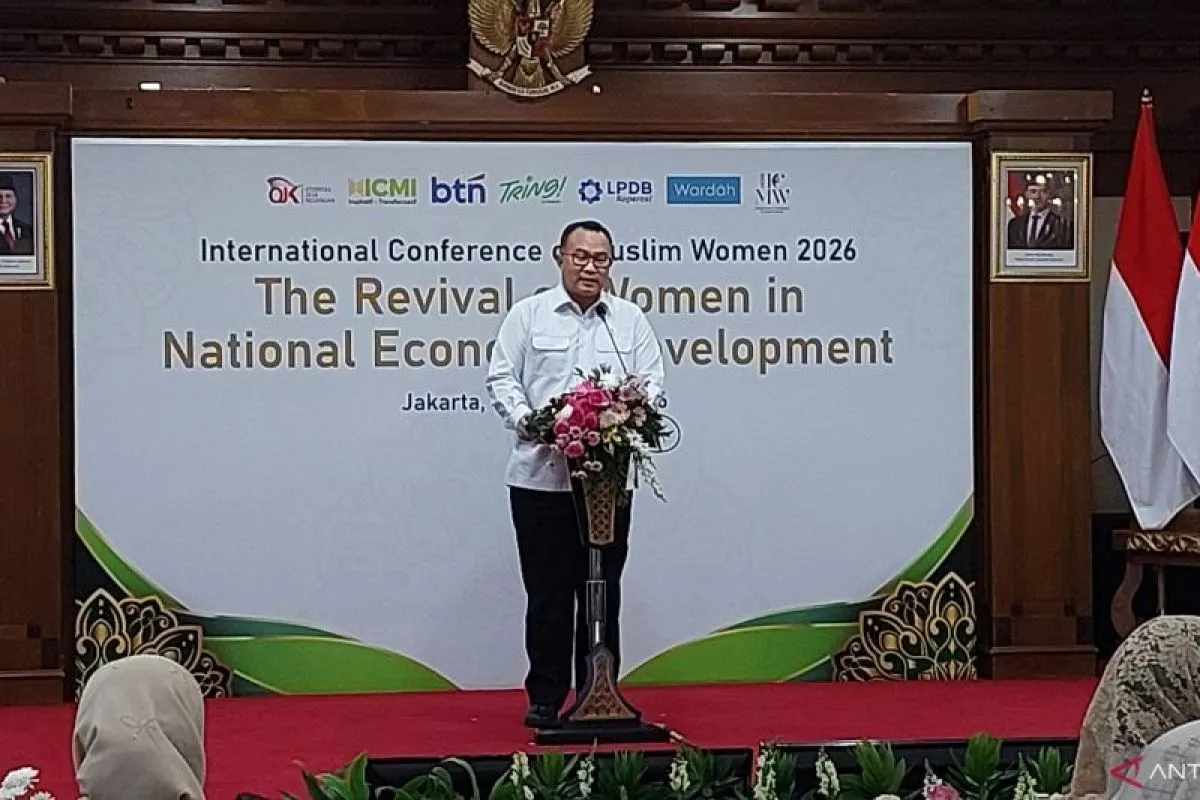
Satria, who heads the National Research and Innovation Agency (BRIN), said natural resource availability is becoming less decisive for economic development as human capital and mastery of technology gain importance.
"So the future strength is indeed formed by two things: first, human capital, and second, the role of technology," he said.
He cited an increase in human capital's contribution to economic development from 39 percent to 44 percent and in technology's contribution from 16 percent to 24 percent. Over the same comparison, the share attributed to natural resources declined from 44 percent to 31 percent.
Building human capital means improving competence, entrepreneurial ability and technical expertise, Satria said. He argued that these efforts must be accompanied by research and technological development to maximize Indonesia's economic growth.
Women's skills and entrepreneurship
The conference's theme was "The Revival of Women in National Economic Development." Its organizer was ICMI, which Satria also leads as chairman.
Satria said women play a vital part in economic success and that developing their capabilities and entrepreneurship should be part of Indonesia's strategy for innovation-led growth. He also welcomed the fact that women hold two central leadership roles overseeing monetary affairs and financial services, including banking.
At the same event, OJK Board of Commissioners Chairman Friderica Widyasari Dewi said women own and drive about 64 percent of Indonesia's micro, small and medium-sized enterprise (MSME) units.
Research funding and workforce gaps
Indonesia's research capacity provides context for Satria's call. The country placed 55th out of 139 economies in the World Intellectual Property Organization's Global Innovation Index 2025. Its lowest-ranked pillar was "Human capital and research," at 92nd, according to WIPO's country profile.
A February 2026 analysis published by UIN Syarif Hidayatullah Jakarta, citing World Bank and UNESCO data, put Indonesia's gross research and development expenditure at about 0.28 percent of GDP in 2020. The analysis compared that with a global average of 1.8 percent, a developing-country average of 1.1 percent and a developed-country level of 2.8 percent.
The analysis also cited UNESCO figures showing that Indonesia had about 110 researchers per million people in 2023. Malaysia had 712 and Singapore had 7,400 per million.
Within BRIN, about Rp2.01 trillion of its Rp5.8 trillion budget for 2025 went to research and innovation programs, the analysis said. Salaries and operating costs accounted for the rest.
BRIN's plans for businesses and frontier technologies
Satria said BRIN is broadening its research and development support for MSMEs, industry and the private sector. The agency is also encouraging technological collaboration to improve productivity and competitiveness.
"Going forward, we hope that the strengthening of MSMEs and industry in Indonesia will be based on strong R&D carried out by BRIN," he said.
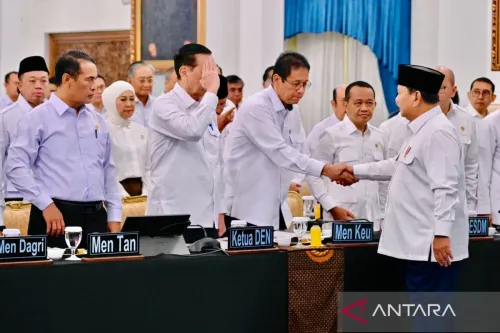
President Prabowo Subianto inaugurated Satria as BRIN head on November 10, 2025, with Amarulla Octavian as deputy head, under Presidential Decree No. 123/P of 2025.
On August 6, 2026, Satria presented Prabowo with a three-track innovation strategy at the State Palace. According to ANTARA, the proposal called for raising MSME productivity and competitiveness, stepping up research to strengthen national industries and support the sovereign wealth fund Danantara, and working with international partners to co-develop frontier technologies.
That day, Satria identified six frontier technology priorities for Indonesia's competitiveness over the next two to three decades: semiconductors, artificial intelligence, genomics, quantum computing, nuclear technology and space technology.