AI joins the legislative agenda
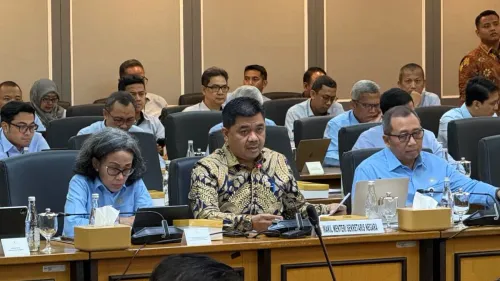
The House of Representatives' Election Bill working committee agreed on October 5, 2026, to make information technology and AI one of 10 strategic issues in the revision of Law No. 7/2017, according to Liputan6.com. The committee, known as Panja, aims to finish the academic manuscript and draft bill by late December 2026 or early January 2027 for submission as a House initiative.
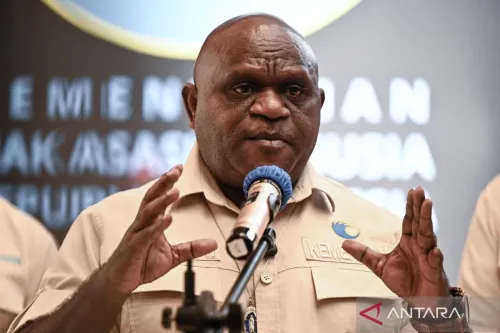
The Association for Elections and Democracy, or Perludem, sees that revision as an opportunity to establish rules specifically addressing AI in elections. Its executive director, Heroik Mutaqin Pratama, said the existing framework covers conventional campaigning, including public meetings, limited gatherings, and print and electronic media advertising, but does not specifically regulate AI-assisted campaigning.
Perludem presented its findings on November 3 at the Habibie Democracy Forum in Jakarta. Organized by The Habibie Center, the event was titled "Transformational Leadership for Inclusive, Resilient, and Sustainable Democracy."
From campaign avatars to misinformation
Indonesia's 2024 elections offered examples of AI's appeal to campaigners. Kompas reported that several candidates used avatars allegedly made with AI, presenting themselves in more appealing or entertaining ways. Civil society groups say the technology allows candidates to shape their campaign presentation around voter preferences.
The uses extend beyond appearances. Heroik said campaigns can use AI to assess public sentiment, measure discussion on social media and reach followers. Civil society monitoring also points to the potential for political fraud through deepfakes.
According to Perludem, AI accelerates misinformation by making emotionally charged content inexpensive to produce. Such material can reinforce echo chambers and leave elections vulnerable. The group said rules governing algorithm transparency and content amplification were still absent.
Looking back at 2024, Heroik said almost every election participant used social media and AI to create campaign material, and that misinformation appeared in that content. He linked vulnerabilities in the digital sphere to AI's development without adequate institutions and regulatory infrastructure.
"AI aims to bring convenience, efficiency, and innovation, but in practice, it actually impacts citizens' political rights," he said.
At the same forum, the Southeast Asia Freedom of Expression Network, or SAFENet, warned that digital democracy was vulnerable to attacks, human rights violations and distorted facts.
A court limit on altered candidate images
Indonesia already has a Constitutional Court ruling against excessive AI alteration of election participants' images. Heroik noted, however, that the ruling does not specify how to regulate or minimize the practice.
In Decision No. 166/PUU-XXI/2023, issued January 2, 2025, the Court imposed a conditional interpretation of "self-image" in Article 1, point 35, of Law No. 7/2017 on General Elections. According to the Court's summary, the term must mean "original and most recent photos/images of the participants, which have not been excessively edited/manipulated with the assistance of artificial intelligence technology."
The Court held that the phrase would violate the 1945 Constitution and have no binding legal force unless interpreted that way.
The case was brought by Gugum Ridho Putra, an Indonesian advocate registered on the Permanent Voter List. The Court granted his petition only in part. It rejected his other requests, including a proposed prohibition on campaigning by public officials with family ties to election participants and an expansion of disqualification sanctions under Article 286(2) of Law No. 7/2017.
International uses and proposed safeguards
Campaign targeting is also examined in International IDEA's April 2024 report, "Artificial Intelligence for Electoral Management." The International Institute for Democracy and Electoral Assistance describes AI use in various countries to tailor political advertisements to internet users' personality traits, with the aim of mobilizing voters and increasing participation.
Earlier research on social media microtargeting found an effect on U.S. electoral participation before 2020, the report said. It suggested a connection with social media companies supplying user data to AI systems for targeted advertising. Kompas also noted that data processing and automation had been identified in Barack Obama's campaign as early as 2012, when they were used to organize and mobilize supporters.
For election administrators, International IDEA identifies potential applications throughout the electoral cycle, rather than describing them all as established practice. They range from maintaining voter lists, registering voters and conducting biometric verification to allocating resources, planning polling sites and forecasting election costs. Other potential uses include targeted voter advertising, campaign and media monitoring, ballot counting and post-election audits.
The report recommends that electoral management bodies label and watermark all AI-generated content and maintain human oversight of AI systems. It also calls for ongoing audits covering security, performance and ethics, alongside strong transparency, interpretability and accountability standards for both in-house and vendor-supplied systems.
Its review of emerging regulatory approaches includes the European Union's Artificial Intelligence Act and its emphasis on high-risk systems, the United States' Artificial Intelligence Executive Order, and regulations issued by Brazil's Superior Electoral Court.