Proposed sanctions and company obligations
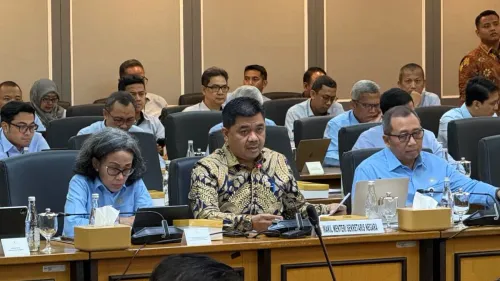
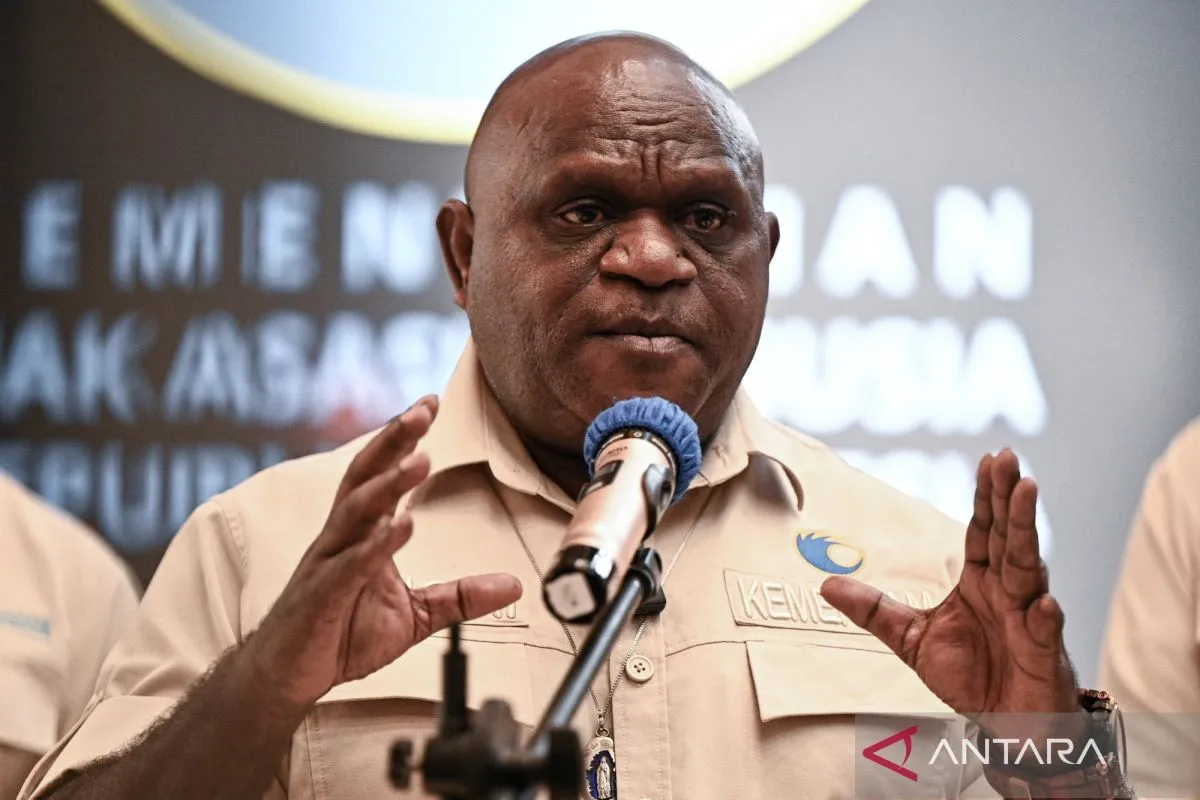
Speaking to House Commission XIII on November 17, 2026, Pigai said the draft Presidential Regulation on Business and Human Rights had reached the Presidential Palace for approval, Antara reported. It would provide authority to sanction businesses responsible for human rights violations or damage to ecosystems.
For companies found to have committed rights violations, Pigai described a process in which the minister would refer them to the president. The president could then order a halt to operations, limit banking access or deliver a stern warning.
Pigai also raised the possibility of summoning large corporations, including Freeport, to parliament under the proposed framework. Pending approval of the regulation, his ministry is working with the Energy and Mineral Resources Ministry to examine business permits that could threaten environmental conservation.
The government's timetable calls for completing the regulation in 2026, introducing it to businesses in 2027 and making compliance mandatory and legally binding by 2028, according to Kompas.id. The draft would require companies to identify 13 categories of human rights risks and measures to mitigate them. Its six main steps include reporting obligations covering due diligence and the company's commitment.
Implementation poses a challenge for smaller businesses, the Indonesian Employers Association, or Apindo, has noted. Kompas.id reported that micro, small and medium enterprises account for 96.9% of Indonesia's business actors. Most operate informally and are not connected to national or global supply chains, circumstances Apindo cites in calling attention to the challenges of a gradual rollout.
Human rights law revision
Alongside the regulation, Indonesia is seeking amendments to its human rights legislation. Pigai told lawmakers that the proposed provisions on human rights and the environment draw on the 1992 Rio Declaration.
The legislation is Law Number 39 of 1999 on Human Rights, which the government and the House of Representatives, known as the DPR, have agreed to revise. According to Kompas.id, the government-initiated bill is on the 2026 priority list of the National Legislative Program, or Prolegnas. Its draft is still undergoing coordination among ministries before discussion in the DPR.
Pigai said the amendments would give prosecutors a stronger legal framework for environmental crimes, including acts he described as ecocide and biocide. His examples included Fukushima, Lapindo, Minamata and Chernobyl in Ukraine.
Existing law and the ecocide debate
Ecocide is not yet a crime under Indonesia's national criminal law, according to a June 2026 article in Sriwijaya Crimen and Legal Studies. Environmental offenses are instead covered by Law Number 32 of 2009 on Environmental Protection and Management.
Under that law, Article 98 provides prison terms of five to 15 years and fines of Rp5 billion to Rp15 billion for intentional conduct causing serious injury or death. Article 99, addressing negligence, provides three to five years in prison and fines of Rp3 billion to Rp9 billion.
The journal article also notes that Law No. 26 of 2000 on the Human Rights Court covers genocide and crimes against humanity, two of the four crimes under the Rome Statute, but does not recognize ecocide. The National Commission on Human Rights, or Komnas HAM, has recommended adding ecocide to that law.
Citing Environment and Forestry Ministry data, the article reports that 546 of the 908 environmental crime cases the ministry handled in 2023 involved companies or corporations.
Komnas HAM categorized the 2006 Lapindo mudflow in Sidoarjo, one of Pigai's examples, as ecocide. The journal article says the mudflow flooded 16 villages in three subdistricts and submerged 1,683 homes. An associated explosion of a Pertamina gas pipeline left 14 people dead and 14 injured.
Other jurisdictions have adopted measures addressing severe environmental harm. According to The PRAKARSA, EU Directive 2024/1203 required member states to adopt new environmental penalties by May 21, 2026. These include "qualifying offences" involving widespread and irreversible damage that may amount to ecocide, with prison sentences of up to 10 years and corporate fines of up to 5% of global turnover. Belgium criminalized ecocide in February 2024.
Conservation concerns at Ujung Kulon
Pigai also linked the ministry's work to lawmakers' visits to conservation areas. He said it would follow up on any such visits they initiate, including to Ujung Kulon National Park, and recommend presidential sanctions when necessary.
In discussing wildlife protection, he pointed to Rwanda's international recognition for conserving animals in their natural habitats. He also used Komodo dragons to illustrate how survival and reproduction depend on an animal's natural environment, or milieu.
Forcing wildlife out of its habitat in Ujung Kulon would breach conservation principles, Pigai said. He compared it with forcibly relocating human communities, citing the example of moving Papuans to Manado, which he said could constitute a gross human rights violation.