Minerals, chips and AI cooperation
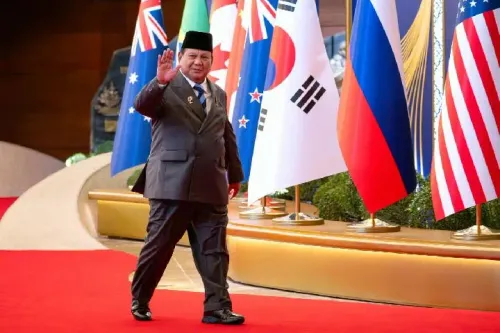
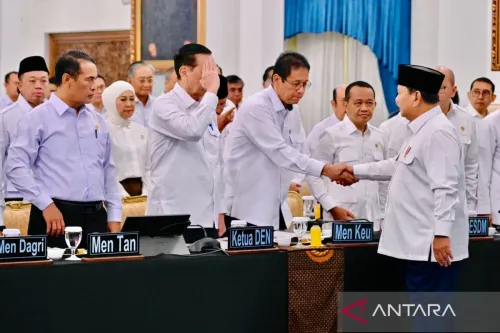
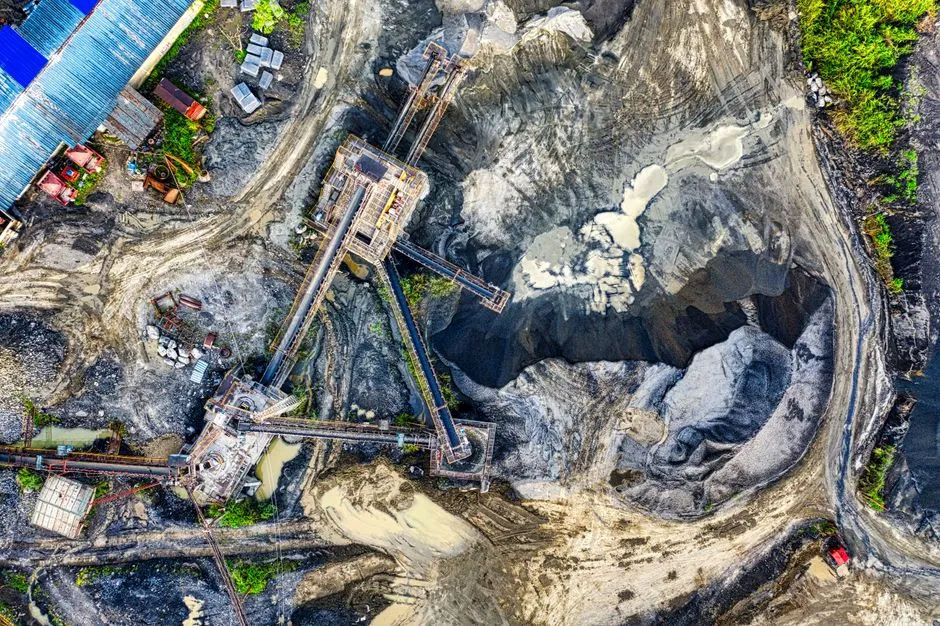
At the 27th ASEAN-Republic of Korea Summit on Monday, Nov. 16, Prabowo described South Korea as a semiconductor leader and argued that Southeast Asia could contribute more than demand for its products. "By developing downstream critical mineral industries together, we can be a reliable partner to further enhance semiconductor industries," he said.
Prabowo linked that cooperation to progress in artificial intelligence research, innovation and workforce skills, alongside safeguards for responsible, safe and secure AI use. He cited the ASEAN-Korea High-Performance Computing (HPC) Facility as an example of efforts to build the region's technological capabilities, emphasizing the essential role of semiconductors.
Critical minerals also featured at the separate third Korea-Mekong Summit. South Korean President Lee Jae-myung proposed pairing the Mekong region's mineral resources with Korean technology to expand supply-chain cooperation. Lee co-chaired the meeting with Thai Prime Minister Anutin Charnvirakul; it was the first such summit since 2020, six years earlier.
A regional computing facility at BRIN
The computing facility Prabowo highlighted is based at Indonesia's National Research and Innovation Agency (BRIN), but is intended to serve every ASEAN member state. South Korea's Ministry of Science and ICT said it was established through the Korea-ASEAN digital cooperation program, with $10 million from the Korea-ASEAN Cooperation Fund over a four-year period running from 2024 to 2028.
The ministry put the supercomputer's capacity at approximately 4.2 petaflops and said nine ASEAN member states, excluding Thailand and Singapore, lacked HPC infrastructure. The project also provides for training about 160 local operating personnel through 2028 and transferring Korea's National Science and Technology Information Service (NTIS) platform.
The Asia Business Daily reported a more precise performance rating of 4.28 petaflops for the BRIN system, which ranks 435th on the TOP500 list of the world's most powerful supercomputers. Its hardware includes 64 NVIDIA H200 GPUs distributed across 16 nodes, plus 32 CPUs. Seven nodes also contain FuriosaAI's second-generation "Renegade" NPU, with four cards in each node.
Trade negotiations and a $300 billion goal
Lee announced the formal opening of negotiations to upgrade the ASEAN-Korea Free Trade Area at the Nov. 16, 2026, summit. PortCalls Asia reported that the talks seek to update a trade framework nearly two decades old to better reflect changes in the global economy. Both sides aim to bring annual trade to $300 billion.
Prabowo also urged closer economic integration as a way to make the region more resilient. He identified the Regional Comprehensive Economic Partnership (RCEP) as an important means of improving supply chains. In his account, merchandise trade between ASEAN and South Korea exceeded $226 billion last year, putting South Korea sixth among ASEAN's trading partners.
Separately, The Asia Business Daily cited South Korean Ministry of Foreign Affairs figures that put last year's Korea-ASEAN trade at $204.7 billion. Against that figure, the $300 billion target represents an increase of roughly 47 percent. The newspaper also reported presidential spokesperson Kim Seong-wan's account that ASEAN leaders, meeting behind closed doors, expressed hope that the upgrade negotiations would be concluded.
The gathering formed part of the 49th ASEAN Summit and Related Summits. The Philippines hosted the meetings as ASEAN's 2026 chair under the theme "Navigating Our Future, Together."
New initiatives and a 2029 summit
Lee proposed a Korea-ASEAN AI Partnership Initiative as well as a Korea-ASEAN Cultural and Creative Industries Initiative. The cultural initiative is intended to open opportunities for Southeast Asian youth through their creative work.
According to PortCalls Asia, Lee and ASEAN leaders also highlighted the Korea-ASEAN Maritime Safety Academy and the ASEAN-ROK Digital Innovation Flagship Project (KADIF). The outlet reported that practical cooperation is expanding across maritime safety, digital innovation, AI, energy security and disaster management.
ASEAN leaders welcomed plans for a special summit in South Korea in 2029, marking 40 years since the establishment of Korea-ASEAN dialogue relations.