A common strategy for minerals
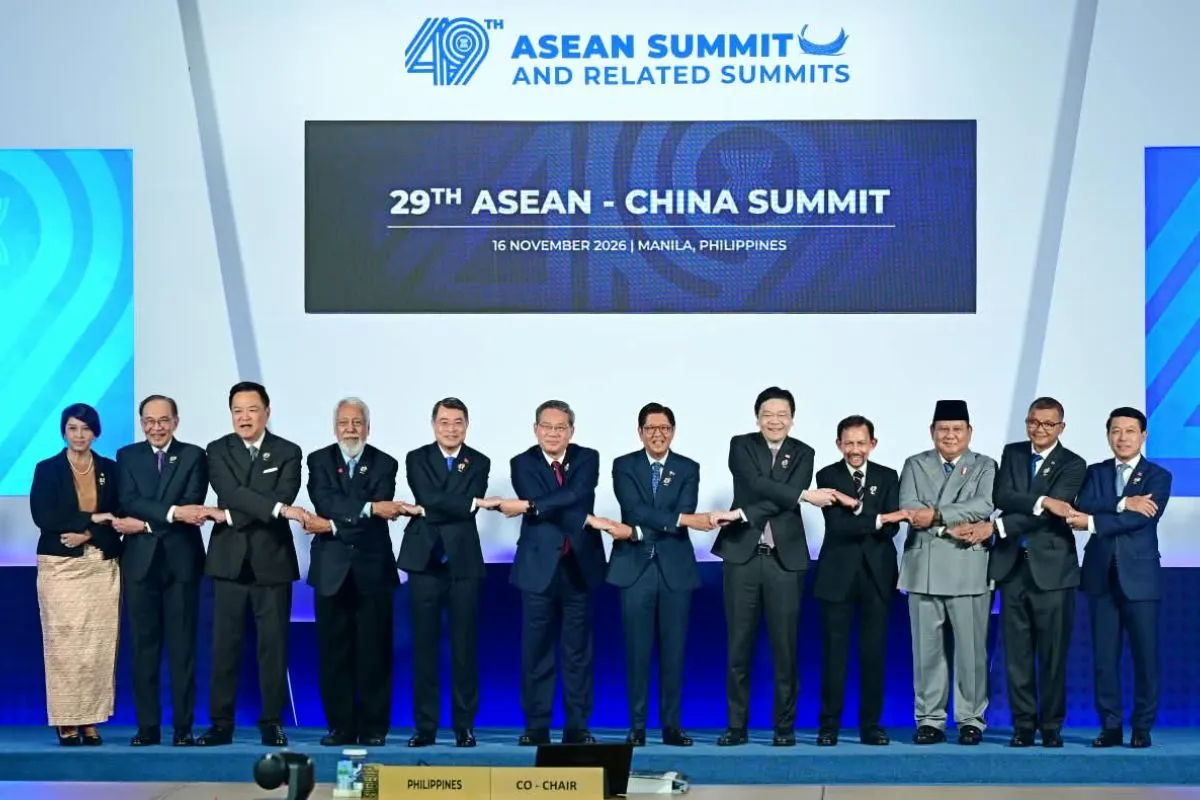
Adopted at the 49th ASEAN Summit, the Declaration on ASEAN Critical Minerals for Regional Resilience and Sustainable Growth sets a framework for cooperation across the minerals value chain. Members agreed to establish a shared definition of critical minerals and a list that can be updated, alongside an ASEAN Critical Minerals Strategy.
The declaration addresses the region's role as a major producer, processor and consumer of minerals needed for industry, the energy transition, digital transformation and emerging technologies. In the text, reported by ANTARA, ASEAN links dependable and diversified mineral supplies to its long-term development, competitiveness and economic security amid changing global economic and geopolitical conditions.
The ASEAN Ministerial Meeting on Minerals (AMMin) will oversee follow-up, develop and implement the strategy, and report on progress. The proposed strategy aligns with the ASEAN Minerals Development Vision (AMDV) 2045 and the ASEAN Minerals Cooperation Action Plan (AMCAP-IV) 2026-2030. It also supports the ASEAN Community Vision 2045 and the ASEAN Economic Community Strategic Plan 2026-2030.
Resource strength and supply-chain risks
An OECD report published on October 27, 2026, illustrates the region's mineral resources: Southeast Asia holds about 46% of the world's nickel reserves, nearly a quarter of its bauxite reserves and 6-7% of its cobalt reserves. Indonesia and the Philippines together produce 68% of global nickel output.
The report, which covers critical minerals in Southeast Asia and India, also identifies risks from the overwhelming concentration of mineral processing in China. It says this leaves ASEAN exposed to supply disruptions, price volatility and political leverage. Restrictions on mineral exports have increased fivefold since 2009, with more than one-fifth of global mineral exports facing at least one restriction.
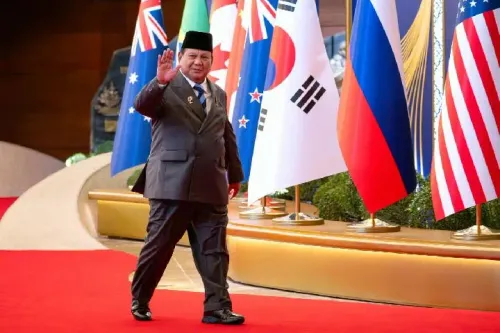
At the summit plenary, Indonesian President Prabowo Subianto cited competition for resources among the global challenges confronting ASEAN, along with economic pressures and geopolitical tensions. Bahlil Lahadalia, Indonesia's coordinating minister for downstreaming and energy, accompanied Prabowo and said cooperation on critical minerals was important to supply-chain resilience and regional economic growth.
Investment from extraction to recycling
ASEAN plans to retain more value from minerals within the region by broadening investment and cooperation. The commitment spans responsible exploration and extraction, processing and refining, manufacturing, recycling, and other downstream operations.
That work will draw on technological innovation, research and development, and workforce training. Circular economy practices will emphasize using resources efficiently and recovering secondary minerals.
Members also plan to strengthen regional supply chains through more trade and investment within ASEAN, wider production and distribution networks, and greater sharing of geological and market information. Both public and private financing will be sought.
To attract that financing, ASEAN will assemble a pipeline of projects suitable for investment and bank financing, use risk-mitigation instruments, and draw on the ASEAN Minerals Investment Forum (AMVest) and ASEAN Minerals Connect (AMConnect). Cooperation with partner countries, international organizations, financial institutions and industry will seek to advance technology transfer and broaden Southeast Asia's participation in global mineral supply chains.
Environmental standards and national authority
The ASEAN Principles for Sustainable Minerals Development will guide mineral-sector development, with the stated aims of maintaining high environmental standards, ensuring social responsibility and delivering benefits to local communities.
Participation in the initiative will be voluntary and mutually beneficial, and cooperation must comply with each member's laws and regulations. The declaration recognizes national sovereignty over natural resources, as well as differences in members' circumstances and economic priorities.
Separate agreement on strategic trade
Leaders at the same summit also adopted a separate declaration to establish an ASEAN Expert Group on Strategic Trade Management. It will coordinate controls on trade in dual-use items and prepare a roadmap with indicative milestones, taking account of national laws and differing levels of readiness among member states.