Indonesia eyes untapped export potential in China, US, India, Japan
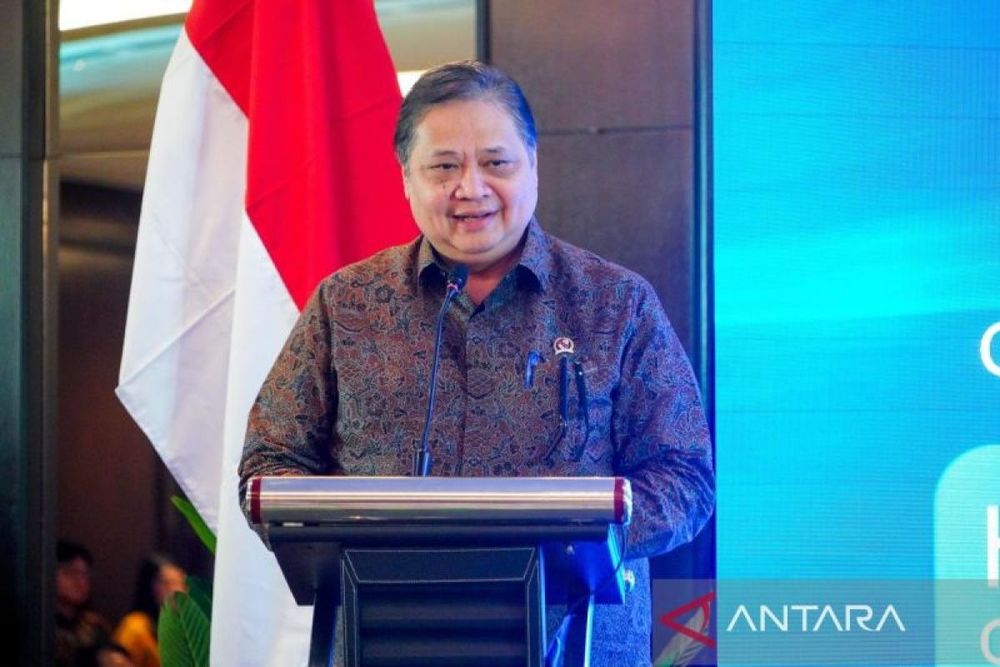
Indonesia is implementing a comprehensive strategy to capture an estimated $60.5 billion in untapped export opportunities across its four traditional trading partners—China, the United States, India, and Japan—according to Coordinating Minister for Economic Affairs Airlangga Hartarto, who has led the ministry since October 2019.
Speaking on Thursday, Hartarto emphasized the government's focus on strengthening commodity- and market-based export strategies to bridge the gap between Indonesia's current export performance and the full potential in these critical markets. The four destinations collectively account for approximately 40 percent of Indonesia's total exports, with the United States representing 11.6 percent, China 10 percent, Japan 9.9 percent, and India 8.8 percent of export share.
China presents largest opportunity despite trade deficit
China, which has been Indonesia's largest trading partner for 13 consecutive years as of 2025, presents the most significant opportunity with an estimated $31 billion in unrealized export potential. Exports to China totaled $16.50 billion in the first quarter of 2026, marking a 17.49 percent increase compared to the same period in 2025. Despite this growth, Indonesia maintains a substantial bilateral trade deficit with China, importing $47.67 billion worth of goods versus exporting $34.46 billion in the first seven months of 2026, creating a deficit of approximately $13.21 billion.
The minister identified minerals and metals along with their derivatives as key categories for expanding Chinese market penetration, alongside machinery and electronic equipment, paper products, rubber, plastics, and chemicals. Indonesia's position as the world's largest nickel producer—accounting for approximately 62 percent of global primary nickel production in 2024 with output of 2.1 million tonnes—supports this minerals-focused strategy. The government's downstreaming policy, which includes export bans on raw nickel ore initially implemented in 2014 and reimplemented in 2020, aims to increase value-addition through domestic processing before export.
Significant gaps identified in US, India, and Japan markets
In the United States market, where Indonesia has recorded strong recent performance with exports reaching $17.89 billion in the first seven months of 2026—a 23.51 percent increase year-on-year—the government has identified a $14 billion export gap. India presents an estimated $10 billion opportunity, while Japan shows $5.5 billion in untapped potential.
China, the United States, and India together accounted for 44.48 percent of Indonesia's non-oil and gas exports in the first quarter of 2026, demonstrating the strategic concentration of trade among these partners. Indonesia's total export value reached $282.5 billion in 2025, representing a 5.99 percent increase from 2024.
Multi-sector approach to market expansion
Hartarto outlined that closing these export gaps requires more than simply exploring new markets. The strategy centers on deepening Indonesia's presence in existing destinations by aligning domestic production capacity with the specific import demands of partner countries.
The mapping results show that boosting exports requires not only exploring new markets but also deepening Indonesia's presence in its traditional export destinations.
The government plans to focus on the mining, agriculture, plantation, fisheries, and manufacturing sectors, with additional mapping planned for electronic, technology, and telecommunications products. This commodity-specific approach aims to identify products with high export capacity while addressing the gap between what Indonesia currently exports and what partner countries import.
Implementation of the strategy will involve strengthened coordination among ministries, government agencies, and private sector businesses to systematically address export barriers. The minister emphasized that this includes regulatory reforms, ensuring compliance with destination market standards, and resolving technical constraints faced by exporters.
Hartarto expressed confidence that the strategy would enable Indonesia to diversify its export commodity mix while generating greater added value. The approach focuses on identifying obstacles faced by businesses and implementing targeted solutions to unlock the full export potential across priority sectors and markets.