Myanmar's Man Maw tin mine resumes operations after three-year suspension
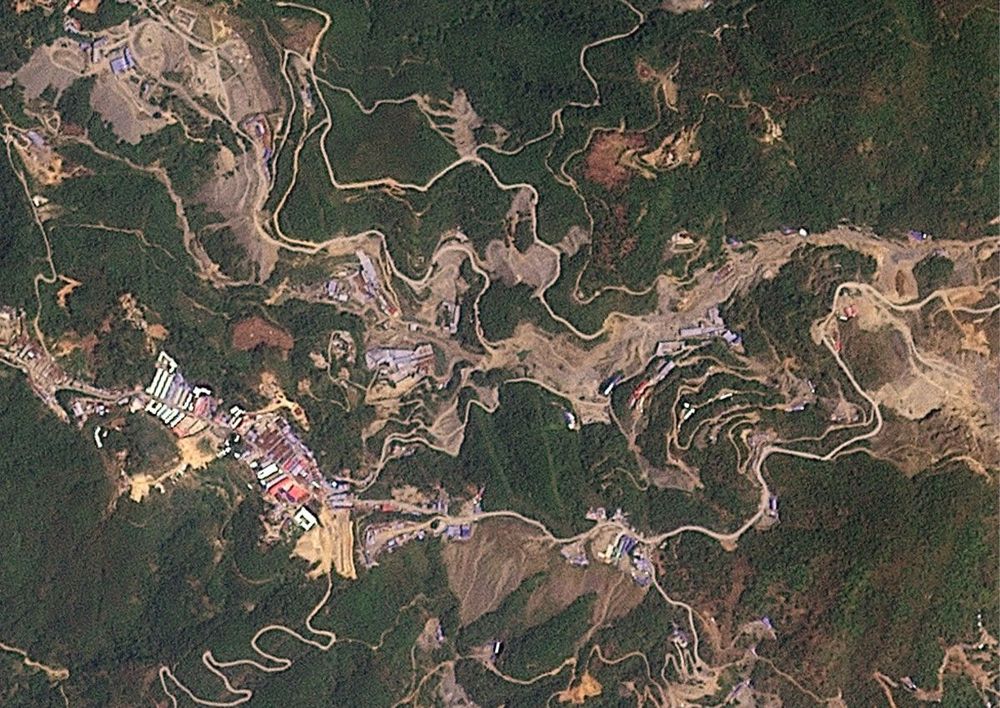
One of the world's largest tin mines, spanning approximately 100 square kilometers in eastern Myanmar's autonomous Wa State, is resuming operations after a three-year suspension, a development with significant implications for global supply chains critical to the artificial intelligence industry.
The Man Maw mine, located about 90 kilometers from Pang Kham in northern Shan State near the Chinese border, has begun what the International Crisis Group describes as a "slow restart" of operations halted in 2023. Tin is essential for AI manufacturing, with solder—which accounts for approximately half of global tin consumption—used to attach microchips to circuit boards and bond electronics in data centers. AI servers require more than three times as much tin as conventional servers.
Global significance of the mine
The mine's emergence around 2010 transformed global tin markets, rapidly elevating Myanmar from negligible production to the world's third-largest tin producer by 2013-2014 and China's largest supplier. At its height in 2016, Myanmar supplied nearly 500,000 metric tonnes of tin ore and concentrate to China, accounting for more than 99 percent of such imports. The facility is estimated to supply at least 10 percent of global tin concentrate production.
"Ore is moving again," analysis shared with AFP stated, though "output remains well below pre-suspension levels." China's imports of tin ore and concentrates from Myanmar in the first half of 2026 have already surpassed 2025's total at nearly 40,000 metric tonnes, according to Beijing's customs data. In 2022, before the suspension, nearly two-thirds of China's imported tin-in-concentrate—totaling 48,000 tonnes—originated from Myanmar, with approximately 70 percent sourced from Wa State.
Evidence of renewed activity
Satellite imagery reveals significant new construction around the massive site, while night-time illumination has returned to higher levels after falling sharply following the suspension, suggesting increased activity. Richard Horsey, senior Asia advisor for the Crisis Group, confirmed evidence of "a steady but uneven ramp-up" at the mine.
The facility's abrupt 2023 closure coincided with the start of the AI boom, triggering a price spike and global scramble for the metal. Tin prices reached a record high of approximately $56,800 per metric ton in January 2026, with an even higher intraday peak near $59,000 per ton in June, representing increases of over 70 percent year-on-year. Global data center construction has announced 190 gigawatts of new hyperscale capacity as of early 2026, driving structural demand growth for tin in semiconductors and electronics.
China's strategic dependence
China, which accounts for 50 percent of global refined tin production, relies heavily on tin ore imports from Myanmar and the Democratic Republic of Congo. These two sources together account for 20 percent of global production and 60 percent of Chinese tin ore imports, highlighting China's strategic vulnerability in this critical supply chain.
Control by the United Wa State Army
Access to Man Maw and information about its operations remains highly restricted by the United Wa State Army, one of the world's largest non-state armed organizations. Established on April 17, 1989, following a mutiny by Wa fighters against the Communist Party of Burma, the group has maintained a ceasefire with Myanmar's central government since its inception. The ethnic minority army controls approximately 27,000 square kilometers of territory with an estimated population of around 560,000 people, operating with Chinese as the working language and the Renminbi as currency.
The group has a long history of international sanctions over its involvement in narcotics trafficking. Analysts suggest the UWSA's Chinese patronage and business ties have allowed Wa State to remain relatively insulated from the civil war consuming the rest of Myanmar since the 2021 military coup.
Challenges ahead
The 2023 mine shutdown likely resulted from internal power struggles among dynastic Wa groups rather than armed conflict, according to the Crisis Group. However, the facility may still face profitability challenges, including flooded mine shafts and depletion of higher-grade ore deposits, potentially limiting how quickly production can return to previous levels.
Any revival of operations, however gradual, carries far-reaching implications amid the international race to secure resources critical to artificial intelligence development and the broader technology sector.