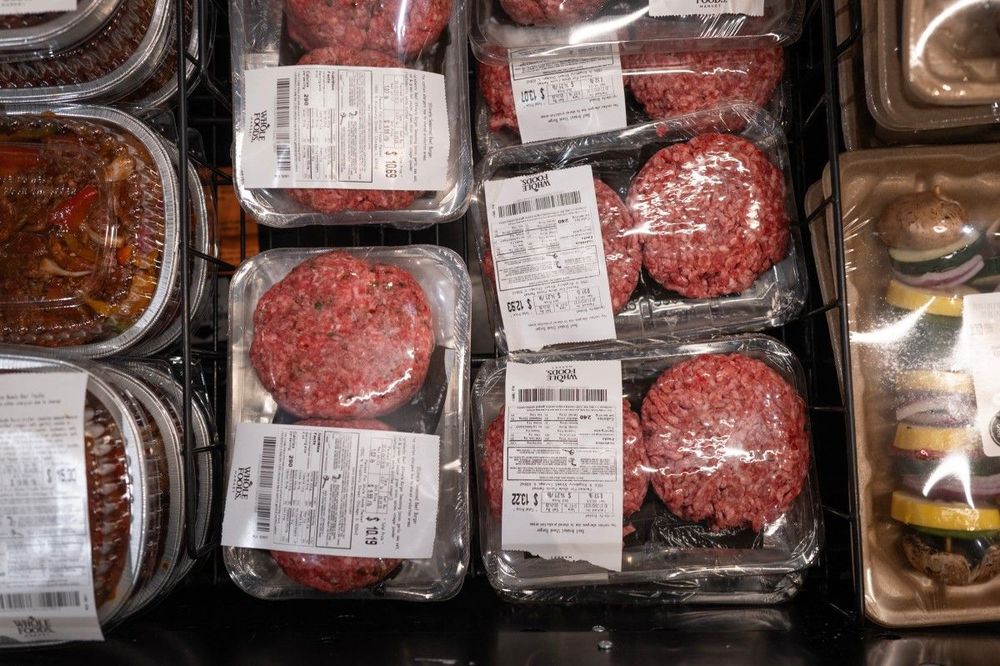
Trump grants 90-day tariff exemption for ground beef imports amid supply crunch
President Donald Trump announced Friday that the United States will temporarily eliminate tariffs on a significant volume of imported ground beef, marking his latest effort to reduce consumer costs as midterm elections approach.
The 90-day measure will allow up to 300,000 metric tons of ground beef to enter the country without the standard out-of-quota tariff, Trump stated on his Truth Social platform. The imported beef will be sold at prices 25 percent below current market rates, though the president did not identify which countries would supply the product.
Shrinking herds drive price surge
The policy responds to mounting pressure on beef prices as the U.S. cattle herd has declined to approximately 87.2 million head as of January 2024, the smallest inventory since 1951. Drought conditions across major cattle-producing states and elevated feed costs have driven the contraction, pushing retail ground beef prices to an average of $5.23 per pound in early 2024, representing a more than 25 percent increase from 2020 levels.
Under the current tariff-rate quota system, beef imports exceeding allocated volumes face a 26.4 percent ad valorem tariff, compared to the lower 4.4 cents per kilogram rate for in-quota shipments. Trump's announcement effectively waives these higher tariffs for the specified import volume. The United States imported approximately 3.2 billion pounds of beef in 2023, primarily from Canada, Mexico, Australia, New Zealand, and Brazil.
Industry pushback from cattle states
The announcement drew immediate criticism from livestock industry representatives and political leaders in major beef-producing regions. Nebraska, Texas, Kansas, Oklahoma, and California collectively account for approximately 45 percent of the nation's cattle inventory, giving these states significant economic stakes in trade policy.
Senator Deb Fischer, a Nebraska Republican, expressed strong opposition to the measure.
We all want lower grocery prices, but as I've said for months, we cannot do it at the expense of American producers. Flooding the market with foreign beef hurts our livestock industry.
The National Cattlemen's Beef Association echoed these concerns. CEO Colin Woodall argued that
flooding the market with government-subsidized, below-market beef is not the way to rebuild the American cattle herd,adding that the policy
sacrifices long-term stability for short-term messaging.
The beef industry generates approximately $67 billion in annual cash receipts for U.S. farmers and ranchers, making it the single largest commodity segment in American agriculture.
Political timing and economic pressures
Affordability issues will be central to November's midterm elections, where Democrats aim to capture control of both congressional chambers from Republicans. Trump defended the policy later Friday, insisting he would reduce beef prices
because that's what the voters want, and that's what I want,though he provided no implementation details.
The president previously demanded that ranchers cut prices and expanded imports of beef trimmings from Argentina, which ranks fourth globally in beef exports with annual volumes exceeding 900,000 metric tons. Argentine grass-fed beef typically carries lower production costs than U.S. grain-fed cattle. Trump also initiated an investigation into meatpacking industry pricing practices.
The administration's actions occur against a backdrop of persistent inflation driven by energy market disruptions. The war on Iran, launched by the United States and Israel in late February, triggered Iranian actions that effectively blocked the Strait of Hormuz, through which approximately 21 percent of global petroleum consumption passes. This blockage has elevated fuel, transportation, and food costs.
Demand remains strong despite uncertainty
Despite elevated prices, American consumers continue purchasing beef at robust levels. The U.S. Department of Agriculture projects total beef consumption will reach 29.4 billion pounds this year, slightly above 2025 levels.
However, the American Farm Bureau Federation warned in May that Americans are consuming more beef than domestic producers can supply. The organization noted that ranchers must either rebuild herds or demand must moderate for prices to decline.
Cattle producers face multiple obstacles to herd expansion, according to Bernt Nelson, an economist at the federation. These include animal health threats such as the New World screwworm, a flesh-eating parasite eradicated from the United States in 1966 but still present in parts of South America and the Caribbean, where recent detection events have triggered import restrictions and quarantine protocols.