Indonesia's Icomex: Ambitious bid to reshape global commodity pricing faces critical tests
Indonesia is preparing to launch the Indonesian Commodity Exchange (Icomex) on January 1, 2027, aiming to transform the country from a commodity price taker into a price maker for strategic exports including crude palm oil, nickel, tin and coal. The initiative comes despite the existence of the Indonesia Commodity & Derivatives Exchange (ICDX), which has operated since 2010 without achieving substantial influence over global commodity benchmarks.
The fundamental question facing policymakers is whether Icomex can attract sufficient trading volume and market participation to establish credible reference prices capable of challenging established international benchmarks, particularly given ICDX's limited success over the past 15 years.
Indonesia's commodity market dominance
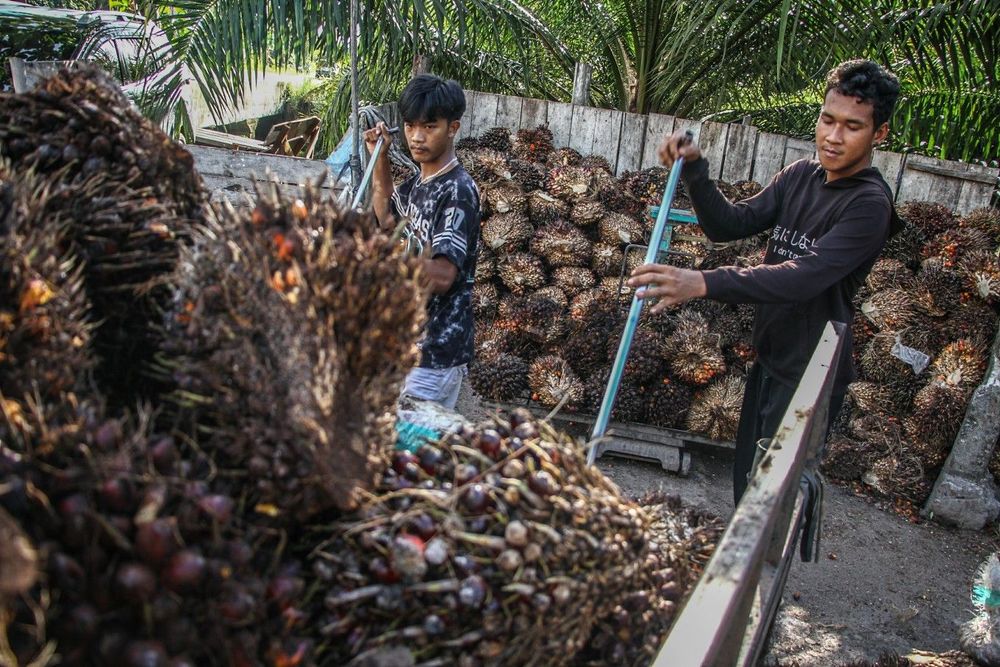
Indonesia's ambitions are grounded in its commanding position across multiple commodity markets. The country produces 46.7 million metric tons of palm oil annually, more than double Malaysia's output and cementing its status as the world's largest producer. In nickel, Indonesia's dominance is even more pronounced, accounting for approximately 65 percent of global production with 2.6 million tons mined in 2025. The country also ranks as the world's second-largest coal exporter after Australia, shipping 549 million tons of thermal coal in 2024, primarily to China and India.
President Prabowo Subianto has argued that Indonesia should not remain dependent on overseas exchanges for price benchmarks despite being a major global producer. The government estimates that cumulative losses from commodity export under-invoicing and transfer pricing reached $908 billion between 1991 and 2024, though these figures vary considerably and have been contested. Recent investigations in 2025 found evidence of transfer pricing practices across all of the country's top 10 palm oil exporters, with preliminary assessments indicating potential losses of at least $88 million.
Regulatory framework and institutional roles
Supervised by the Financial Services Authority (OJK), Icomex is being developed in coordination with state asset fund Danantara and the Mineral Industry Agency. The exchange will employ clearing arrangements modeled on those used in capital markets, with the objective of deepening domestic markets, improving price transparency and strengthening governance.
PT Danantara Sumberdaya Indonesia (DSI), established in May, will play a complementary but distinct role. DSI president director Luke Thomas Mahony clarified that the two institutions will have separate functions: Icomex will establish commodity reference prices through market mechanisms, while DSI monitors exports and verifies prices for coal, palm oil and ferroalloys. DSI is not directly involved in either the operations or trading activities of Icomex.
Danantara believes the exchange could improve transparency and accountability while helping curb practices such as transfer pricing and under-invoicing that have plagued Indonesian commodity exports.
The ICDX precedent and market challenges
The existence of ICDX presents both a reference point and a cautionary tale for Icomex. Established in 2009 and launching operations on March 31, 2010, with a single crude palm oil futures contract, ICDX currently offers trading in gold, crude oil, palm oil and tin. However, its global impact has remained limited. In 2021, ICDX ranked 49th in global derivative exchange volume with just 643,891 contracts traded.
The Indonesian Palm Oil Association (GAPKI) has noted that palm oil trading volumes on ICDX remain constrained, with transactions still dominated by business-to-business arrangements rather than exchange-based trading. This suggests that the success of Icomex will depend not only on its regulatory framework but also on the incentives it offers participants, the depth of market engagement, its transaction mechanisms and how its reference prices interact with existing international benchmarks.
ICDX has expressed support for the Icomex initiative, describing the government plan as a step toward strengthening commodity sovereignty and developing national reference prices for strategic commodities. The exchange indicated it would comply with the new regulatory framework while continuing its existing operations.
Policy measures supporting commodity oversight
The Icomex initiative is part of a broader government strategy to enhance control over commodity markets. In March 2026, Indonesia increased its palm oil export levy from 10 percent to 12.5 percent, generating over $47 million in additional revenue for the palm oil fund to support the biodiesel program and commodity market infrastructure.
The key test for Icomex will be whether it can overcome the market participation challenges that have limited ICDX's influence for more than a decade. Success will require not just regulatory design and institutional coordination, but the active engagement of domestic and international traders willing to use Indonesian reference prices for pricing and settlement. Without substantial trading volume, Icomex risks replicating ICDX's experience of operating without meaningful impact on global commodity price discovery.