Coordinating platform oversight
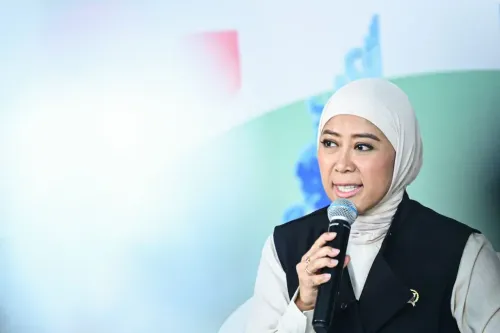
Officials announced the agreement Friday after Indonesian Communication and Digital Minister Meutya Hafid met with Australian Home Affairs Minister Tony Burke in Jakarta. The talks focused on bringing their regulatory approaches into alignment and holding social media platforms accountable.
Hafid said the countries should act together rather than wait for global developments, drawing on their respective regulations and experience to build bilateral and regional cooperation. She pointed to their shared approach to age restrictions as an opportunity to coordinate monitoring and ensure platforms meet their obligations.
Indonesia proposed the bilateral working group to turn that cooperation into specific enforcement measures. The group would work on ensuring that technology platforms comply with each country's safeguards.
"Our measure of success will be whether digital platforms comply with our regulations and whether the protections in place effectively safeguard children and families," Hafid said.
Age restrictions and compliance
Both countries already restrict children's access to social media. Indonesia's Government Regulation No. 17 of 2025, known as PP Tunas, took effect on March 28, 2026, restricting access for users under 16, according to the Ministry of Communication and Digital Affairs.
The initial phase required eight platforms to adapt their services, including restricting access for under-16 users: X, Bigo Live, Threads, Facebook, Instagram, TikTok, YouTube and Roblox.
Hafid said that, as of October 7, 2026, TikTok had deactivated nine million underage accounts to comply with PP Tunas. Meta had deactivated 184,000 accounts belonging to children under 16, comprising 85,000 on Instagram and 99,000 on Facebook. It had also moved 22.5 million accounts belonging to minors to teen accounts. Threads, also owned by Meta, had not reported any deactivations.
Australia's social media minimum age obligation has been in effect since December 10, 2025. It requires age-restricted social media platforms to take reasonable steps to prevent Australians under 16 from holding accounts, according to the Australian Department of Infrastructure, Transport, Regional Development, Communications, Sport and the Arts. Platforms that fail to take those steps may face penalties of up to A$109.2 million.
AI governance and international cooperation
The Jakarta talks also covered ways to strengthen cybersecurity resilience, develop digital talent and govern artificial intelligence. Hafid said Indonesia was drafting a presidential regulation on AI, along with a national development roadmap and an ethical code.
Kompas.id reported that two proposed AI presidential regulations address ethics and the National AI Roadmap for 2026–2030. Both were submitted by the Ministry of Communication and Digital and included in Presidential Decree No. 38 of 2025, which President Prabowo Subianto signed on December 22, 2025. The decree listed 46 draft presidential regulations to be enacted within a year.
Indonesia's broader cooperation on child protection also includes the Global Coalition for Children's Rights and Protection in the Age of AI. Jakarta announced on October 7, 2026, that it had joined the coalition following a September 22 forum in New York co-led by the leaders of France, Spain, Kenya and Australia.
Jakarta said it would attend a follow-up summit in November 2026 to help shape international guidelines.