Improving Educational Management Efficiency through Academic Management
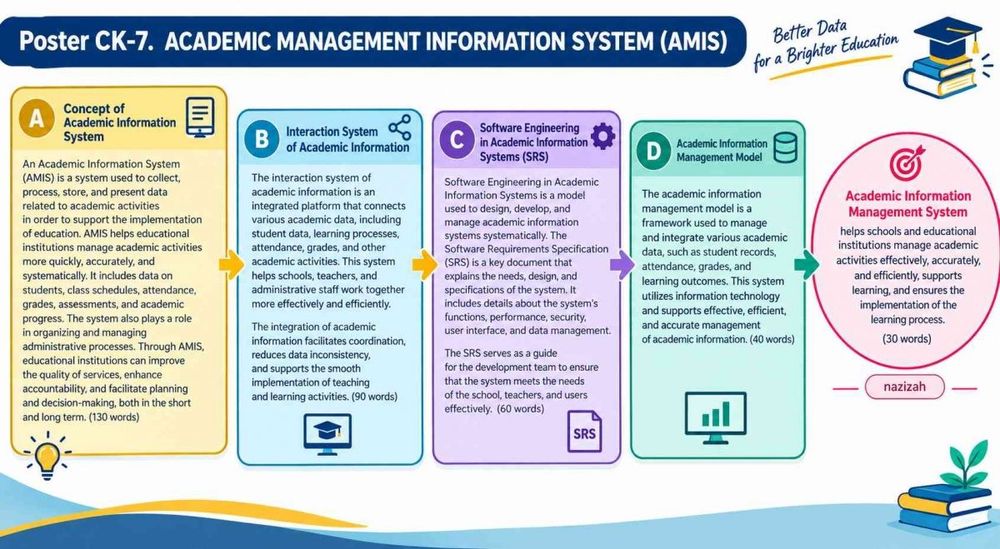
An Academic Management Information System functions as the central nervous system of modern educational institutions, collecting, processing, and distributing critical academic data. These systems manage student records, class schedules, attendance tracking, grade recording, and assessment results. While technology offers significant promise for improving educational administration, the path to genuine efficiency requires more than simply installing software.
The global shift toward digital academic management reflects broader trends in educational technology. By 2025, 75% of K-12 schools worldwide will use learning management systems daily, up from 58% in 2020. This acceleration mirrors substantial investment in educational technology infrastructure, with the online education market expected to reach $185.20 billion in 2025, growing at 8.56% annually. Despite this widespread adoption, with 83% of educators now reporting regular use of digital tools, the critical question remains whether these systems deliver on their efficiency promises.
Streamlining Academic Data Operations
Traditional manual academic record-keeping consumes considerable time and creates opportunities for human error. Recording student information, maintaining attendance logs, calculating grades, and preparing reports manually burdens staff and delays information access. Digital systems address these challenges by storing academic data systematically and enabling authorized personnel to retrieve information according to specific needs.
Universities implementing academic management systems have reported reducing administrative workload by up to 40% through automation of routine tasks such as attendance tracking and exam scheduling. Teachers can manage student grades and attendance more efficiently, while administrative personnel prepare academic reports faster. Educational leaders gain immediate access to information needed for monitoring teaching and learning activities.
However, speed alone does not guarantee value. Digital processing delivers optimal benefits only when data entered is accurate, current, and accountable. Systems processing incorrect information simply generate flawed results more quickly than manual methods.
Integrating Information Across Academic Functions
Effective academic management systems function as more than data repositories. They integrate various academic activities within unified platforms where student records, class schedules, attendance, grades, and assessment results interconnect. Authorized personnel can access and utilize information without repeatedly entering identical data across separate systems.
This integration reduces repetitive administrative work, minimizes data inconsistencies, and improves coordination among teachers, administrative staff, homeroom teachers, and educational leaders. Conversely, using disconnected applications without integration mechanisms creates duplicated effort and complicates report preparation. Research indicates that Student Information System implementations typically fail due to poor planning, disconnected stakeholders, weak data governance, and inadequate change management rather than technology limitations.
The evidence demonstrates that planning represents 80% of successful implementation while technology represents only 20%. Institutions that skip planning face adoption problems and delays, regardless of how sophisticated their chosen technology may be.
Building Human Capacity for System Success
Technology capabilities mean little without competent users. Teachers, administrative staff, and educational leaders must understand how to enter, update, process, and utilize academic information according to their respective responsibilities. Yet significant gaps persist in professional development. As of Fall 2024, only 47% of teachers reported receiving training for digital tools despite many already using these technologies in classrooms.
Research findings reveal that key implementation issues include lack of end-user training, lack of enthusiasm, system unavailability, lack of technical support, and difficulty registering accounts. A 2025 systematic review of professional development programs found that effective teacher training for digital tools must be hands-on, collaborative, sustained, and aligned with classroom needs. One-time workshops prove ineffective for building lasting competency.
Beyond user competence, data security and confidentiality require rigorous attention. Student personal information and academic records demand protection through access controls, secure passwords, data backups, and clear information management procedures. In the United States, the Family Educational Rights and Privacy Act serves as the foundational federal law protecting student education records, limiting access and specifying rules for data handling. Similar legal frameworks exist in other jurisdictions, establishing baseline requirements for responsible data stewardship.
Without adequate training and proper governance, system implementation may create problems including data entry errors, data loss, or information misuse. Development efforts must therefore incorporate improvements in educational staff competencies alongside stronger data security systems.
Balancing Technology with Strategic Implementation
Academic Management Information Systems represent strategic instruments for improving educational management efficiency rather than simple replacements for manual administration. These systems can accelerate data processing, integrate academic information, reduce administrative workloads, and support more informed decision-making. However, these benefits materialize only when systems are designed according to institutional needs, data is managed accurately, and human resources possess necessary competencies.
Educational institutions must establish balance among technology, people, data, and governance. When implemented appropriately, academic management systems become foundations for effective, transparent, and accountable academic administration while supporting continuous improvements in educational quality. The technology serves the institution's mission rather than driving it, enabling educators and administrators to focus on their core purpose of facilitating student learning and development.