From Maluku refugee camp to US tech sector: One scholar's journey of resilience
Richard Waery's life exemplifies how a single opportunity can reshape destiny. Born in Ternate, Maluku Islands, his journey from refugee camp resident to technology professional in Washington, D.C. illustrates the transformative power of education and human resilience.
In 1999, when Richard was a teenager, sectarian violence erupted across Maluku, displacing approximately 370,000 people and claiming an estimated 5,000 lives over three years of conflict. His family became part of this humanitarian crisis, forced to abandon their home with only what they could carry.
The violence unfolded against the backdrop of Indonesia's political and economic upheaval following the May 1998 fall of the New Order regime. The Asian financial crisis had sent the rupiah plummeting 83 percent, plunging millions into poverty and exacerbating existing tensions in regions like Maluku.
Flight to safety
Richard's father and younger brother had already fled to their grandparents' home in Halmahera before the riots intensified, leaving Richard and his nine-month-old baby brother in his mother's care. The teenager had wanted to stay for a school event, but the escalating violence made that impossible.
The family reunited in Halmahera, though even North Maluku offered little respite. Since October 1999, fighting in the region had left approximately 3,000 dead and displaced over 100,000 people. Eventually, the family made their way to a refugee camp in Manado, where they would spend the next five years.
Despite the uncertainty and limited resources, Richard's mother insisted on prioritizing education. He completed elementary and middle school in the camp before attending SMA 5 Manado for high school, though transportation and institutional choices remained scarce.
A door opens
The turning point came when a teacher handed Richard an application form for a scholarship from the Putera Sampoerna Foundation. Established in 2001 by tobacco heir Putera Sampoerna, the foundation has since distributed more than 34,000 scholarships to academically talented but financially disadvantaged students across Indonesia.
Richard faced significant obstacles, including limited English proficiency and his conservative family's concerns about sending their 15-year-old son abroad. His parents were initially hesitant, worried about his safety and supervision so far from home.
Foundation representatives traveled to Manado to meet directly with Richard's family, reassuring them about the support systems in place. Their intervention proved crucial in securing parental consent for what Richard had assumed would be domestic education funding.
International education pathway
In 2005, Richard secured a place at United World College in the United States to pursue an International Baccalaureate Diploma. UWC, founded in 1962, operates an international network of 18 schools and colleges across four continents, with approximately 80 percent of students receiving financial support through national committees.
After a brief orientation period in Bogor, Richard embarked on his journey to the United States. The culture shock and academic pressure were intense, compounded by language barriers, but he persevered through the rigorous IB program.
Following his UWC graduation, Richard continued to Westminster College in Missouri, studying Computer Science and Biology. Westminster's comprehensive curriculum in programming, systems analysis, and software development provided the foundation for his future career in technology.
Building a career
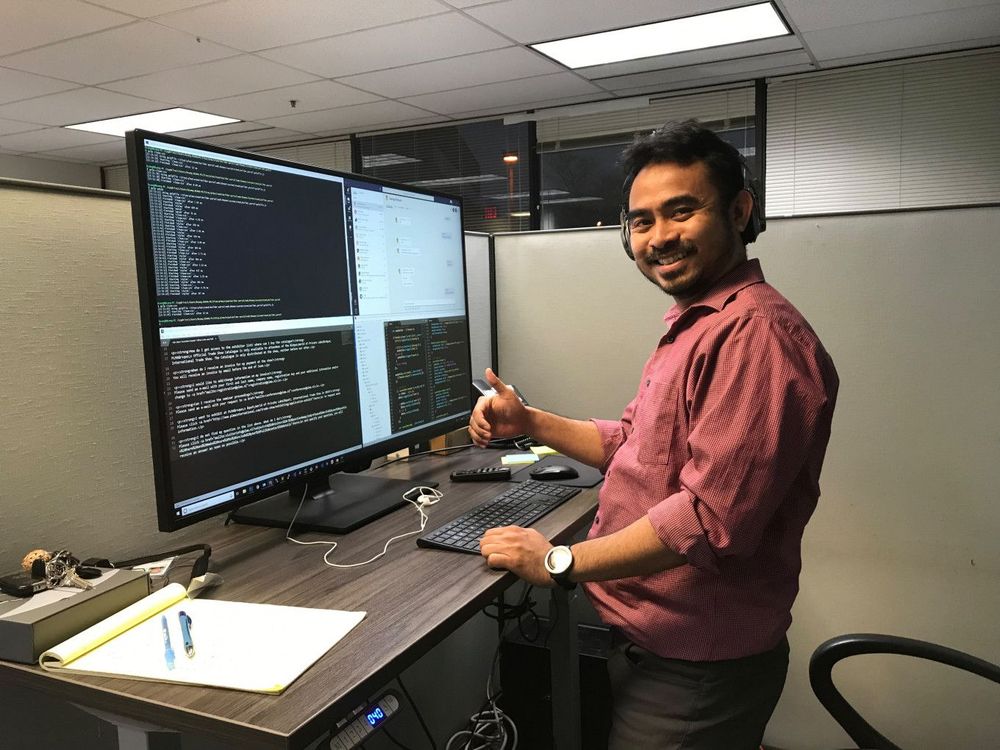
While pursuing his degree, Richard worked as a programming and 3D game modding instructor, teaching C++ and game design using engines like Unreal and World of Warcraft. He also served as a programmer analyst for Mail & More, Inc., managing all IT aspects from hardware maintenance to software development and system security.
His performance impressed the company enough to sponsor his work visa after graduation. In 2014, he relocated to Washington, D.C., entering the government technology sector with a position at WebFirst.
During his tenure at WebFirst, Richard witnessed and contributed to remarkable growth as the company expanded from approximately eight employees to over 50, handling multimillion-dollar projects for the United States federal government.
Lessons and legacy
Richard attributes his success to resilience, institutional support, and the people who opened doors at critical moments. His story demonstrates how access to quality education can create opportunities that enable individuals to overcome adversity and contribute on a global stage.
For the people reading my story, just know that anything in life, good or bad, it'll pass. One thing doesn't define your whole life, so just keep preparing yourself so that when an opportunity comes, you're ready to take it seriously. There are lots of nice people out there. Be very open to the blessings and be open to the guidance to anybody who would want to extend their hands.
Now married to a Nepalese woman with two children, Richard has stepped back from full-time work to focus on his young family. After two decades of rebuilding from displacement, he now has the stability to make deliberate choices about his time.
His journey from a Maluku refugee camp to technology professional in the United States spans twenty years of perseverance, representing countless young Indonesians awaiting their chance to develop their potential through education and opportunity.