Menko PMK Finalizes No-Cost Education Scheme for Religious-based Educational Institutions
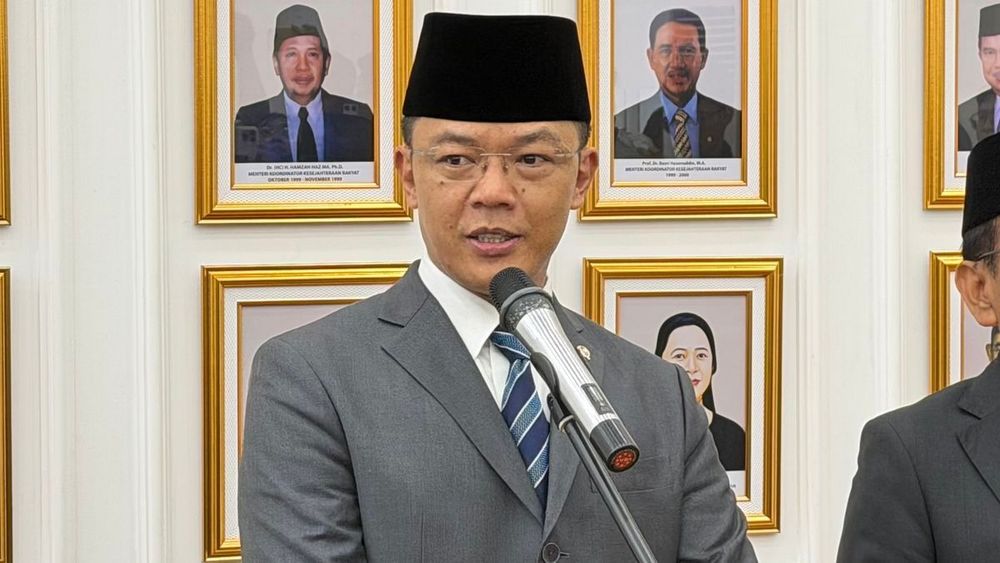
Indonesia's Coordinating Minister for Human Development and Culture, Sugiono, announced on Tuesday that his ministry is finalizing a comprehensive cost-free education policy aimed at religious-based educational institutions across the country. The initiative represents a major expansion of educational access, particularly in Indonesia's most underserved regions.
Speaking at a press conference on October 20, 2026, Sugiono outlined a three-pronged approach that targets basic and secondary religious education in underdeveloped, frontier, and outermost regions known as 3T areas. These regions face significant developmental challenges including limited infrastructure, geographic isolation, and lower economic growth compared to other parts of Indonesia. The policy also aims to expand access to Religious Higher Education Institutions through the elimination of Single Tuition Fees and increased quotas for the Indonesia Smart Card program for higher education.
The scale of this initiative is substantial. Indonesia's religious education sector encompasses approximately 37,000 madrasahs serving about 5.7 million students, representing roughly 13 percent of the country's 44 million students in formal education. Additionally, the country has between 10,000 and 13,000 pesantrens with around 2.7 million students enrolled, and enrollment has been growing in recent years.
"We must align our perspectives that this free education initiative is designed comprehensively, embracing both general and religious education equally," Sugiono stated.
His emphasis on parity reflects Indonesia's dual education system, where one subsystem operates under the Ministry of Education and Culture, while madrasah education and religious education fall under the Ministry of Religious Affairs, which received IDR 75.62 trillion from the total IDR 769.09 trillion education budget allocated in the 2026 State Budget.
The minister stressed that implementation must be grounded in careful fiscal planning.
"The primary goal of this additional allocation is to significantly reduce parents' financial burdens regarding essential student needs that have not been covered by schools," he explained.This focus is particularly relevant given that madrasahs are often located in remote areas and tend to be less expensive than other schools, making them especially accessible to low-income families.
Evaluating Financing Scenarios
The Coordinating Ministry is currently evaluating multiple financing scenarios aligned with the nation's fiscal capacity. These scenarios examine proposals to augment components of the School Operational Assistance program, known as BOS, which was first established in 2005 to reduce financial burdens on families and has been running for nearly two decades as Indonesia's main school subsidy program. Proposed additions include support for uniforms and dormitory schools, along with expanding the targets of the Indonesia Smart Program.
Research has demonstrated the effectiveness of such assistance programs. According to survey data, recipients of the Indonesia Smart Card program had a dropout rate of just 2.92 percent compared to 11.28 percent for non-recipients, showing the significant impact these programs have on keeping students in school.
However, the ministry acknowledges existing challenges in fund management. Recent policy evaluations have identified delays in distribution, limited understanding of digital technology among implementers, and constraints in the online reporting system as obstacles that must be addressed in the new policy framework.
Focus on Educator Welfare
Beyond student assistance, Sugiono emphasized the importance of equity for educators. He instructed that each financing scenario must include measurable components addressing teachers' salaries and welfare.
"Each financing scenario must be clearly detailed, covering everything from BOS funds, KIP for higher education, to educators' rights," said the Gerindra Party secretary-general, who assumed the coordinating minister position on October 1, 2026, succeeding Pratikno.
To achieve this, the ministry is working to identify the status and distribution of civil servant teachers in both public and private educational institutions.
"This will serve as our database to map out equitable financing for educators," Sugiono concluded,underscoring the government's commitment to comprehensive reform that addresses both student access and teacher welfare in Indonesia's religious education sector.