Expanding beyond established hubs
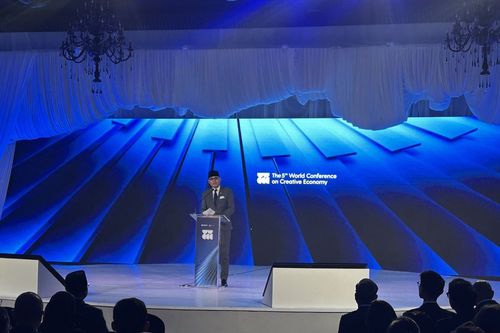
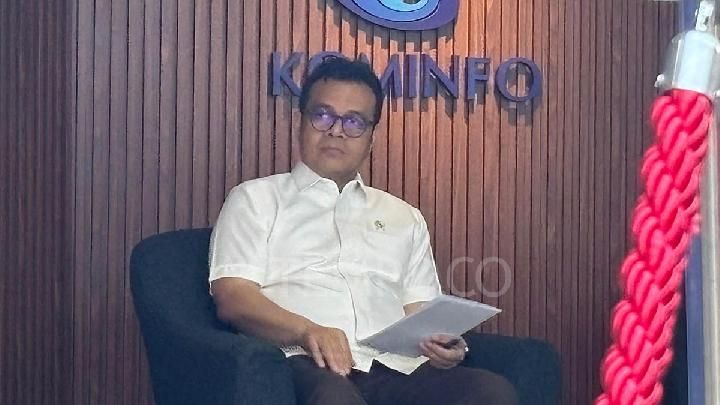
Deputy Minister Nezar Patria outlined the push at Bali Tech Week 2026 in Denpasar, Bali, on Thursday. He said Indonesia wants AI data centers outside Java and Batam, with development guided by industry needs.
The current concentration is substantial: Greater Jakarta and Batam together account for more than 60 percent of the country's data centers, according to a Jakarta Post analysis published in October 2026.
Nezar pointed to frequency tenders as one regulatory tool for extending connectivity. Winners must build networks in both developed and underdeveloped regions, an obligation that could pair network construction in Java with work in Papua, he said.
Sulawesi and Kupang are among the locations that could be considered for data centers, depending on local potential and market demand, Wayan Toni Supriyanto, Komdigi's director general of digital infrastructure, said on October 20, 2026. He said the government is providing backup connections to national and international connectivity hubs to keep facilities outside Java and Batam from becoming isolated.
Wayan said site selection must account for market readiness, available resources, power supply and connectivity. Demand from government, industry, education and public services should help determine which regions receive priority, alongside the suitability of each location. Investment and construction alone are not enough, he said; reliable operations also require a supporting ecosystem.
Capacity and investment plans
Indonesia had more than 200 commercial data centers operating as of September 2026, providing approximately 580 MW of capacity, according to an October 2 legal newsletter from Walalangi & Partners. The newsletter said the government expected projects under development to add another 1.3 GW. Nezar put the target for ongoing projects at up to 1.3 GW.
Coordinating Minister for Economic Affairs Airlangga Hartarto estimated the investment pipeline for the planned 1.3 GW expansion at US$15 billion to US$20 billion on July 10, 2026. Operational capacity at that time was about 580 MW, he said.
Among the projects announced during 2026, Bisnis.com reported that BDx broke ground on its 640 MW AI Campus 2 (CGK4) in Jatiluhur, Purwakarta, West Java, on September 22. The project is backed by an 845 MVA grid power supply. Digital Edge is preparing its CGK Campus in Bekasi with 500 MW of capacity and the potential to expand to 1 GW.
In Batam, DayOne signed a power purchase agreement with PLN Batam for about 511 MVA, or 450 MW, in Kabil. Firmus, Nvidia and DayOne are also preparing a 360 MW AI factory campus in Batam designed for up to 170,000 Nvidia accelerators. That campus is targeted to begin operating in the first quarter of 2027, according to Bisnis.com.
Water supply concerns
Water demand has already drawn objections to projects in established development areas. The Jakarta Post reported that construction of a major data center in Jatiluhur, West Java, was halted on September 30, 2026, about a week after groundbreaking. The main reason was community opposition to projected water consumption equivalent to the daily needs of 220,000 people.
In Batam, protests over the strain on the rain-fed water supply prompted authorities to require data centers to build their own seawater desalination facilities, the same analysis said.
The Jakarta Post also described restrictions in neighboring Malaysia. Selangor has imposed a 30 percent local-content requirement on new data center investments, while Johor has stopped approving applications for water-intensive facilities that can use up to 50 million liters a day.
Permits and regulations
Nezar said Komdigi does not oversee data center construction permits; those involve the ministries responsible for investment and industry. A proposal to give data center development National Strategic Project status, known as PSN, remains under discussion.
The regulatory framework currently spans several sectors rather than a single overarching data center regulation, according to Walalangi & Partners. Its October 2 newsletter identified requirements covering investment, electronic system operators, personal data protection, energy and the environment. Data center activity falls under the KBLI 63102 classification, which permits 100 percent foreign investment.
Wayan said the government has prepared draft presidential regulations covering submarine cables and data centers, and both are entering public consultation. The government is seeking feedback from industry participants, public agencies and private companies to refine the drafts.