Platforms asked to explain moderation decisions
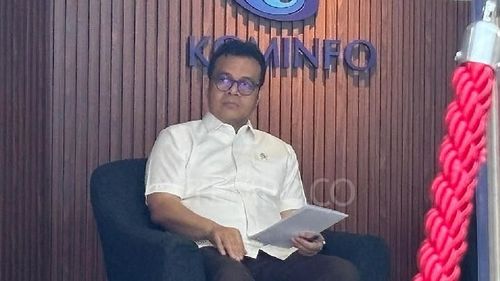
In a statement received in Jakarta on Friday, October 23, Mediodecci Lustarini, secretary of the ministry's Directorate General of Digital Space Oversight, urged platforms to make clear how they generate, display and distribute content. The ministry said transparency is increasingly important as AI produces human-like opinions, including through automated accounts or bots.
The ministry wants platforms to label AI-generated material, explain why they moderate or restrict posts, and offer accessible ways for users to file complaints and appeals. It framed those measures as safeguards for people's rights to obtain information, express opinions and decide what they want to see.
Mediodecci said moderation decisions should turn on whether material breaks regulations or harms the public. Disagreement with the government, she said, is not by itself grounds for treating criticism as a violation.
For users whose posts reach fewer people, the ministry called for explanations that identify whether community rules or algorithmic recommendations are responsible.
Reports document restrictions on fire-related content
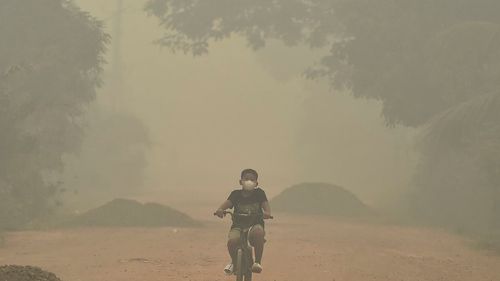
The allegations come as Indonesia confronts extensive fires. Mongabay reported on October 23 that Nusantara Atlas data put the area burned through September at about 1.92 million hectares (4.74 million acres), including forests. That was more than twice the area recorded in August.
Mongabay described several October cases involving wildfire-related posts. On October 10, Instagram blurred a post by the NGO YIARI and marked it as "sensitive content." On October 15, TikTok removed a Nalar Rawat Institute post that had received 500,000 views, citing alleged community-guideline violations. The institute's appeal was rejected.
TikTok also removed a video by Siak district chief Afni Zulkifli on October 20 after it had drawn 5 million views. Following an appeal, the platform restored it that evening, Mongabay reported.
The media-monitoring NGO Remotivi told Mongabay it had received 142 verified user complaints about content moderation from January 1 through October 15, 2026. About 85% involved moderation linked to requests from the communications ministry. Those figures concern moderation complaints broadly; the ministry's denial specifically covers requests to remove or restrict fire-related material.
Digital rights group SAFEnet also told Mongabay it had seen similar restrictions involving posts about the major Sumatra floods in 2025 and the August 2026 protests.
Meta AI answers are not company statements
The ministry's request for clarification from Meta followed widespread concern about Meta AI responses linked to the alleged restrictions on wildfire content. Mediodecci cautioned that a chatbot's answer should not automatically be read as the company's official position or accepted as evidence of an allegation without verifiable confirmation.
She said AI can help people find and understand information, but it can also give inaccurate answers. Claims about government policy or accusations against particular parties require checks against credible sources.
The ministry advocated a "trust but verify" approach: people can use AI while comparing information, checking its sources and withholding unverified outputs from further circulation.
Current ethics guidance and pending regulations
The ministry pointed AI developers to Ministerial Circular No. 9 of 2023, which sets out principles covering transparency, security, credibility, accountability and protection of user rights. According to the AIinASIA Policy Atlas, the circular was promulgated on December 19, 2023, and reconfirmed as the operative AI ethics standard on August 27, 2026. It is soft law and carries no sanctions.
The government is also preparing an AI ethics Presidential Regulation and the National AI Roadmap 2026–2029 to strengthen national AI governance. The atlas's September 2026 account says the two draft Presidential Regulations were included in the program under Presidential Decree No. 38 of 2025, signed in December 2025, but neither had been signed into law as of late 2026.
The atlas cites Deputy Minister Nezar Patria as saying the planned ethics regulation is expected to introduce no sanctions of its own. Penalties would instead remain under existing electronic information and pornography statutes.
It also reports that the draft AI regulation was revised following formal submissions in June 2026 from the US-ASEAN Business Council and the US Chamber of Commerce, as US technology companies pressed to reopen discussions.