Warning signs and protection for children
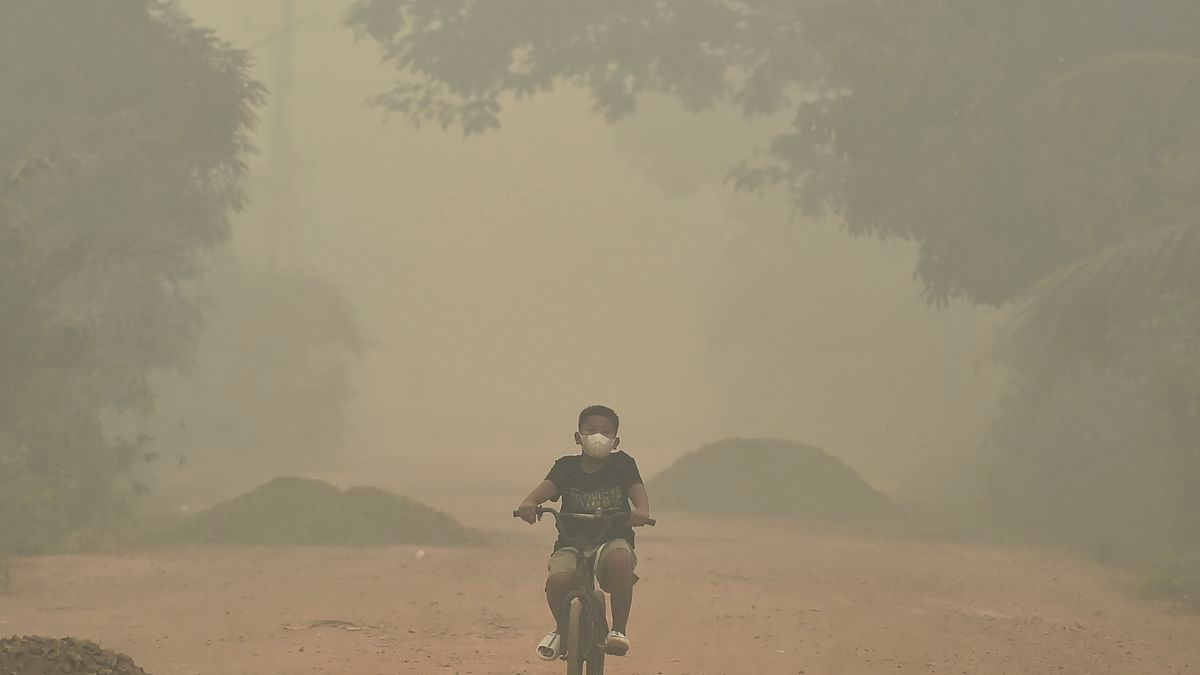
IDAI Central Executive Chair Pripim Basarah Yanuarso said children depend on adults and the state for protection. In a statement received by Kompas.com on October 23, he described children as the group most vulnerable to smoke disasters, while often having little opportunity to make their needs heard.
"It is our responsibility as adults and as a state to ensure they are safe," he said.
Pripim highlighted the needs of children, particularly toddlers, with asthma, heart disease, chronic lung disease or disabilities, noting that they often depend on oxygen and high-risk medical equipment.
Parents should seek immediate care at the nearest health facility if a child has severe difficulty breathing, chest wall retractions, cyanosis, reduced consciousness or an inability to drink, IDAI said.
Pripim urged families, schools, healthcare providers and government agencies to act before symptoms develop, prioritize vulnerable children and evacuate when surroundings become unsafe. He framed decisions ranging from closing windows to evacuation as measures to uphold children's rights to clean air and health.
Illness across seven provinces
The respiratory infections, known in Indonesia as ISPA, were reported across 68 districts and cities in seven provinces. The Ministry of Health's October 21 breakdown included 258,298 cases among residents older than five and more than 75,000 among children ages zero to five.
An earlier snapshot showed South Kalimantan and South Sumatra with the largest case counts, each above 74,000 as of October 13. Those figures came from ministry data cited by Arzeti Bilbina, a member of Commission IX of Indonesia's House of Representatives (DPR).
In its August 21 data, the ministry identified the affected provinces as Jambi, Riau, South Sumatra, West Kalimantan, Central Kalimantan, South Kalimantan and East Kalimantan. Six had declared a disaster emergency alert, or siaga darurat, during a prolonged dry season that began in early 2026.
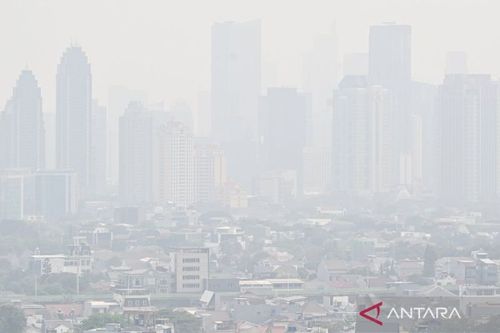
Hazardous air conditions persisted in several regions. Ministry monitoring at 8:40 a.m. WIB on October 22 placed them in the Air Pollution Standard Index's black, or hazardous, category, defined by PM2.5 levels above 300.
Extent of the fires
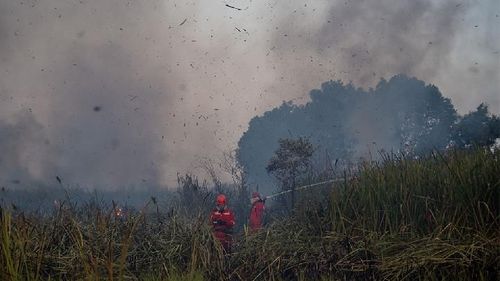
The Ministry of Forestry reported that fires had burned 202,000 hectares of forest and land nationwide by August 18. The January-June total was 107,465 hectares, up 110% from the same period in 2023, the previous El Niño year.
Wikipedia's account of the 2026 Indonesian wildfires describes the fires as extreme because of a very strong El Niño and links the dry season to the developing 2026-2027 El Niño event. It also describes large-scale clearing for plantations and mining as a suspected contributor to land becoming extremely dry and fire-prone.
The Indonesian Forum for the Environment (WALHI) reported that corporate concessions contained 74% of Kalimantan's hotspots. Its figures included 10,739 hotspots in oil palm plantation Right to Cultivate (HGU) areas, 7,880 in mining concessions and 6,905 in areas covered by Forest Utilization Business Permits (PBPH).
Health services and calls for national action
The government has readied healthcare facilities, provided oxygen shelters and deployed tens of thousands of health workers. By October 22, the Ministry of Health had mobilized 1,691 community health centers, known as puskesmas, and prepared 360 referral hospitals and 87 public health laboratories. It also reported 18,547 general practitioners and specialist medical staff. Local governments had established 491 oxygen houses across the affected regions.
On October 16, Bilbina called for a national Extraordinary Event (KLB) or health crisis declaration in response to the smoke. Citing Ministry of Health Decree No. 1 of 2026 as the legal basis, she argued that regional intervention remained limited and that a national designation was needed to mobilize the state budget.