One-day training and mobile forecasts
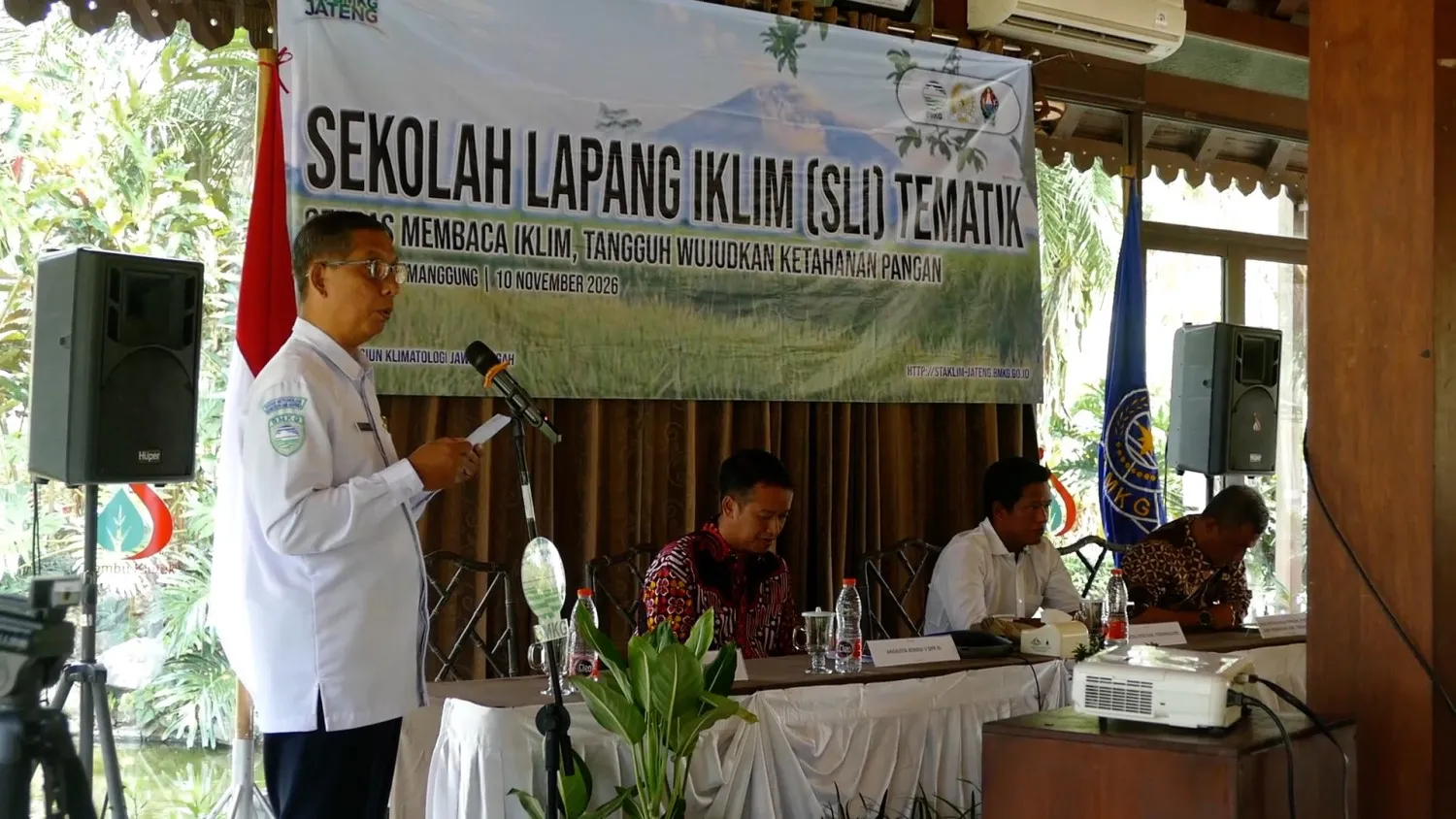
The session combined the Sekolah Lapang Iklim (SLI), or Climate Field School, program with access to weather information services. Goeroeh Tjiptanto, head of BMKG's Central Java Climatology Station, said the Temanggung event used the one-day SLI Tematik format, which introduces climate conditions and their applications in farming. Unlike this thematic session, SLI Operasional provides mentoring from planting preparations through harvest.
BMKG introduced the InfoBMKG mobile app, which supplies real-time weather, climate and earthquake information. Farmers can check local rain forecasts before applying fertilizer, for example, to avoid having it washed away by heavy rain.
The event was organized jointly by BMKG and Sofwan Dedi Ardyanto, a member of Commission V of Indonesia's House of Representatives (DPR RI). His expert staff member Yosep Heristyo Endro Baruno said farmers received instruction in using InfoBMKG for daily weather predictions, seasonal forecasts and rainfall indices. Farmers also received a plaque displaying a map of normal rainfall for Temanggung Regency.
Planting advice as the rainy season begins
BMKG's Central Java Climatology Station cautioned farmers against planting as soon as the first rains arrive. After a long dry season, initial rainfall may not replenish soil moisture sufficiently. The station advised waiting until the ground was wet enough and estimated that planting could be possible around late November 2026.
The station's November 10 assessment showed different rainy-season start dates across Temanggung Regency. Some areas bordering Wonosobo had already entered the season in early November. Parakan and nearby areas were expected to follow around November 11-20, while areas bordering Semarang were not expected to enter the rainy season until early December.
The rainy season in Temanggung was forecast to peak in January and February 2027.
The field school's longer record
The SLI program is tied to Presidential Instruction No. 5 of 2011 on securing national rice production under extreme climate conditions. In a report dated May 4, 2018, BMKG said it had run the program since 2011 at 316 locations in 33 Indonesian provinces, reaching about 8,000 participants.
That report also said harvests from SLI Stage 3 activities had shown production gains of up to 30% compared with average production. Those results concerned the Stage 3 activities, not the one-day Temanggung session.