Ratification deadline approaches
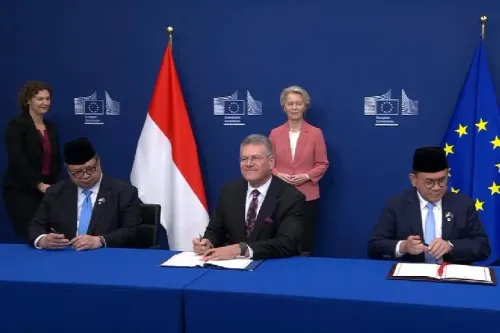
Indonesia's Coordinating Minister for Economic Affairs Airlangga Hartarto and Trade Minister Budi Santoso signed the IEU-CEPA and an accompanying Investment Protection Agreement (IPA) in Brussels on November 21, 2026, alongside European Commissioner for Trade Maroš Šefčovič, according to Investortrust.id. European Commission President Ursula von der Leyen witnessed the signing after 19 negotiating rounds over about a decade.
European Parliament consent and Indonesian ratification remained pending as of late November, Trusty.report reported. Neither agreement had completed the procedures required to enter into force.
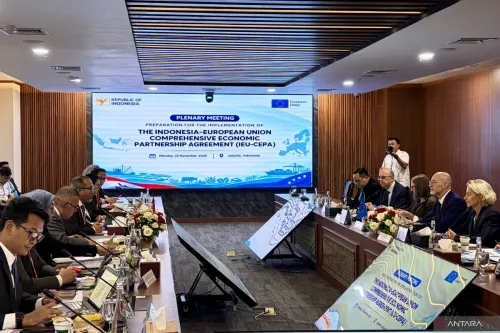
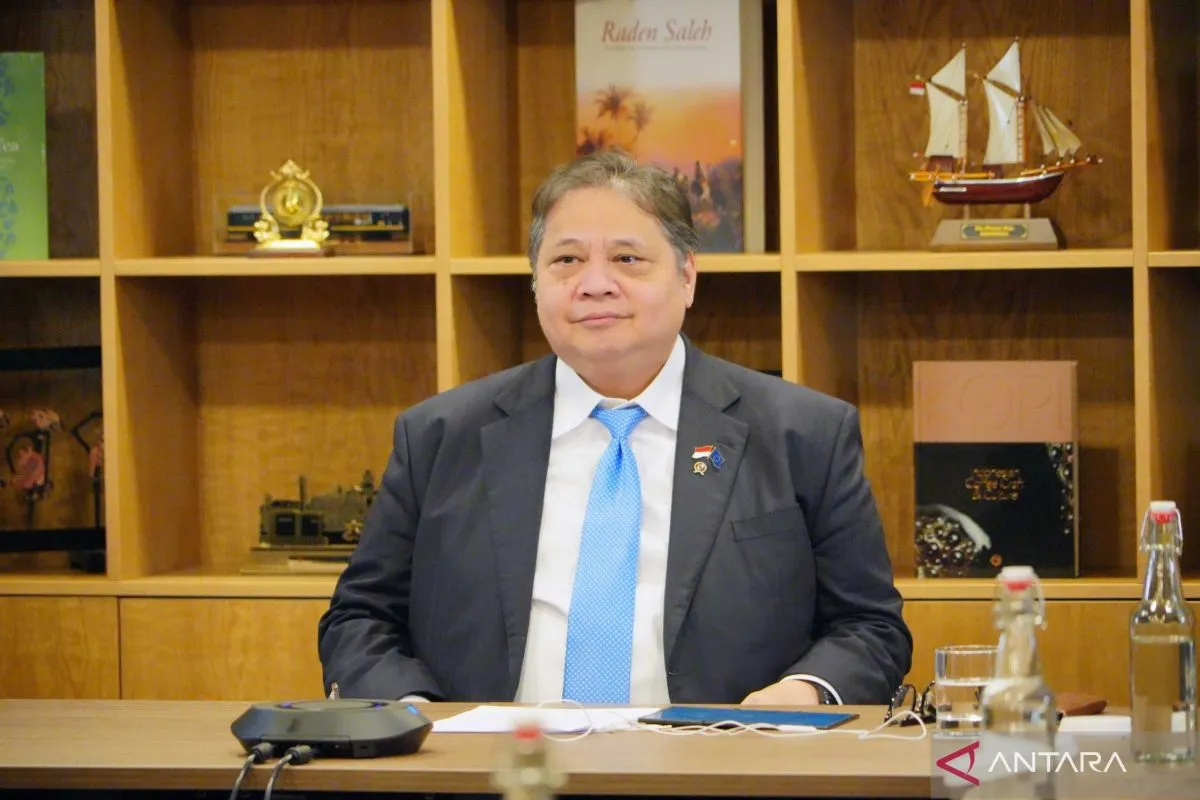
Speaking in Jakarta on Monday, November 23, Hartarto said the two sides were still working through details and needed time to resolve outstanding issues, according to ANTARA. He described the negotiations as a breakthrough in addressing bilateral trade concerns despite difficult global geopolitical and geoeconomic conditions.
Indonesia's existing tariff preferences under the Generalized Scheme of Preferences (GSP) expire at the end of 2026. Ratification delays could therefore leave exporters facing a gap between those benefits ending and the IEU-CEPA taking effect.
Tariff cuts and exceptions
Some Indonesian exports now face EU import duties of roughly 7% to 12%, Hartarto said. The agreement would remove duties on more than 90% of goods traded between the two economies, with estimated annual trade-cost savings of 600 million euros.
RRI (Voice of Indonesia) reported that the EU's market-opening commitments cover 98.35% of its 9,754 tariff lines. Duties on 90.42% of tariff lines would fall to zero when the agreement takes effect, while another 7.92% would be phased out over three to 15 years. Tariff-rate quota benefits would apply to 44 tariff lines.
Hartarto put the estimated import-duty savings for Indonesian exporters from immediate duty-free treatment on 90.4% of EU tariff lines at Rp 15 trillion to Rp 17 trillion.
Indonesia would make reciprocal cuts, gradually removing import duties on 50% of EU-origin vehicles over five years. Rice, sugar and ethanol are among the sensitive agricultural products excluded from the tariff-reduction program.
Export opportunities and help for smaller firms
Textiles, footwear and apparel are among the labor-intensive industries expected to gain more opportunities to compete in Europe as tariffs fall. Hartarto said the tariff provisions would also broaden market access for crude palm oil and other Indonesian agricultural products.
Manufactured goods represented 95.61% of Indonesia's exports to the EU during January through September 2026, according to RRI. Total bilateral trade reached $26 billion over those nine months, compared with $23.7 billion a year earlier. Full-year trade in 2025 totaled $31 billion.
Indonesia is targeting average annual export growth of 3.8% to 5.7% by the agreement's fifth year of implementation. Hartarto said the pact connects a combined consumer market of about 730 million people across the EU's 27 member countries and Indonesia, whose population is about 280 million.
Smaller exporters would also have a simpler way to document where their products originate. The agreement allows micro, small and medium enterprises to self-certify through a Certificate of Origin (SKA) declaration rather than undergo lengthy approval procedures, Investortrust.id reported.
Jakarta is preparing a dedicated portal for those businesses and a tariff database organized by Harmonized System (HS) codes. The tools are intended to help exporters check duty schedules and market-entry requirements.
Services, investment and technology
The agreement reaches beyond goods to cover services, intellectual property, public procurement, competition and sustainable development, according to Investortrust.id. It also creates frameworks for digital trade and e-commerce.
Indonesia is seeking European capital and technology transfers in electric vehicles, renewable energy, telecommunications, automotive manufacturing and electronics through the agreement.
Investment protections include legal safeguards for investors, mechanisms to settle disputes between states and voluntary mediation between investors and states.
Palm oil and environmental rules
Addressing environmental concerns surrounding palm oil and deforestation, Hartarto said Indonesia had maintained a deforestation moratorium for several years. He also noted that Indonesia had raised concerns about the European Union Deforestation Regulation (EUDR). Further discussions followed before the EU decided to delay implementation by two years.
The signed trade agreement contains a dedicated Protocol on Palm Oil. According to the European Commission's sustainability factsheet, cited by Trusty.report, it provides a forum for dialogue on matters including regulatory developments affecting the sector, alongside a framework for sustainable palm oil production. The factsheet does not name the EUDR.