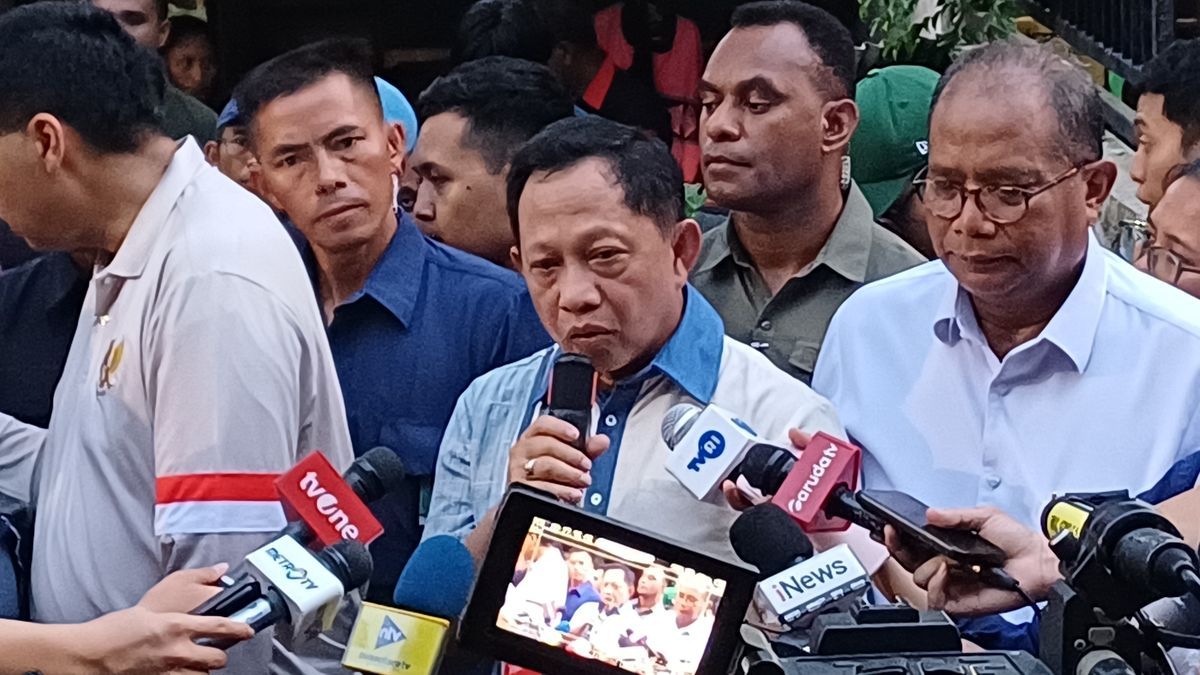
Housing and poverty in Kampung Ambon
Tito made the appeal in Kampung Ambon, in Kedaung Kali Angke, Cengkareng, West Jakarta, where one home is slated for renovation. The neighborhood is often described as a drug village.
"I only ask my fellow local government officials to embrace programs like this that are pro-poor," he said. He specifically called on the DKI Jakarta provincial government to provide funding and asked that the request be conveyed to the local council dealing with housing matters.
Tito identified poverty, uninhabitable housing and a lack of community empowerment as underlying problems in drug villages across Indonesia. "Drug villages, for example, are just the tip of the iceberg. We are working to resolve the underlying issues," he said.
He credited President Prabowo Subianto with the renovation program and characterized the president's programs as pro-people. Citing Prabowo, Tito also said a leader's happiness comes from seeing people happy.
Renovation targets and funding
The initiative is the BSPS scheme, commonly called "bedah rumah," which the Ministry of Housing and Residential Areas (PKP) implements under Prabowo's direction. Tito said the renovation effort brings the housing ministry together with ATR/BPN, PNM Mekaar, the police and the Central Statistics Agency (BPS).
In his October 24 remarks, Tito put the government's renovation goal at 450,000 uninhabitable homes. He had cited an earlier national BSPS target of around 400,000 homes for 2026 during a June 22 appearance in Jayapura, compared with about 45,000 in 2025.
At that June appearance, Tito also said approximately Rp8 trillion had been allocated to accelerate the construction and rehabilitation of uninhabitable houses nationwide. He said the funding came from both the state budget, known as APBN, and non-APBN sources.
Rules for assistance and reported housing progress
Minister of Housing and Residential Areas Regulation No. 6 of 2026 on "Bedah Rumah," issued July 28, provides the program's legal framework. The regulation provides for state-budget funding and cash assistance that recipients may use only for building materials, construction workers' wages or both.
Separately, the housing ministry reported that the broader housing program it coordinates had reached 1,790,081 units as of October 15, 2026. That total comprised 1,103,918 newly built homes and 686,163 renovated homes.