Communities waiting for resolution
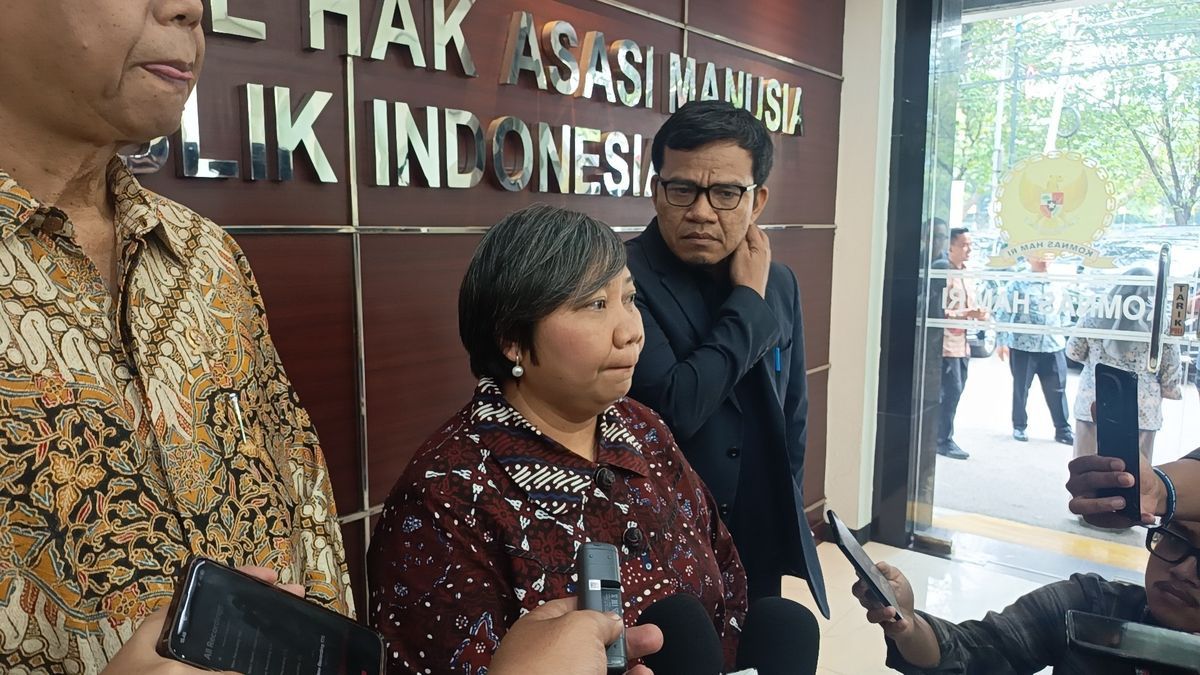
Speaking at the commission's Central Jakarta office after meeting BRAN head General Dedi Prasetyo, Komnas HAM Chair Anis Hidayah said some agrarian disputes had remained unresolved for five years or longer. "The community has been waiting," Anis said.
Agrarian conflict is a major part of the commission's work, Anis said, with 2,700 reports received over the past three years. Resolving cases has proved difficult because they involve multiple parties, including corporations, as well as questions concerning state assets.
The commission's annual figures also show the prominence of land disputes among complaints. According to its 2025 data, reported by NU Online, agrarian conflict accounted for 484 of the 2,796 complaints of alleged human rights violations. It was the second-largest category, behind complaints about law enforcement officers' conduct, which totaled 612.
Separately, the Agrarian Reform Consortium (KPA) recorded 3,575 outbreaks of agrarian conflict in Indonesia between 2015 and 2025, according to Mongabay Indonesia. KPA's figures for that period also included 3,245 instances of criminalization of agrarian rights defenders, 1,366 people assaulted, 80 killed and 107 shot.
Recommendations and a planned cooperation agreement
Anis said the meeting was intended to advise BRAN on how to respond to disputes and carry out agrarian reform. The commission wants the body both to resolve existing cases and to take effective measures to prevent new conflicts.
Komnas HAM also initiated formal institutional cooperation at the meeting, ANTARA News reported. Dedi said BRAN would draw up a memorandum of understanding with the commission, describing it as the first step since the body's formation and inauguration on October 1, 2026.
The commission had already developed a human rights-based roadmap for resolving agrarian conflict, known as Peta Jalan Penyelesaian Konflik Agraria Berbasis HAM. According to RRI, it handed the roadmap to the Ministry of Agrarian Affairs and Spatial Planning/National Land Agency (ATR/BPN) on July 13, 2026.
Komnas HAM said the roadmap took nearly three years to prepare and that its recommendations were meant not only for ATR/BPN but also for other ministries and agencies, including those responsible for forestry and energy and mineral resources.
BRAN's legal powers and unfinished organization
BRAN was established under the Law on the Regulation of Agrarian Reform, passed by the DPR in September 2026, Mongabay Indonesia reported. President Prabowo Subianto inaugurated Dedi as its first head on October 1, nine days after the law's passage.
The law assigns BRAN responsibility for planning, implementing, monitoring and evaluating agrarian reform. Its powers include designating Priority Locations for Agrarian Reform, temporarily suspending land administration and licensing on disputed land, and de-escalating violence on the ground. Its decisions remain legally binding even if government agencies or businesses ignore them, according to Mongabay Indonesia.
The body's planned leadership structure includes a head, two deputy heads, a main secretary and four deputies. As of October 2026, however, the presidential regulation specifying BRAN's organization had not been published, despite the appointment of its head.
Civil society criticism of the appointment
Dedi previously served as deputy chief of the National Police and remained an active high-ranking police officer as of October 2026, Mongabay Indonesia reported.
The civil society coalition Koalisi Masyarakat Sipil untuk Keadilan Agraria criticized his appointment, arguing that it conflicts with Constitutional Court ruling No. 114/PUU-XXIII/2025. Under that ruling, active police officers must resign or retire before accepting posts outside the police, the coalition said.
The coalition also objected to the appointment process, saying it lacked open selection, competency criteria and public input.