Kaja Kallas has scrapped a defence advisory group she publicly introduced just days ago, bowing to pressure from member states in an episode that exposes the limits of her authority as head of the EEAS.
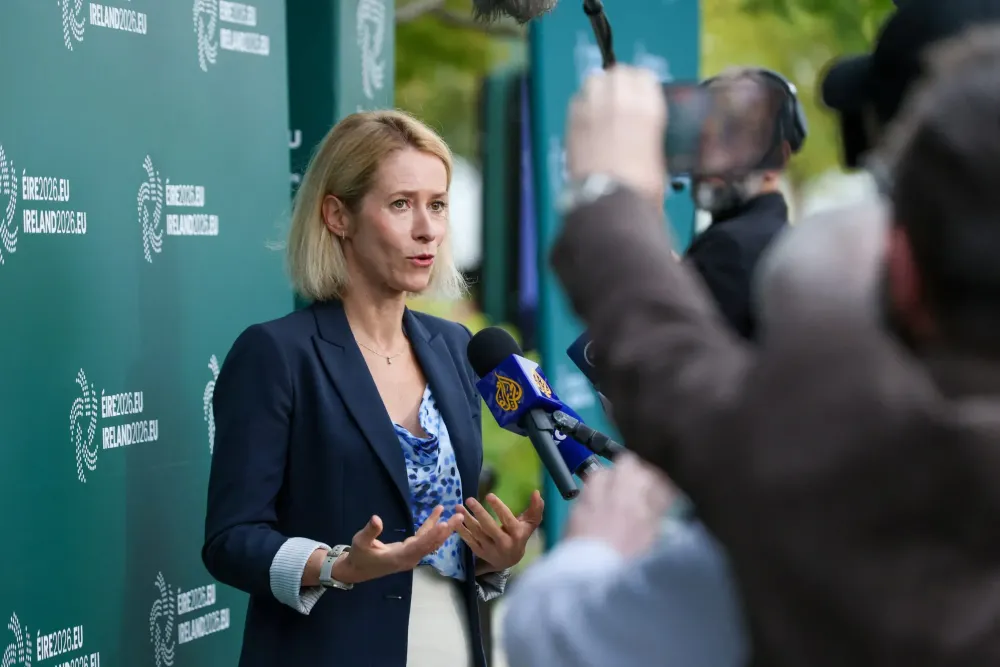
Kallas unveiled the initiative at an informal gathering of EU defence ministers in Ireland around September 1. The body would bring together political and military leaders to develop new approaches to European defence.
"The aim is to have some of the brightest minds on security and defence come together and really provide out-of-the-box solutions on how we can be faster in fulfilling these gaps and how we can be more effective," she said at the press conference.
Several governments opposed the initiative, viewing it as the wrong direction — despite the group carrying no authority over member states, its role being strictly advisory. "Some member states felt this was not the right path to pursue at this moment," a source said.
Invitees were due Monday, September 7, at a Brussels venue for a fireside chat with Kallas. They received the cancellation Sunday afternoon. No names of participants had ever been released. The group never formally launched.
The reversal is particularly damaging given its timing. Kallas had assembled a new EEAS leadership team only recently in a bid to strengthen her institutional position. The advisory panel's cancellation — before its participants were publicly named, before its formal launch — is a public indication of the limits of that position.
Those limits are being tested from multiple directions. Commission President Ursula von der Leyen has consistently pushed for more say over EU foreign policy, clashing with Kallas on major questions including the bloc's policy on Israel. A Franco-German proposal that would place the EEAS under the European Commission president's direct supervision, while expanding the High Representative's broader mandate, is circulating in Brussels.
One EU official insisted the underlying problem has not been resolved. "The diagnosis has not changed that Europe needs to deliver faster on defence. Europe still needs to confront the question the group was designed to address, how to strengthen European defence faster."
The group was meant to be part of the answer. Its collapse before a single meeting — driven by member states who raised opposition before the participants were even publicly named — raises the question of who, within the EU's overlapping structures, can actually move European defence forward.