Prabowo Agrees to Revise Corruption Definition to Align With UNCAC
President Prabowo Subianto has approved a proposal to revise Indonesia's legal framework for defining corruption, aligning it with international standards set by the United Nations Convention Against Corruption (UNCAC), National Economic Council Chairman Luhut Binsar Pandjaitan announced Tuesday.
The decision came during a limited cabinet meeting at Merdeka Palace in Jakarta, where Luhut presented findings from a study conducted by the newly reconstituted council. The National Economic Council, originally established in 1999 to guide Indonesia's recovery from the Asian Financial Crisis before being dissolved in 2000, was revived by President Prabowo on October 20, 2024.
Luhut, who was appointed DEN chairman via Presidential Decree Number 139/P of 2024 and previously served as Coordinating Minister for Maritime Affairs and Investment under President Joko Widodo, emphasized that the revision aims to bring Indonesia's anti-corruption efforts in line with global best practices.
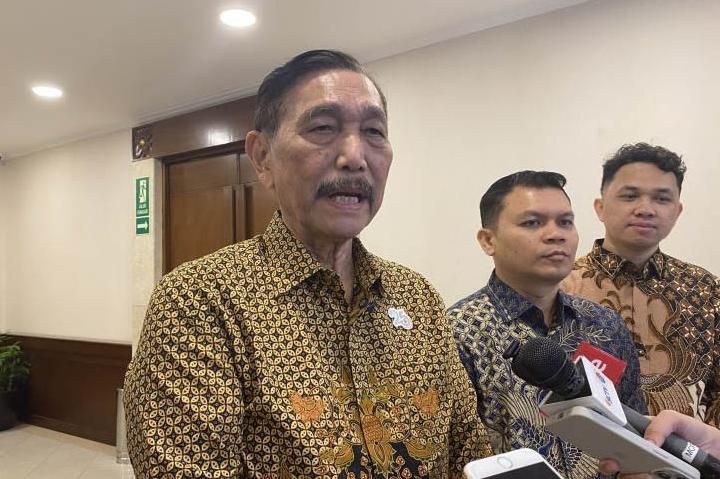
"The president has also agreed with the study conducted by the National Economic Council team on the definition of corruption, because it is important for Indonesia's efforts to tackle corruption to meet international standards," Luhut stated at a press conference following the meeting.
Focus on UNCAC Framework
Indonesia ratified UNCAC on April 18, 2006, through Law No. 7 of 2006, becoming one of over 180 countries to adopt the convention. The UN General Assembly adopted UNCAC on October 31, 2003, and it entered into force on December 14, 2005, after 30 countries ratified it. Indonesia's ratification included a reservation concerning Article 66(2), which governs dispute settlement.
However, research has long indicated that Indonesia's implementation of UNCAC remains incomplete, with many principles from the convention not fully adopted into national legislation, particularly in anti-corruption law. This gap has persisted for nearly two decades since ratification.
Luhut asserted that UNCAC primarily addresses corruption through bribery provisions and does not center on state financial losses.
"So, it does not talk about state financial losses, because Indonesia is the only country that applies the concept of state financial losses," he said.
In reality, UNCAC does not provide a single definition of corruption but outlines specific corrupt acts across multiple articles, including bribery, embezzlement, abuse of functions, trading in influence, and illicit enrichment. Furthermore, Article 3(2) of UNCAC explicitly states that implementing the convention does not require corruption offenses to result in damage or harm to state property, except as otherwise specified.
Current Legal Framework Under Review
Indonesia's existing corruption law is defined in Law Number 31 of 1999, as amended by Law Number 20 of 2001 on the Eradication of Criminal Acts of Corruption. This legislation includes state financial losses or state economic losses as elements in Articles 2 and 3, making Indonesia distinct in requiring demonstrable harm to state finances for many corruption prosecutions.
The concept of state financial losses has been subject to domestic legal debate for years. Indonesian courts have ruled that state economic loss must be actual and certain rather than potential or estimated. Constitutional Court Decision No. 25/PUU-XIV/2016 and Supreme Court Decision 4551 K/Pid.Sus/2021 both established that losses must be concrete, measurable, and proven to establish guilt.
According to Luhut, the current emphasis on state financial losses has been viewed as an obstacle to business activity.
"Any business involves risks," he argued, suggesting that the existing framework may discourage legitimate corporate operations.
Scale of Corruption Losses
The potential revision comes against a backdrop of substantial corruption-related losses. Between 2003 and 2015, corruption cost Indonesia approximately IDR 153.01 trillion in state losses, yet only about 10.4 percent—roughly IDR 15.96 trillion—was recovered through fines, asset confiscation, and replacement payments. More recently, in 2020, total state losses from corrupt practices reached IDR 56.7 trillion.
The proposed changes to Indonesia's corruption definition represent a significant policy shift that could reshape how corruption cases are prosecuted and potentially affect accountability mechanisms for public officials and corporate actors alike.