Changes follow September-October haze
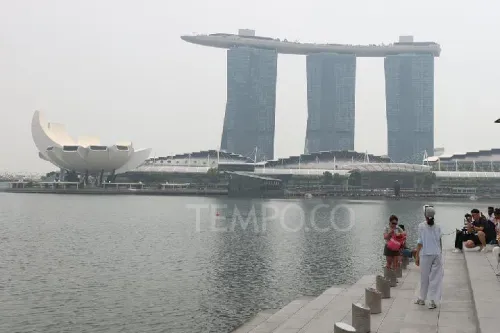
The proposals follow Singapore's worst haze episode since 2015, according to the National Environment Agency (NEA). Haze from September to October 2026 disrupted daily life, affected businesses and workers, and prompted public health concerns. Investigators were still examining that episode as of November 4.
"Following the recent haze episodes, it is clear that the status quo is no longer sustainable," Fu said, according to Reuters.
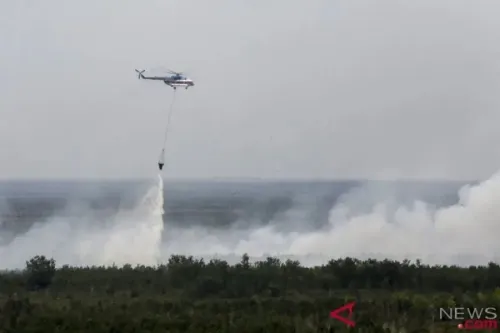
The revised law would cover conduct that causes or contributes to overseas land or forest fires posing a haze risk to Singapore, without requiring the haze to reach the country first. Under the existing threshold, the Act could be triggered only after haze kept the Pollutant Standards Index in the unhealthy range somewhere in Singapore for at least 24 hours, NEA said.
Higher fines and a civil enforcement route
For companies found to have contributed to haze pollution, the proposed daily fine would rise to as much as S$1 million, with a total ceiling of S$20 million. The current limits are S$100,000 (US$78,200) a day and S$2 million overall.
NEA would also gain a civil enforcement option. With the Public Prosecutor's consent, the agency could bring a court action seeking a penalty of up to S$10 million. The same case could not result in both civil and criminal penalties for an entity.
A separate provision would allow a court to impose an additional penalty reflecting any profit an offender gained, or loss it avoided, by committing an offence under the Act.
"We need better ways to obtain and verify information, trace corporate relationships, and impose meaningful consequences on offending entities, even when criminal prosecution is difficult," Fu said.
Investigations and business restrictions
The government would be able to enlist private-sector assessors to examine companies suspected of connections to haze pollution in Singapore. The Director-General of Environmental Protection and authorized officers would also receive arrest powers within Singapore.
Other procedural changes would explicitly permit courts to hear offences without the accused present in specified circumstances. To address difficulties involving foreign entities, authorities could serve documents electronically or through alternative methods, including public media and NEA's website.
The proposals would also allow the government to bar companies from doing business with entities suspected of contributing to haze. Breaching those restrictions could carry a fine of up to S$1 million per offence, with another S$100,000 for each day the breach continues.
Certain entities, especially those in forestry and agriculture, could be placed on notice and required to ensure that their supply chains and business arrangements exclude entities causing or contributing to fires that pose a haze risk. NEA could publicly identify entities that fail to comply with notices or directions under the Act.
Company inquiries, banks and regional cooperation
Singapore has already sought information from 10 locally registered companies about their operations and possible connections to haze pollution. The Monetary Authority of Singapore has separately reminded banks to set requirements for companies that may be violating environmental laws. Banks have also been asked to consider ending those business relationships.
On Tuesday, November 3, Singapore announced plans to work with fellow ASEAN members on strengthening implementation of the transboundary haze agreement. That cooperation is planned for next year, when Singapore takes over the ASEAN chairmanship.